
Luxury Home Styles in the Triangle: Custom Estates Built Around Land, Light, and Lifestyle
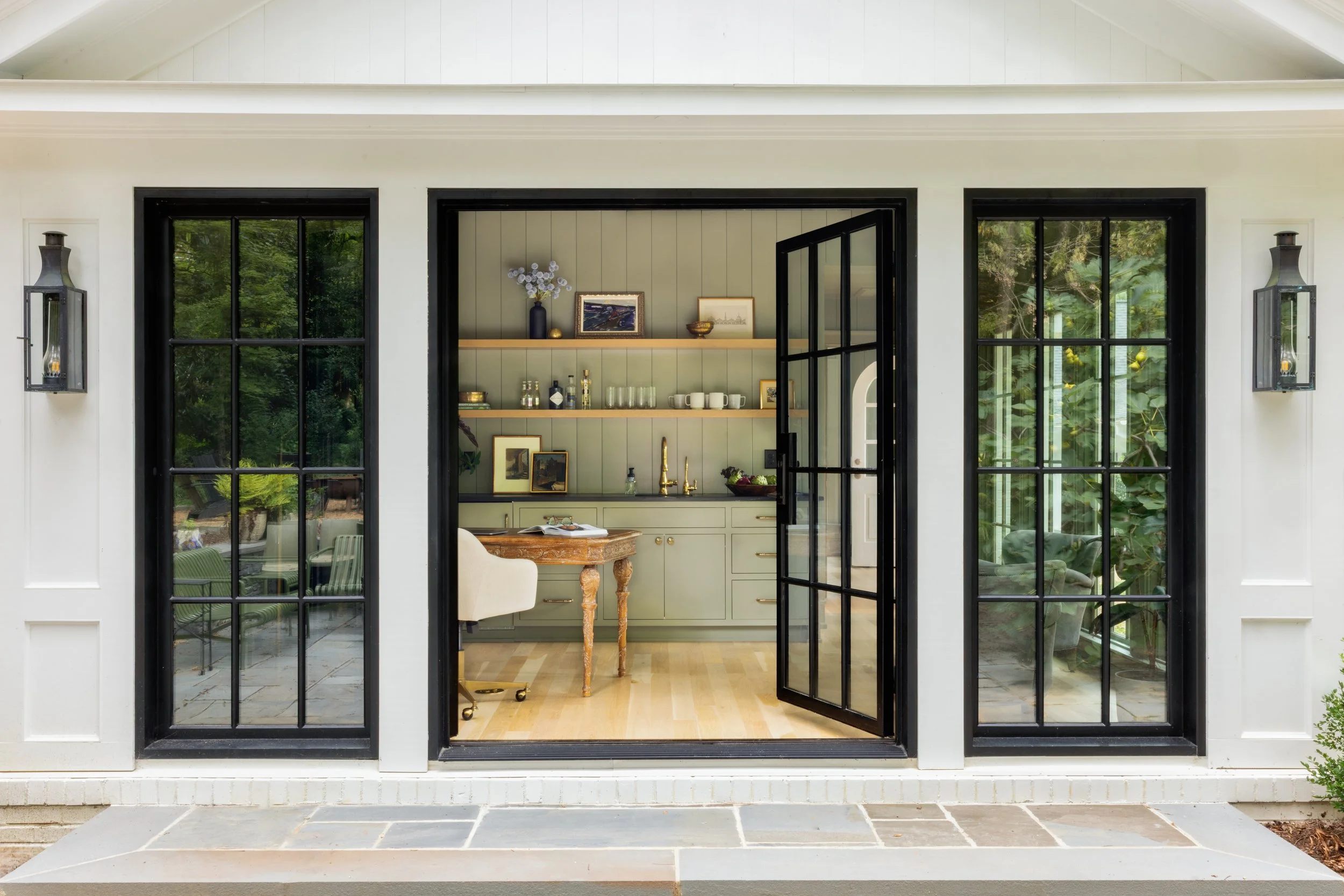
A thoughtfully designed workspace inside a luxury Triangle custom home showcasing the relationship between design, natural light, and everyday living. Black steel-framed windows and doors create strong visual contrast while framing views of mature landscaping and outdoor gathering spaces. Inside, sage green cabinetry, floating wood shelves, brass fixtures, and a vintage wood desk create a warm and functional environment that blends contemporary design with timeless craftsmanship. The image reflects how high-end homes in Chapel Hill, Durham, and Raleigh are increasingly built around the surrounding land, strategic light placement, and lifestyle-driven spaces that seamlessly connect indoor comfort with outdoor living. This design approach emphasizes flexibility, natural materials, and purposeful room planning that supports both daily routines and long-term livability.
Luxury Home Styles That Define High-End Living in the Triangle
Luxury homes across the Triangle are shaped by more than square footage or surface-level style. In Durham, Chapel Hill, Raleigh, Cary, Pittsboro, Hope Valley, and Orange County, the most successful custom homes are built around land, light, lifestyle, craftsmanship, and long-term value. The exterior style may create the first impression, but the true quality of a luxury residence is found in how the home lives every day.
For homeowners planning an estate-level custom home or major renovation, choosing a style is rarely just an aesthetic decision. A wooded Chapel Hill homesite may call for a very different approach than a golf-course property in Cary, a historic Raleigh residence Inside-the-Beltline, or an acreage estate in Chatham County. The right home style should respond to the property, natural light, privacy, views, family needs, entertaining habits, and the way each space will be used over time.
At Will Johnson Building Company, luxury custom homebuilding begins with thoughtful planning, careful site evaluation, and a clear understanding of how design choices affect construction, comfort, and durability. Whether you are beginning with custom home design planning, studying a potential property, or refining a renovation concept, the goal is to create a home that feels timeless, personal, and deeply connected to its setting.
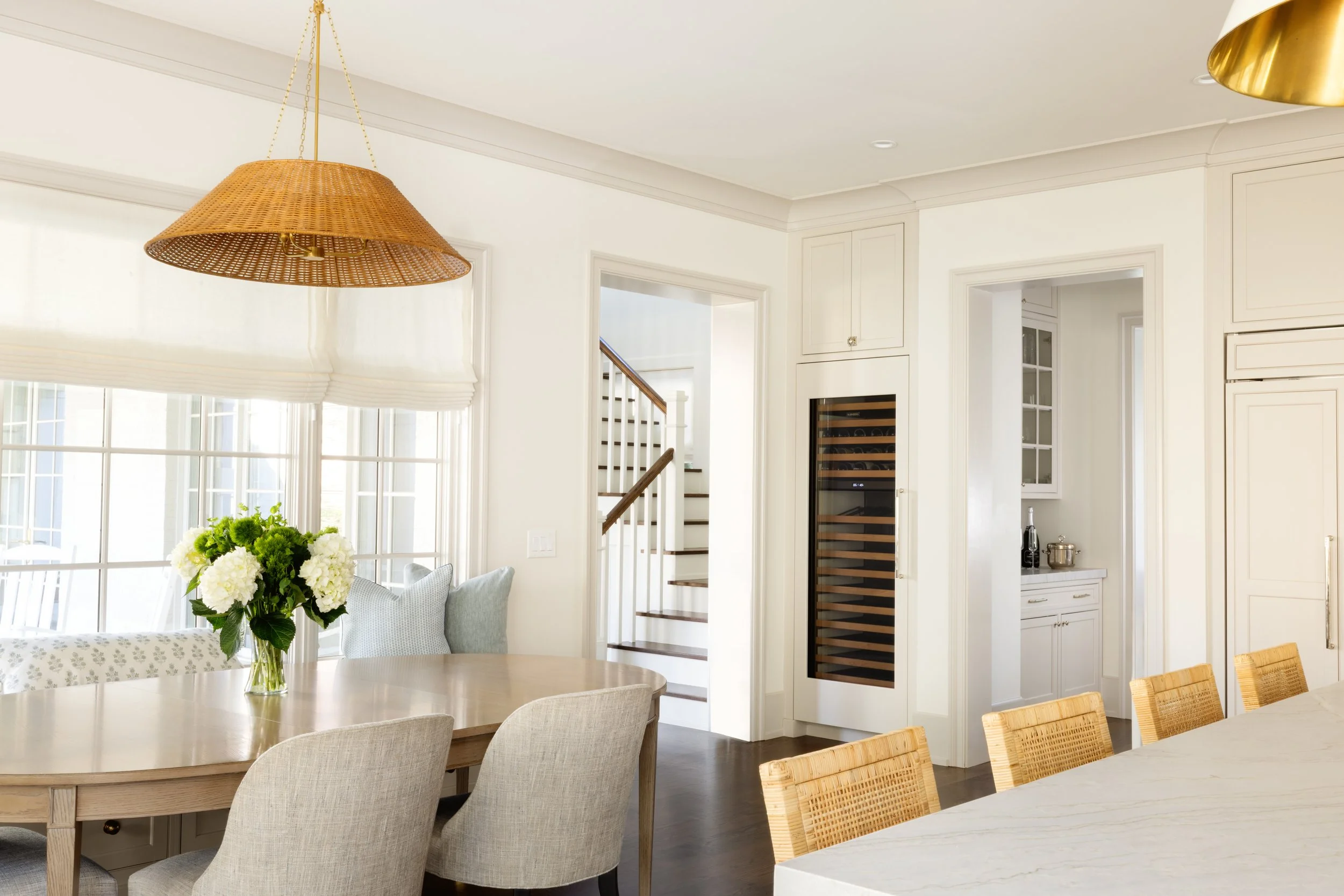
A sophisticated kitchen and dining space inside a luxury Triangle custom home designed around light, flow, and everyday living. Large windows fill the room with natural daylight, highlighting soft neutral finishes, custom millwork, integrated wine storage, and layered textures that create a welcoming atmosphere. Woven pendant lighting, tailored cabinetry, and an open floor plan establish a seamless connection between gathering, entertaining, and daily routines. The image reflects how high-end homes throughout Raleigh, Durham, and Chapel Hill prioritize lifestyle-centered design, where room placement, circulation patterns, and carefully selected materials work together to create spaces that feel timeless, functional, and comfortable for long-term living. This approach emphasizes intentional planning that balances elegance with practicality while allowing natural light to shape the overall experience of the home.
Modern Transitional Luxury Homes
Modern transitional homes are among the most adaptable luxury styles in the Triangle because they balance classic proportion with cleaner, more current detailing. This style works especially well for homeowners who want warmth, refinement, and modern function without committing to either a fully traditional or highly minimalist design language.
In Raleigh, Cary, Chapel Hill, and Durham, modern transitional homes often include balanced rooflines, generous windows, open living areas, refined trim, natural stone, custom cabinetry, and simplified interior detailing. The result is a home that feels polished without feeling cold, elegant without feeling overly formal, and current without relying too heavily on trends.
This style is especially effective for families planning a long-term residence because it can support multiple layers of living: everyday family routines, formal entertaining, private workspaces, indoor-outdoor transitions, guest suites, and wellness areas. For homeowners comparing inspiration across completed projects, the custom home portfolio can help clarify how different materials, proportions, and interior choices influence the final character of a residence.
Where Modern Transitional Homes Work Best
Modern transitional design is a strong fit for custom homes in established neighborhoods, new estate communities, and larger private lots. It can be adapted to wooded Chapel Hill properties, view-oriented Durham homesites, golf-course homes in Cary, and Raleigh neighborhoods where timeless curb appeal matters.
For homeowners planning in Wake County, this style can also work beautifully in areas where the home needs to feel refined from the street while still offering relaxed, open living inside. Those planning in Raleigh may want to review Raleigh custom homes or more specific planning guidance for custom home planning in Raleigh.

A timeless custom estate home in the Triangle showcasing classic design principles adapted for modern North Carolina living. The residence features gray cedar shake siding, expansive divided-light windows, substantial brick chimneys, and balanced proportions that create a refined and enduring exterior presence. Mature trees, layered landscaping, and generous green space reinforce the connection between the home and its natural surroundings, demonstrating how thoughtful site planning contributes to both beauty and functionality. This image reflects a luxury home style commonly found throughout Chapel Hill, Durham, and Raleigh, where homes are designed around the land, natural light patterns, and long-term lifestyle needs rather than short-term trends. The combination of traditional materials, careful symmetry, and contextual design creates a residence that feels established, welcoming, and built to maintain its character for generations.
Southern Colonial Revival Homes
Southern Colonial Revival homes remain one of the Triangle’s most recognizable expressions of estate-level living. With symmetrical facades, formal entry sequences, classic columns, deep porches, brick or painted siding, and carefully proportioned windows, this style communicates permanence and tradition.
In Chapel Hill, Raleigh, and older Durham neighborhoods, Southern Colonial Revival homes often feel especially appropriate because they connect naturally with the region’s historic residential character. These homes can be grand, but the best examples are not simply large. They are disciplined, balanced, and carefully detailed.
Inside, this style often supports formal dining rooms, paneled libraries, gracious stair halls, detailed millwork, wide-plank flooring, custom fireplaces, and refined gathering spaces. When updated for modern living, these homes can also include open kitchens, sculleries, wellness suites, expanded outdoor living, and highly functional family zones without losing their traditional character.
Renovating Traditional Triangle Homes with Care
Many Southern Colonial Revival homes in the Triangle are not new builds but existing residences ready for thoughtful renovation. The challenge is preserving character while improving livability, circulation, natural light, kitchens, baths, and mechanical performance. For homeowners considering this path, luxury renovations and location-specific renovation services such as Chapel Hill renovations, Raleigh renovations, and Durham renovations offer helpful context.
Historic and traditional homes require a builder who understands proportion, craftsmanship, sequencing, and the hidden conditions that can emerge during renovation. This is especially important in older Chapel Hill and Raleigh homes where additions must feel intentional rather than attached as an afterthought.
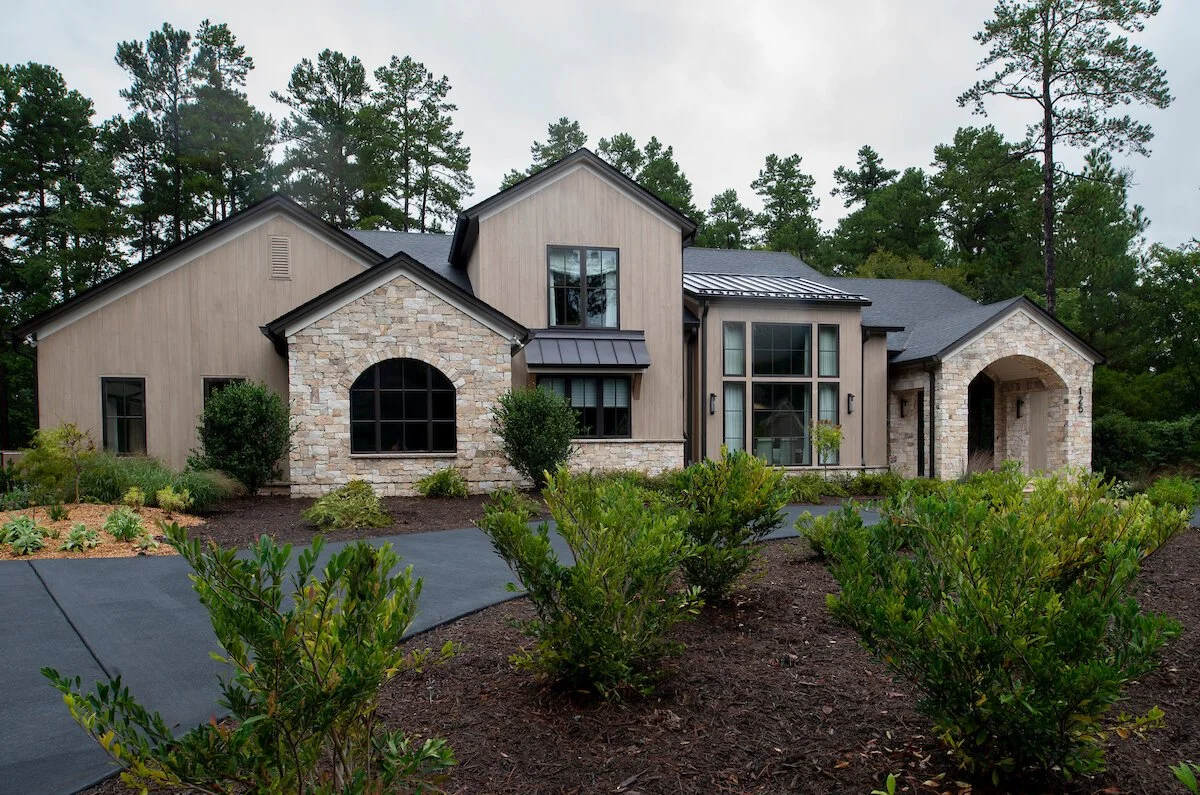
Modern European-inspired luxury estate home in the Triangle
A luxury custom estate home in the Triangle that blends modern European and French Country influences through natural stone facades, warm wood-inspired siding, black metal accents, and thoughtfully layered forms. Large windows introduce abundant natural light while maintaining privacy within a wooded setting. Professionally designed landscaping, mature pine trees, and a carefully planned arrival sequence reinforce the home's connection to the land. This residence exemplifies how high-end custom homes in Chapel Hill, Durham, and Raleigh are designed around the property's natural characteristics, balancing timeless design principles with modern functionality, indoor-outdoor living, and long-term lifestyle goals. The image reflects a design approach centered on permanence, material authenticity, and estate-level planning rather than trend-driven features.
French Country and European Manor Estates
French Country and European Manor style homes bring old-world character to luxury living in the Triangle. These residences often include steep rooflines, stone or limestone-inspired facades, arched openings, refined masonry, slate or metal roof accents, dormers, detailed chimneys, and layered landscaping.
This style is well suited for estate properties, wooded lots, and homesites where the residence can sit with a sense of arrival. A long driveway, mature trees, garden walls, courtyards, and layered outdoor rooms can all reinforce the feeling of permanence that defines this approach.
Inside, European-inspired homes often include formal entertaining spaces, chef kitchens, wine rooms, hand-crafted millwork, paneled studies, stone fireplaces, gallery-like hallways, and private bedroom wings. The best versions avoid feeling heavy by incorporating better natural light, improved flow, and modern conveniences into a traditional design framework.
Estate Presence Without Excess
A European Manor home should feel established, not overdone. The materials, roof massing, window proportions, and landscape design all need to work together. Poorly scaled details can quickly make this style feel artificial, while thoughtful execution creates a home with lasting presence.
This is where early planning matters. Homeowners considering this type of estate should begin with a careful review of the land, exterior elevations, driveway approach, sun orientation, and outdoor living goals. The site selection process plays a major role in whether a European-inspired home feels naturally placed or forced onto the property.
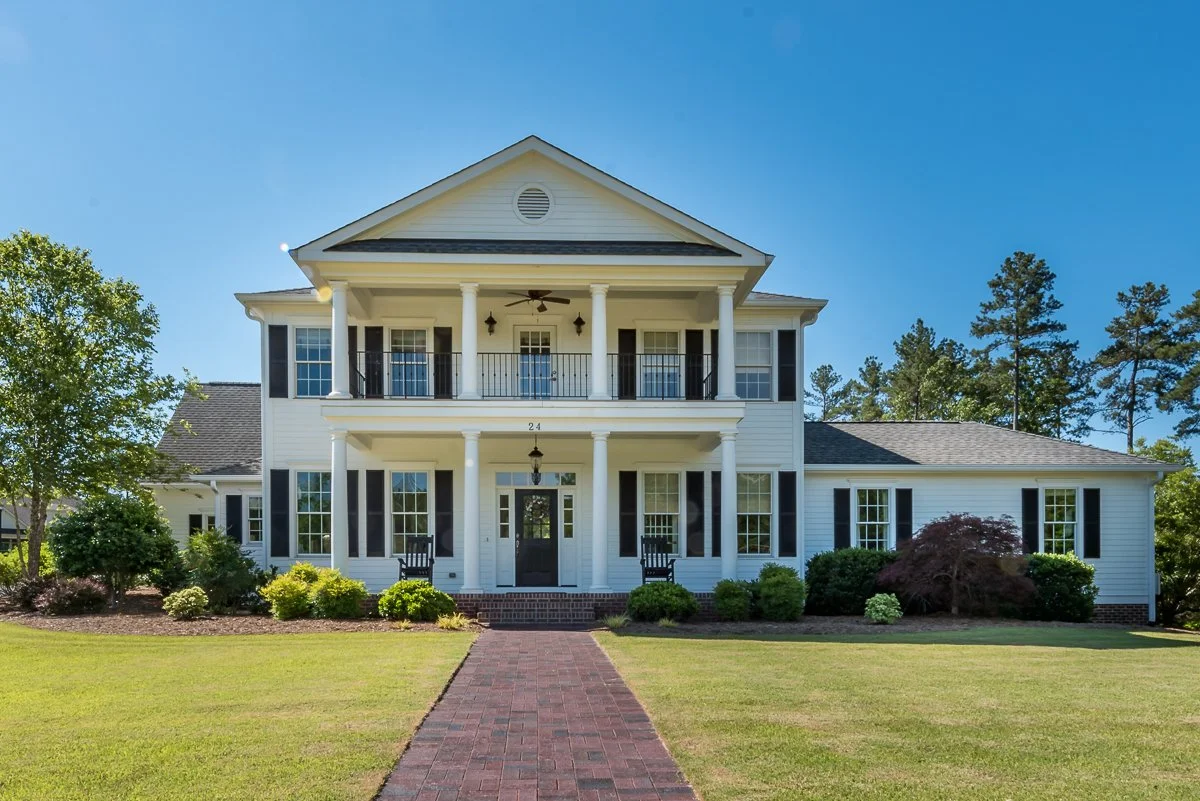
Southern Colonial Revival luxury home
A Southern Colonial Revival custom estate home in the Triangle showcasing symmetrical design , double stacked porches, white exterior siding, traditional black shutters, and a formal brick entry path. Expansive covered outdoor spaces, balanced window placement, and classic columns reinforce a timeless design style that has long been associated with elegant North Carolina living. This home demonstrates how luxury residences in Raleigh, Durham, and Chapel Hill can honor traditional Southern design while supporting modern expectations for indoor-outdoor living, entertaining, and everyday comfort. The combination of disciplined proportions, mature landscaping, and thoughtful site planning creates a residence designed for long-term livability and enduring curb appeal.
Refined Modern Farmhouse Homes
The modern farmhouse has evolved significantly in the Triangle’s luxury market. The strongest versions are no longer simple interpretations of rural style. They are refined, estate-level homes that use farmhouse influence as a foundation for warmth, comfort, and indoor-outdoor living.
Common features include board-and-batten siding, standing seam metal roof accents, oversized porches, natural wood beams, large windows, soft neutral palettes, stone fireplaces, sculleries, and relaxed family gathering spaces. When elevated with high-quality materials and disciplined detailing, the style can feel comfortable and sophisticated at the same time.
This style is especially effective on larger lots in Chatham County, Orange County, Pittsboro, and acreage properties around Chapel Hill and Durham. It also works well for families planning forever homes, guest-friendly layouts, family compounds, and homes designed around outdoor gathering.
Farmhouse Warmth with Luxury-Level Planning
Luxury modern farmhouse design depends on restraint. Too many rustic details can make the home feel themed. Too many modern details can strip away the warmth that makes the style appealing. The right balance comes from quality materials, purposeful simplicity, and careful interior planning.
Homeowners exploring this direction may also want to review content on building a forever home, family compounds and forever homes, and multi-generational home planning.

A contemporary minimalist custom home in the Triangle showcasing expansive glass, clean geometric forms, simplified material selections, and strong connections to the surrounding wooded landscape. Large black-framed windows flood interior spaces with natural light while preserving views and creating a seamless relationship between indoor and outdoor environments. Restrained detailing, low-profile rooflines, and a curated landscape design demonstrate how modern luxury homes in Raleigh, Durham, and Chapel Hill prioritize precision, openness, and long-term livability over decorative excess. This style emphasizes intentional planning, where natural light studies, room orientation, and site integration work together to create calm, highly functional living environments tailored to everyday life.
Contemporary Minimalist Homes
Contemporary minimalist homes prioritize clean lines, natural light, open volume, simplified materials, and strong indoor-outdoor connections. In Durham, Chapel Hill, and select Raleigh neighborhoods, this style is especially appealing to homeowners who want a home that feels calm, modern, and highly intentional.
These homes often feature expansive glass, flat or low-slope rooflines, large-format stone, metal accents, natural wood, open stair systems, frameless details, concealed storage, and carefully controlled lighting. Every visible element matters because there is less ornamentation to hide poor execution.
Minimalist luxury is not about emptiness. It is about precision. The layout, window placement, ceiling heights, material transitions, cabinetry lines, and lighting plans all need to be resolved with care. When done well, the result is a home that feels peaceful, refined, and deeply connected to the surrounding landscape.
Natural Light as a Design Driver
Light is one of the most important elements in contemporary luxury homes. Window placement affects mood, privacy, heat gain, furniture layouts, and the way rooms change throughout the day. For that reason, light studies are valuable during early planning. These studies help determine where morning and afternoon light enter the home, how shadows move across the property, and which rooms should be positioned for the best daily experience.
At the custom planning stage, studying light can influence kitchen placement, primary suite orientation, outdoor living areas, window sizes, covered porch depth, and even the location of workspaces. This is especially important on wooded lots, sloped sites, and properties where privacy must be balanced with openness.

A luxury custom estate home in the Triangle thoughtfully positioned to take advantage of its surrounding landscape, open views, and mature tree canopy. Expansive outdoor terraces, elevated gathering spaces, layered landscaping, and generous setbacks demonstrate how successful custom homes are designed around the characteristics of the property rather than forcing a predetermined layout onto the land. The residence showcases a balance of timeless design, indoor-outdoor living, and site-responsive planning commonly found throughout Chapel Hill, Durham, Cary, and Raleigh estate communities. This image illustrates the importance of evaluating topography, privacy, natural light, outdoor living goals, and long-term lifestyle priorities when selecting a luxury home style that feels integrated with its environment.
Matching Luxury Home Styles to the Land
The land should guide the home. In the Triangle, luxury properties vary widely: wooded Chapel Hill lots, Durham acreage, Raleigh infill properties, Cary golf-course homes, Pittsboro estates, Hope Valley residences, and Orange County homesites each come with different opportunities and constraints.
A style that looks beautiful in concept may not be right for every property. The slope of the land, driveway approach, tree canopy, neighboring homes, sun path, drainage, privacy, and outdoor living goals all influence the smartest design direction. This is why early feasibility and site study work is so valuable before finalizing a home style.
Homeowners evaluating land should consider feasibility and site study before committing too deeply to a design direction. This step can uncover grading concerns, access challenges, view opportunities, tree preservation needs, stormwater considerations, and layout possibilities that may affect the entire project.
Wooded Chapel Hill Homesites
Wooded Chapel Hill properties often benefit from homes that feel grounded and organic. Modern transitional, European-inspired, refined farmhouse, and warm contemporary homes can all work well when the design respects the natural canopy. The key is balancing privacy with light.
Because heavy tree coverage can darken interior spaces, light studies are especially valuable. They help identify where glass, outdoor living areas, main living spaces, and private retreats should be placed. Homeowners planning in this area may want to review Chapel Hill custom homes and custom home planning in Chapel Hill.
Durham Acreage and Hope Valley Homes
Durham offers a wide range of luxury home opportunities, from contemporary custom homes to traditional estates in established neighborhoods. Hope Valley, in particular, often calls for homes that respect a mature residential setting while improving livability and comfort.
For Durham homeowners, style selection should consider lot shape, tree coverage, neighborhood character, outdoor living potential, and whether the project is a new custom home or a significant renovation. Helpful resources include Durham custom homes, Hope Valley custom homes, and custom home planning in Hope Valley.
Raleigh Inside-the-Beltline Properties
Inside-the-Beltline Raleigh homes often require a thoughtful balance between established neighborhood character and modern luxury living. Some properties are ideal for traditional or transitional homes, while others can support more contemporary design if the scale, materials, and streetscape relationship are handled carefully.
For homeowners planning near Five Points, Hayes Barton, Anderson Heights, or other established Raleigh neighborhoods, the home must feel appropriate to its surroundings while still serving modern expectations for kitchens, baths, primary suites, parking, outdoor living, and storage. The 27608 Raleigh custom home planning page and custom homes in 27608 page can support deeper planning.
Cary Golf-Course and Estate Communities
Cary luxury homes often emphasize outdoor living, refined curb appeal, and views. Golf-course properties may benefit from modern transitional, European-influenced, or contemporary styles that frame landscape views while maintaining privacy from neighboring fairways and homes.
For these sites, window placement, covered terraces, pool orientation, and outdoor kitchens should be studied early. Homeowners planning in Cary can review Cary custom home builders and custom home planning in Cary.
Pittsboro and Chatham County Estate Properties
Pittsboro and Chatham County homesites often offer more room for privacy, guest structures, gardens, pools, pavilions, detached garages, and multi-structure living. These properties may support refined farmhouse, European Manor, transitional estate, or family compound concepts.
Because larger properties introduce more planning decisions, the relationship between the main house, secondary structures, driveway approach, outdoor living, and long-term land use should be studied carefully. Homeowners may find value in reviewing Pittsboro custom homes, custom home planning in Pittsboro, and Chatham County renovations.
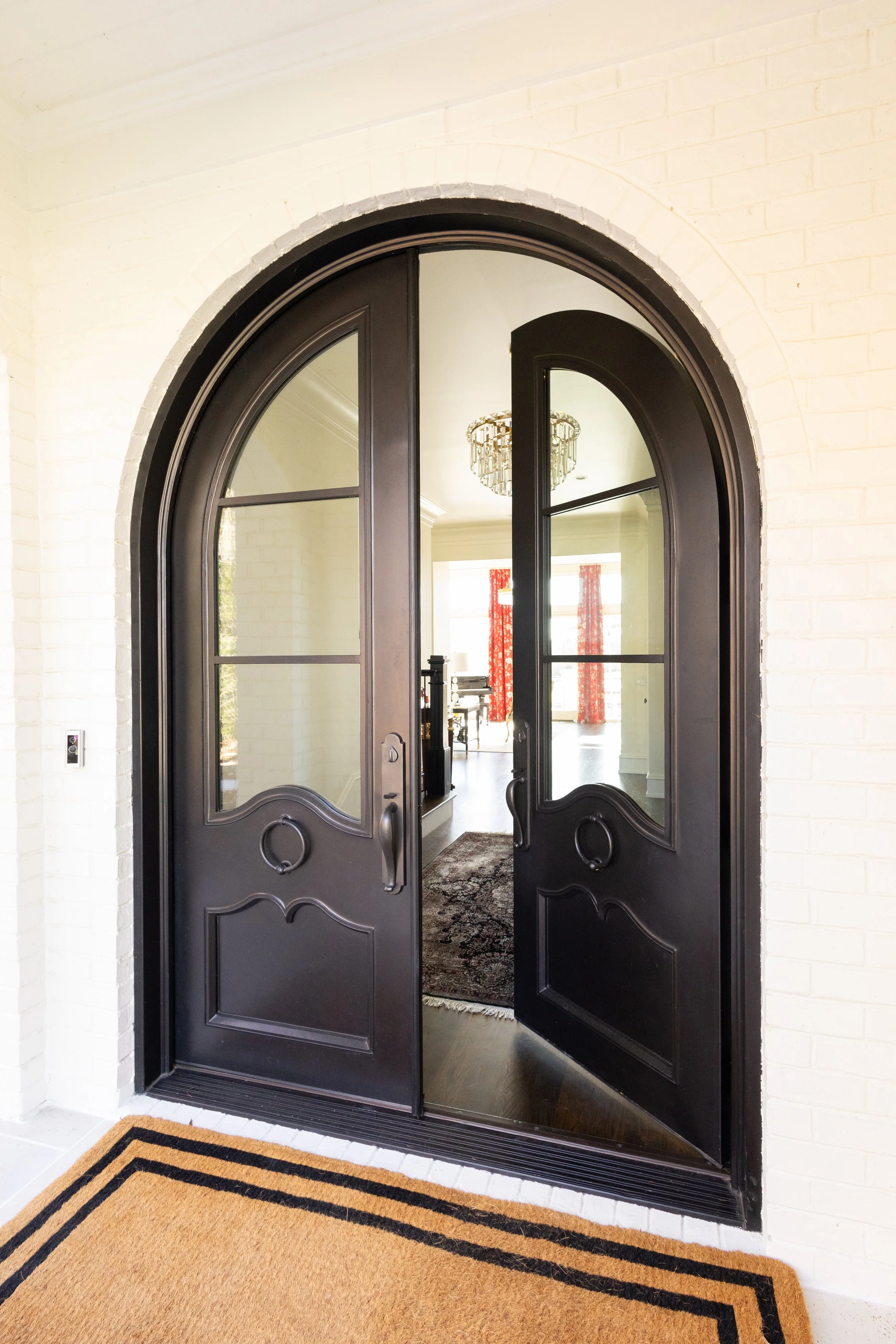
Choosing a Luxury Home Style Around How You Live
The right luxury home style should support the way a household actually lives. A beautiful exterior will not compensate for a layout that fails to serve daily routines, privacy needs, entertaining habits, aging-in-place goals, or family transitions.
Before committing to a style, homeowners should think through how they use a home now and how that may change over the next decade. This includes children, extended family, guests, remote work, hobbies, wellness routines, entertaining, pets, storage, travel, and future accessibility.
For a deeper look at this planning mindset, designing custom homes around lifestyle is a valuable companion topic.
Homes Designed for Entertaining
For homeowners who entertain frequently, the home style should support flow, arrival, serving, gathering, and privacy. A formal Southern Colonial Revival home may call for defined dining and entertaining rooms, while a modern transitional home may use open kitchen, dining, and living zones connected to a covered terrace.
Important planning elements include guest parking, entry experience, powder room placement, kitchen support spaces, sculleries, wine storage, wet bars, outdoor kitchens, covered seating, and acoustic separation between public and private rooms.
Homes Designed for Family Life
Family-centered homes need durable materials, thoughtful storage, strong sightlines, flexible rooms, mudrooms, laundry planning, homework areas, play spaces, and outdoor connections. Refined farmhouse, transitional, and warm contemporary styles can all support this type of living when the plan is carefully organized.
Luxury does not mean fragile. A well-built custom home should feel refined while still supporting real life. Materials should be selected not only for appearance but also for durability, maintenance, and long-term performance.
Homes Designed for Multi-Generational Living
Multi-generational homes require privacy, comfort, accessibility, and independence. Guest suites, secondary living areas, elevators or future elevator planning, wider circulation, private entries, and flexible bedroom locations can all make a home more adaptable.
This type of planning connects closely with multi-generational home design and universal design for forever homes.

A professionally designed luxury kitchen inside a Triangle custom home showcasing handcrafted cabinetry, a brick herringbone backsplash, natural stone countertops, and a commercial-style cooking range centered around symmetry and functionality. Large windows introduce natural light while custom storage, integrated millwork, and layered materials create a timeless and highly functional gathering space. This kitchen reflects how luxury homes in Chapel Hill, Durham, and Raleigh are increasingly designed around everyday routines, entertaining needs, and long-term livability. The combination of durable materials, thoughtful organization, and refined craftsmanship demonstrates the importance of early kitchen planning in creating a cohesive home that balances beauty, performance, and comfort.
Professional-Grade Kitchens and Sculleries
In Triangle luxury homes, the kitchen is often one of the most important rooms in the house. It must be beautiful, but it also needs to function under pressure. Daily meals, large gatherings, catered events, family holidays, and casual entertaining all place different demands on the space.
High-end kitchens often include professional-grade appliances, oversized islands, custom cabinetry, stone surfaces, integrated refrigeration, beverage stations, walk-in pantries, and secondary prep areas. Many homeowners also include sculleries to keep mess, prep work, and cleanup out of view during entertaining.
For homeowners planning a kitchen-focused renovation or custom home, the kitchens page offers a relevant next step, while interior services can help connect cabinetry, finishes, millwork, lighting, and flow into a cohesive plan.
Kitchen Planning by Home Style
In a Southern Colonial Revival home, the kitchen may need to connect traditional detailing with modern function. In a European-inspired estate, the kitchen may feature natural stone, custom range surrounds, beams, and scullery spaces. In a contemporary minimalist home, the kitchen may rely on concealed storage, slab cabinetry, integrated appliances, and precise lighting.
Regardless of style, kitchen planning should begin early because appliance placement, plumbing, cabinetry, ventilation, lighting, ceiling design, and circulation all affect construction decisions.

Spa-Inspired Primary Suites and Wellness Rooms
Primary suites in luxury Triangle homes have evolved into private retreats. They are no longer limited to a bedroom, bath, and closet. Today’s high-end homes may include sitting rooms, morning bars, private terraces, exercise rooms, meditation spaces, steam showers, soaking tubs, heated floors, and highly organized dressing areas.
For homeowners focused on comfort and privacy, the primary suite should be planned around daily rhythm. Morning light, bathroom access, closet flow, laundry proximity, sound separation, and views all matter. A light study can also help determine whether the suite should face east for morning light, remain shaded for privacy, or connect to a more secluded outdoor space.
For renovations focused on private retreat spaces, bath renovations and the article on quiet luxury primary suites are especially relevant.
Outdoor Living as an Extension of the Home
Outdoor living is one of the defining features of luxury homes in the Triangle. With the right planning, covered porches, screened rooms, pool terraces, outdoor kitchens, fireplaces, gardens, courtyards, and pavilions can function as true extensions of the home.
The best outdoor spaces are not added late in the process. They are integrated from the beginning. Door placement, kitchen access, rooflines, views, privacy, sun exposure, grading, drainage, and landscape relationships should all be considered as part of the larger design.
Homeowners planning exterior improvements or full custom homes may want to review exterior services and the article on outdoor living masterpieces.
Outdoor Living by Property Type
On wooded Chapel Hill lots, outdoor living may focus on screened porches, terraces, fireplaces, and views into the trees. On Cary golf-course properties, outdoor spaces may frame fairway views while preserving privacy. On Pittsboro or Chatham County acreage, outdoor living may expand into pavilions, guest cottages, pool houses, and gardens.
For larger estate properties, multi-structure planning can create a richer living experience. Guest cottages, pool houses, detached studios, and pavilions should relate naturally to the main residence. The article on guest cottages, pool houses, and pavilions offers useful context.

A sophisticated living space inside a luxury Triangle custom home showcasing artisan millwork, soaring vaulted ceilings, full-height wall paneling, and a custom fireplace surround that anchors the room. Expansive windows and French doors flood the interior with natural light while creating strong connections to the surrounding landscape. Layered trim details, carefully selected finishes, and a restrained color palette demonstrate how craftsmanship extends beyond individual materials to create a cohesive interior environment. This image reflects how luxury homes in Chapel Hill, Durham, and Raleigh rely on intentional millwork, precise detailing, and thoughtful material selections to create interiors that feel timeless, functional, and highly personalized while supporting everyday comfort and long-term livability.
Artisan Millwork and High-End Interior Finishes
Luxury home style is defined as much by interior execution as exterior appearance. Custom millwork, stair details, ceiling treatments, cabinetry, stone selections, flooring, lighting, hardware, and built-ins all determine whether a home feels truly custom.
In traditional and transitional homes, millwork may include paneled rooms, coffered ceilings, crown molding, built-in bookcases, custom fireplace surrounds, and detailed stair components. In contemporary homes, craftsmanship may appear through flush transitions, precise cabinetry reveals, integrated lighting, and clean material alignments.
Every style requires discipline. The goal is not to add detail everywhere, but to place the right details where they matter most. For homeowners comparing interior finish possibilities, the interiors page is a helpful resource.
Invisible Technology and Smart-Home Integration
Modern luxury homes often include advanced technology, but the best systems feel quiet and integrated. Lighting, climate, audio, security, shades, irrigation, pool systems, and entertainment can all be connected without visually overwhelming the home.
Smart-home planning should happen early because wiring, equipment locations, recessed components, speaker placement, shade pockets, lighting scenes, and control systems can affect framing, electrical work, cabinetry, ceilings, and finish details.
Technology should support the home’s style rather than compete with it. In a traditional residence, systems may be concealed behind millwork and cabinetry. In a contemporary home, the details may need to be even more precise because there are fewer decorative layers to hide them.
Builder Insight: Common Mistakes When Selecting a Luxury Home Style
One of the most common mistakes in luxury home planning is choosing a style before understanding the property. A home that looks beautiful in inspiration photos may not work well with the lot, sunlight, grading, neighborhood, or desired lifestyle.
Another mistake is focusing too heavily on the front elevation while underestimating how the home will live from the inside. Window placement, room relationships, outdoor access, privacy, storage, and circulation often matter more over time than a single exterior view.
A third mistake is chasing trends too aggressively. Trend-driven materials, overly specific design gestures, and highly stylized details can make a home feel dated faster. For homeowners who want lasting value, the article on building for timelessness is especially relevant.
How Planning Protects Quality, Budget, and Long-Term Value
Luxury custom homes require clear planning before construction begins. The earlier key decisions are studied, the more effectively the team can protect quality, budget alignment, schedule, and design intent.
This is why schematic planning, design development, construction documents, and value engineering all matter. These steps help refine the home before field work begins, reducing avoidable uncertainty and improving communication.
Homeowners can learn more through the articles on schematic design for high-end custom homes, design development and construction documents, and value engineering in luxury custom homes.
Cost-Plus Transparency and Luxury Homebuilding
For estate-level custom homes and major renovations, transparency is essential. Homeowners need clarity around allowances, selections, construction scope, material choices, and how decisions affect budget. A thoughtful process helps align expectations before construction begins.
The article on the cost-plus approach to custom home building provides additional insight into how transparency can support better decision-making during a complex project.
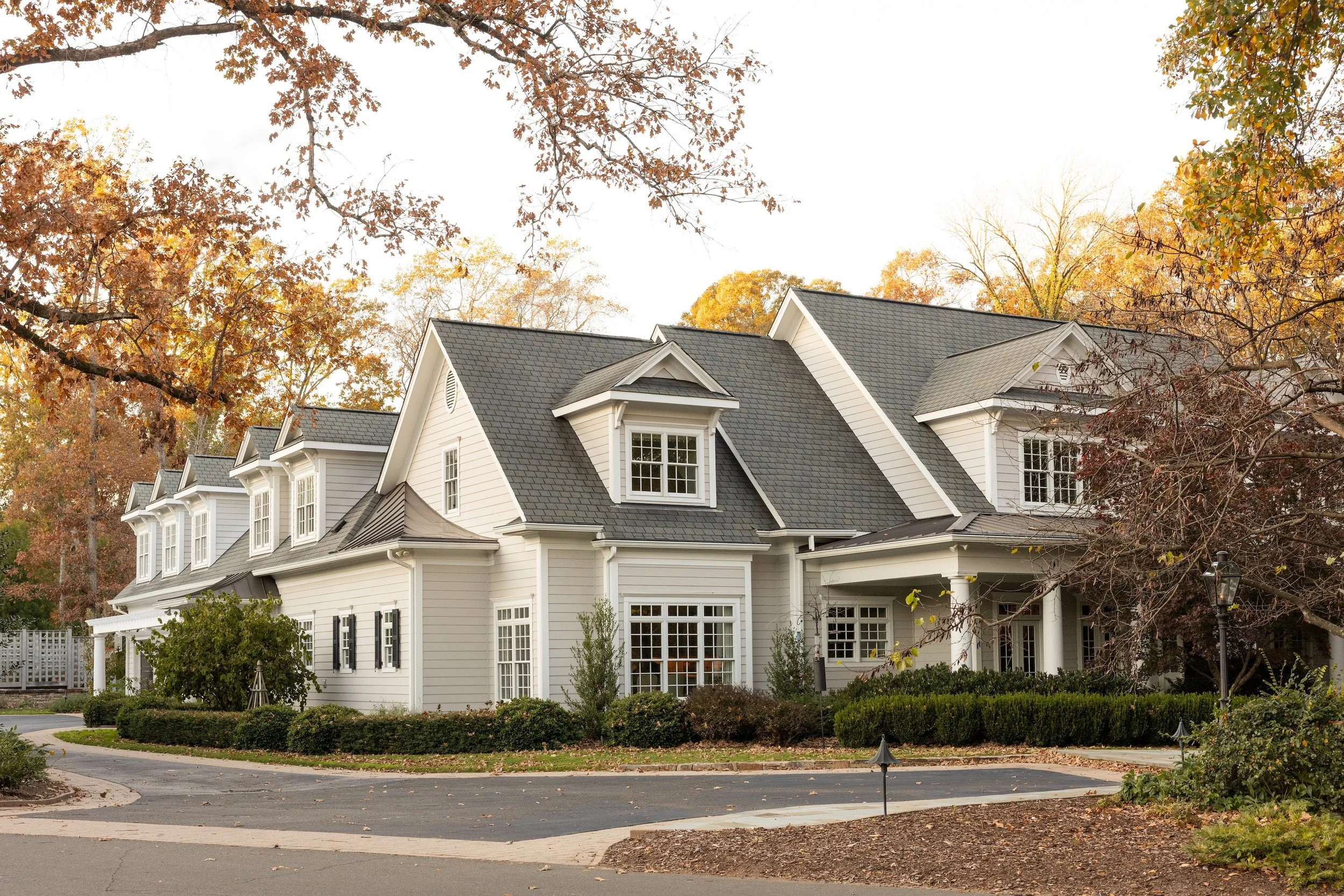
A timeless custom home in the Triangle showcasing classic design proportions, layered rooflines, dormer windows, and carefully maintained landscaping that complement the surrounding mature tree canopy. The residence reflects the diverse design approaches found throughout Chapel Hill, Durham, Raleigh, Cary, Pittsboro, and other Triangle communities, where luxury homes are thoughtfully planned around neighborhood character, property conditions, and long-term lifestyle goals. Traditional materials, balanced exterior detailing, and a strong connection to the landscape create a residence that feels established and enduring. This image represents how custom homes across the Triangle prioritize lasting craftsmanship, functional living spaces, and design styles that respond naturally to both the property and the surrounding community.
Luxury Home Styles Across the Triangle
Each Triangle community has its own character, and the best luxury homes respond to those local differences. Chapel Hill, Durham, Raleigh, Cary, Pittsboro, Chatham County, Orange County, and Hope Valley all offer different opportunities for custom homebuilding and renovation.
Chapel Hill Luxury Homes
Chapel Hill luxury homes often emphasize privacy, natural surroundings, mature trees, and a sense of quiet permanence. Traditional, transitional, European-inspired, and warm contemporary homes can all work well depending on the property.
For homeowners planning in Chapel Hill or Orange County, relevant resources include Chapel Hill custom homes, custom home planning in Chapel Hill, Orange County custom homebuilders, and custom home planning in Orange County.
Durham Luxury Homes
Durham supports a wide range of luxury styles, from contemporary custom residences to refined renovations in established neighborhoods. Hope Valley homes often require a careful balance of tradition, scale, and modern comfort.
Useful planning resources include Durham custom homes, custom home planning in Durham, and Hope Valley custom homes.
Raleigh Luxury Homes
Raleigh luxury homes vary from established Inside-the-Beltline residences to larger custom properties in North Raleigh and Wake County. Traditional, transitional, and contemporary homes can all work well when the scale and setting are respected.
Homeowners may find value in Raleigh custom homes, custom home planning in Raleigh, 27608 custom home planning, and Wake County renovations.
Cary Luxury Homes
Cary luxury homes often emphasize refined neighborhood living, golf-course views, family function, and indoor-outdoor comfort. Transitional, European-inspired, and polished contemporary styles can all be appropriate depending on the community and homesite.
For Cary-specific planning, review Cary custom home builders and custom home planning in Cary.
Pittsboro and Chatham County Luxury Homes
Pittsboro and Chatham County offer opportunities for larger estate properties, acreage homes, family compounds, and multi-structure living. These homes often benefit from early land planning because driveway approach, guest structures, outdoor living, privacy, and long-term property use can shape the entire project.
Relevant resources include Pittsboro custom homes, custom home planning in Pittsboro, and Chatham County renovations.
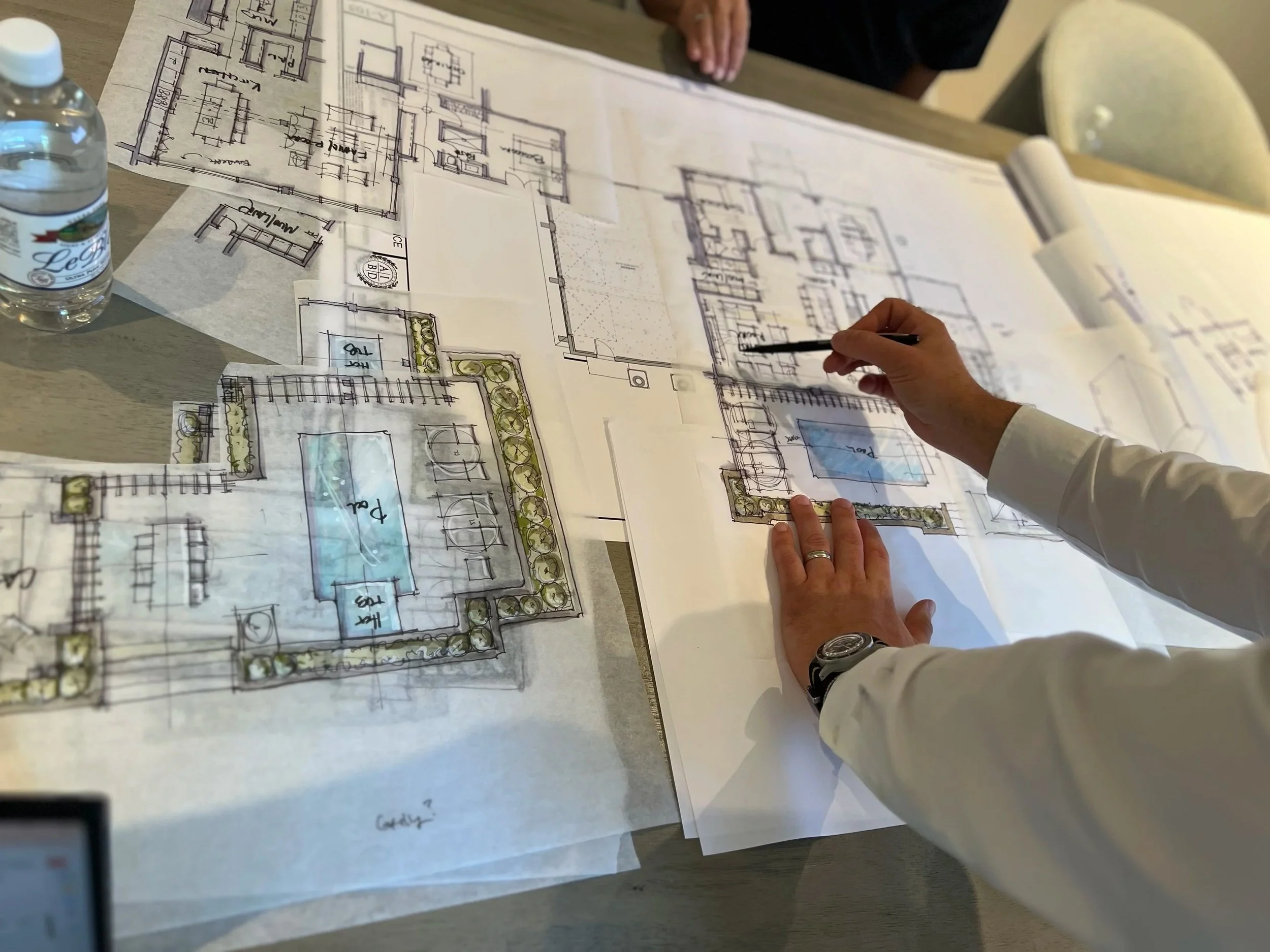
How Will Johnson Building Company Helps Homeowners Select the Right Luxury Home Style
Selecting a luxury home style is not a single decision. It is a process that connects land, lifestyle, budget, materials, construction knowledge, and long-term vision. Will Johnson Building Company helps homeowners move from inspiration into a buildable, carefully planned direction.
The process begins by understanding the property and the people who will live there. This includes evaluating the homesite, studying light, reviewing privacy needs, discussing daily routines, identifying entertaining priorities, and considering how the home should support future stages of life.
From there, planning becomes more specific. The team can help evaluate style direction, exterior materials, interior finish expectations, construction feasibility, site conditions, outdoor living opportunities, and the relationship between design intent and budget.
Homeowners beginning this journey can review the custom home process, learn more about services, or start with custom home builders for a broader overview of the company’s approach.
Final Perspective on Luxury Home Styles in the Triangle
The most successful luxury homes in the Triangle are not defined by style alone. They are defined by how well the style fits the land, how carefully the home is planned, how naturally it supports daily life, and how well it is built.
Modern transitional, Southern Colonial Revival, European Manor, refined farmhouse, and contemporary minimalist homes can all be exceptional when executed with discipline and care. The right choice depends on the property, the homeowner’s lifestyle, the surrounding community, and the long-term goals for the residence.
Whether you are planning a new custom home, evaluating a homesite, or considering a major renovation, early guidance can help turn inspiration into a clear path forward. To begin a conversation with Will Johnson Building Company, visit the contact page or learn more about the team through About Will Johnson Building Company.
```html
Luxury Home Styles and Estate-Level Living Features
While the homes design often receives the most attention, many of the features that define luxury living exist beyond the exterior design. The most successful custom homes combine beautiful design with highly functional spaces that improve daily life, support entertaining, simplify routines, and create long-term comfort. Whether the home is a Southern Colonial Revival estate, a modern transitional residence, a refined farmhouse, or a contemporary custom build, these features help transform a house into a truly personalized home.
As homeowners move through custom home design planning, many discover that lifestyle-focused decisions ultimately have a greater impact than style alone. Spaces designed around wellness, entertaining, family gatherings, work, recreation, and outdoor living often become the most frequently used and most appreciated parts of the home.
Make it stand out
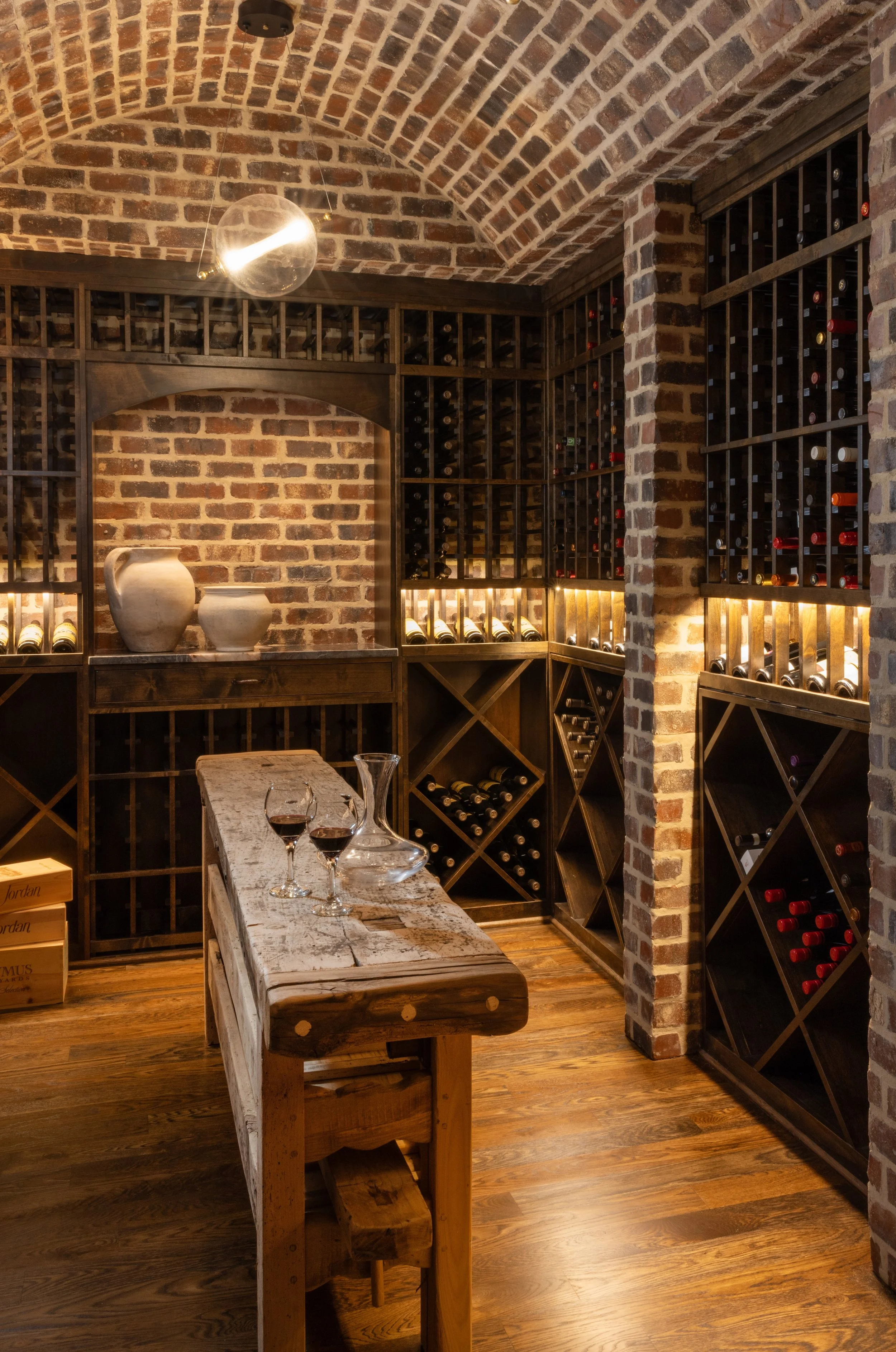
Wine Vaults and Sophisticated Entertainment Spaces
Luxury entertaining has evolved significantly over the last decade. Formal living rooms are often replaced or complemented by highly functional gathering spaces that encourage connection, comfort, and flexibility. Modern entertainment areas can support intimate family evenings, large celebrations, charitable events, business gatherings, and multi-generational entertaining throughout the year.
Glass-Enclosed Wine Rooms
Wine storage has become both a functional feature and a design statement within many Triangle luxury homes. Temperature-controlled wine rooms allow collections to be stored properly while creating a visual focal point that adds character and sophistication.
Glass-enclosed wine displays often work particularly well within transitional, European-inspired, and contemporary homes where they can become elements integrated into circulation spaces, dining rooms, lower levels, or entertaining zones. Lighting, climate control, bottle organization, and accessibility should all be considered during early planning stages.
Private Home Theaters and Media Rooms
Dedicated media spaces remain highly desirable for homeowners who enjoy immersive entertainment experiences. Unlike a simple television room, a purpose-built media environment considers acoustics, sight lines, seating arrangements, lighting control, sound isolation, and equipment integration.
Whether incorporated into a lower level, a dedicated entertainment wing, or a secondary gathering area, these rooms provide year-round enjoyment while supporting family gatherings and social events.
Custom Wet Bars and Social Lounges
Many luxury homes include dedicated beverage and entertaining areas that allow guests to gather naturally away from the kitchen. Wet bars, bourbon rooms, tasting lounges, and flexible entertaining spaces can be designed around the homeowner's interests while creating a more complete entertaining environment.
These areas often include custom cabinetry, refrigeration, wine storage, display shelving, specialty lighting, and seating arrangements that encourage conversation and relaxation.

Designing Around Indoor-Outdoor Living
The Triangle's climate allows outdoor living spaces to become meaningful extensions of the home for much of the year. Rather than viewing outdoor areas as separate amenities, many luxury homeowners now plan them as interconnected parts of the overall living experience.
This approach allows entertaining, dining, recreation, and relaxation to move naturally between interior and exterior environments. It also creates stronger connections between home design and landscape while maximizing the enjoyment of the property itself.
Covered Outdoor Living Rooms
Covered outdoor rooms provide protection from sun and weather while maintaining a strong connection to the surrounding landscape. These spaces often include fireplaces, televisions, integrated audio systems, retractable screens, ceiling heaters, and comfortable seating arrangements that encourage year-round use.
For many homeowners, these covered gathering spaces become some of the most frequently used areas of the home because they offer flexibility that interior rooms cannot always provide.
Outdoor Kitchens and Dining Areas
Luxury outdoor kitchens continue to evolve beyond basic grills and countertops. Today's outdoor entertaining spaces often include refrigeration, pizza ovens, beverage stations, sinks, storage, smokers, and dedicated dining environments capable of supporting large gatherings.
Thoughtful placement is critical. Outdoor kitchens should relate naturally to indoor cooking areas, serving spaces, and traffic patterns while taking advantage of views and prevailing breezes.
Homeowners interested in outdoor-focused design may find valuable ideas in outdoor living design planning.
Pools, Gardens, and Recreational Features
Estate homes often incorporate pools, gardens, sport courts, walking paths, water features, and recreation areas that reflect the homeowner's interests. The most successful properties plan these elements as part of the overall site strategy rather than adding them later.
This coordinated approach helps preserve views, improve circulation, strengthen outdoor experiences, and create a more cohesive relationship between the home and the land.
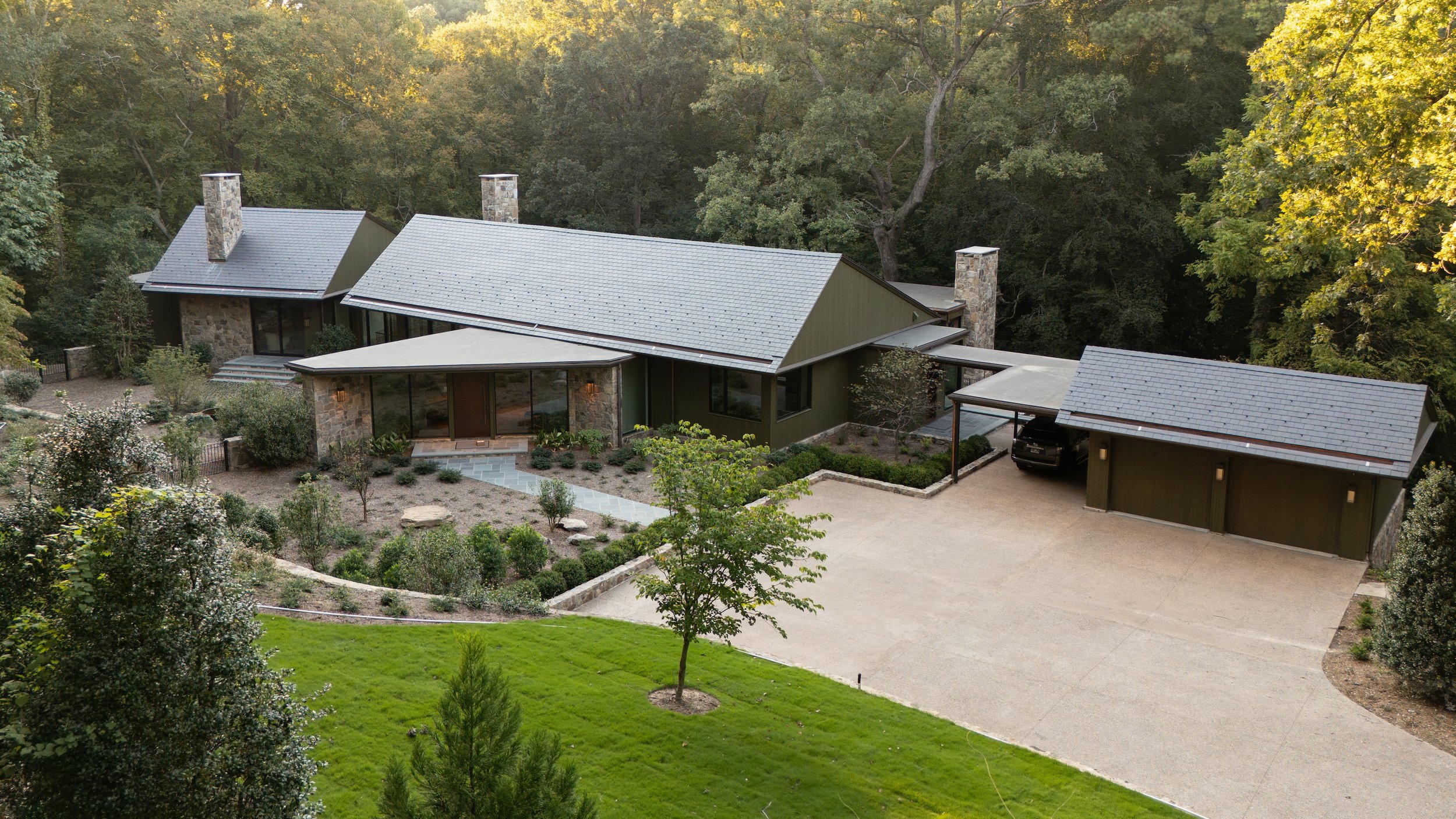
An estate-level custom home in the Triangle thoughtfully positioned within a mature wooded setting to maximize privacy, natural views, and long-term functionality. Multiple connected structures, natural stone elements, carefully planned landscaping, and generous outdoor spaces demonstrate how successful luxury homes are designed around the land rather than imposed upon it. The home's placement, circulation patterns, and relationship to the surrounding tree canopy reflect a planning approach that prioritizes natural light, outdoor living, and lifestyle goals from the earliest stages of development. This image represents how homeowners throughout Chapel Hill, Durham, Raleigh, Cary, Pittsboro, and Chatham County can create residences that feel integrated with their environment while supporting entertaining, everyday comfort, and lasting value.
Family Compounds and Multi-Structure Living
As more homeowners prioritize flexibility and long-term planning, family compounds and multi-structure properties have become increasingly common throughout the Triangle. These properties support multiple generations, frequent guests, remote work, hobbies, recreation, and evolving family needs while preserving privacy and independence.
Large properties in Pittsboro, Chatham County, Orange County, and select Chapel Hill and Durham locations are particularly well suited for this type of planning.
Guest Houses and Private Retreats
Guest accommodations can provide privacy for visiting family members, long-term guests, caregivers, or adult children returning home. Detached guest structures often allow visitors to enjoy independence while remaining connected to the primary residence.
These spaces may include full kitchens, living rooms, laundry areas, private outdoor spaces, and dedicated parking depending on the intended use.
Pool Houses and Recreational Buildings
Pool houses serve a variety of functions beyond changing rooms. Many include entertaining areas, kitchenettes, exercise facilities, game rooms, bathrooms, storage, and flexible gathering spaces that support outdoor activities throughout the year.
When designed correctly, these structures become meaningful destinations within the property rather than simple accessory buildings.
Future-Proofing Family Properties
Family compounds are often designed with long-term adaptability in mind. What begins as a guest house may eventually serve as housing for aging parents, adult children, caregivers, or extended family members. Flexibility allows the property to evolve alongside changing family needs.
Additional insight can be found in family compound planning and multi-generational home design.
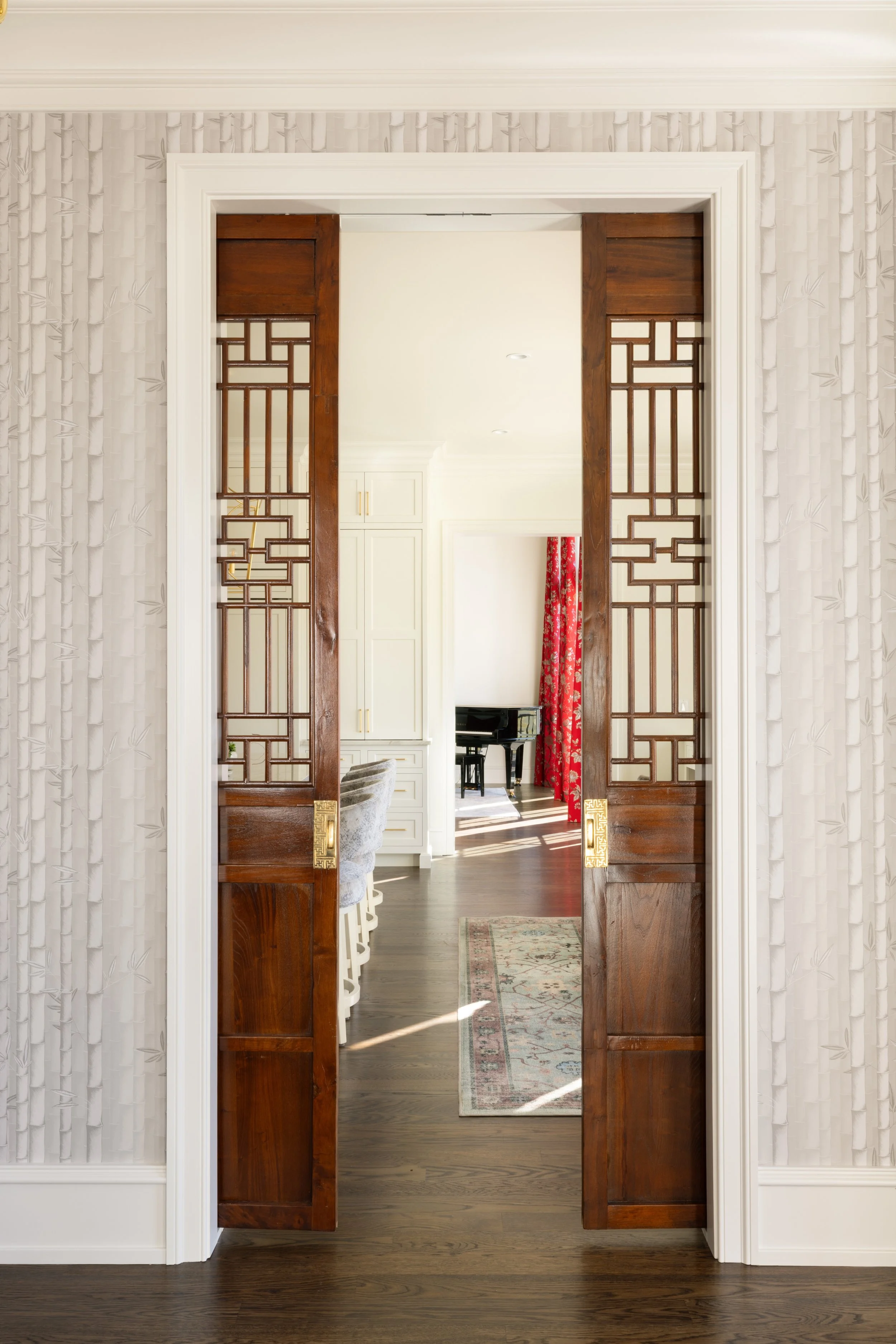
How Luxury Home Styles Influence Construction Complexity
Not all luxury home styles require the same level of construction effort, detailing, or coordination. While every custom home demands careful planning and execution, certain home design approaches introduce additional complexity that homeowners should understand early in the process.
Traditional Homes and Detailed Craftsmanship
Southern Colonial Revival and European-inspired homes often require extensive millwork, masonry, custom trim packages, decorative ceiling treatments, intricate roof structures, and highly detailed finish work. These features demand skilled trades and significant coordination throughout construction.
The value of these details is that they contribute directly to timeless character, permanence, and design authenticity.
Contemporary Homes and Precision Execution
Many homeowners assume contemporary homes are simpler because they appear visually clean. In reality, contemporary design often requires extraordinary precision because there are fewer decorative elements available to conceal imperfections.
Flush transitions, large-format materials, concealed systems, expansive glass, and simplified detailing require careful planning and exceptional execution throughout the construction process.
Balancing Vision and Practicality
One of the most important aspects of luxury home planning involves aligning design aspirations with construction realities. Early collaboration between homeowners, designers, and builders allows creative goals to remain achievable while protecting quality and project efficiency.
Resources such as the design-build approach and the design-build difference provide additional insight into this collaborative process.

A thoughtfully designed gathering space inside a luxury Triangle custom home featuring floor-to-ceiling built-in bookcases, custom cabinetry, and integrated storage solutions that combine functionality with timeless craftsmanship. The room demonstrates how personalized millwork can create highly usable spaces that support reading, hobbies, family activities, and everyday organization without sacrificing design quality. Layered lighting, refined finishes, and carefully proportioned built-ins reflect the level of detail commonly found in custom homes throughout Chapel Hill, Durham, Raleigh, Cary, and surrounding Triangle communities. This image illustrates how thoughtful interior planning can create spaces that remain useful and adaptable for decades while contributing to the home's overall character and long-term livability.
Home Style, Timelessness, and Long-Term Value
Luxury homes represent a significant long-term investment, which is why the most successful residences are designed to remain relevant and functional for decades rather than following short-lived trends. While design preferences naturally evolve over time, certain principles consistently contribute to enduring value.
Proportion, material quality, craftsmanship, site integration, natural light, and thoughtful layouts tend to age far more gracefully than trend-driven finishes or highly specific stylistic choices. Homeowners who focus on these fundamentals often find that their homes maintain both visual appeal and market desirability long after construction is complete.
For those planning a custom residence intended to serve multiple generations, designing for timelessness offers additional insight into balancing current preferences with long-term value.
The Difference Between Timeless and Trend-Driven Design
Timeless homes tend to emphasize scale, proportion, natural materials, thoughtful detailing, and design consistency. These homes often feel relevant regardless of changing design trends because they are built around fundamental design principles rather than temporary aesthetic movements.
Trend-driven homes may rely heavily on finishes, colors, or design gestures that feel current today but may become dated more quickly. While incorporating modern elements is often appropriate, successful luxury homes balance current preferences with enduring foundations.
Material Selection and Lasting Performance
Material choices affect both appearance and long-term maintenance. Natural stone, quality masonry, durable roofing systems, hardwood flooring, custom millwork, and premium windows often provide lasting performance while contributing to the home's character.
Homeowners should evaluate materials not only for their appearance during construction but also for how they will weather, age, and perform over decades of ownership. Maintenance requirements, repairability, regional suitability, and durability should all be considered.
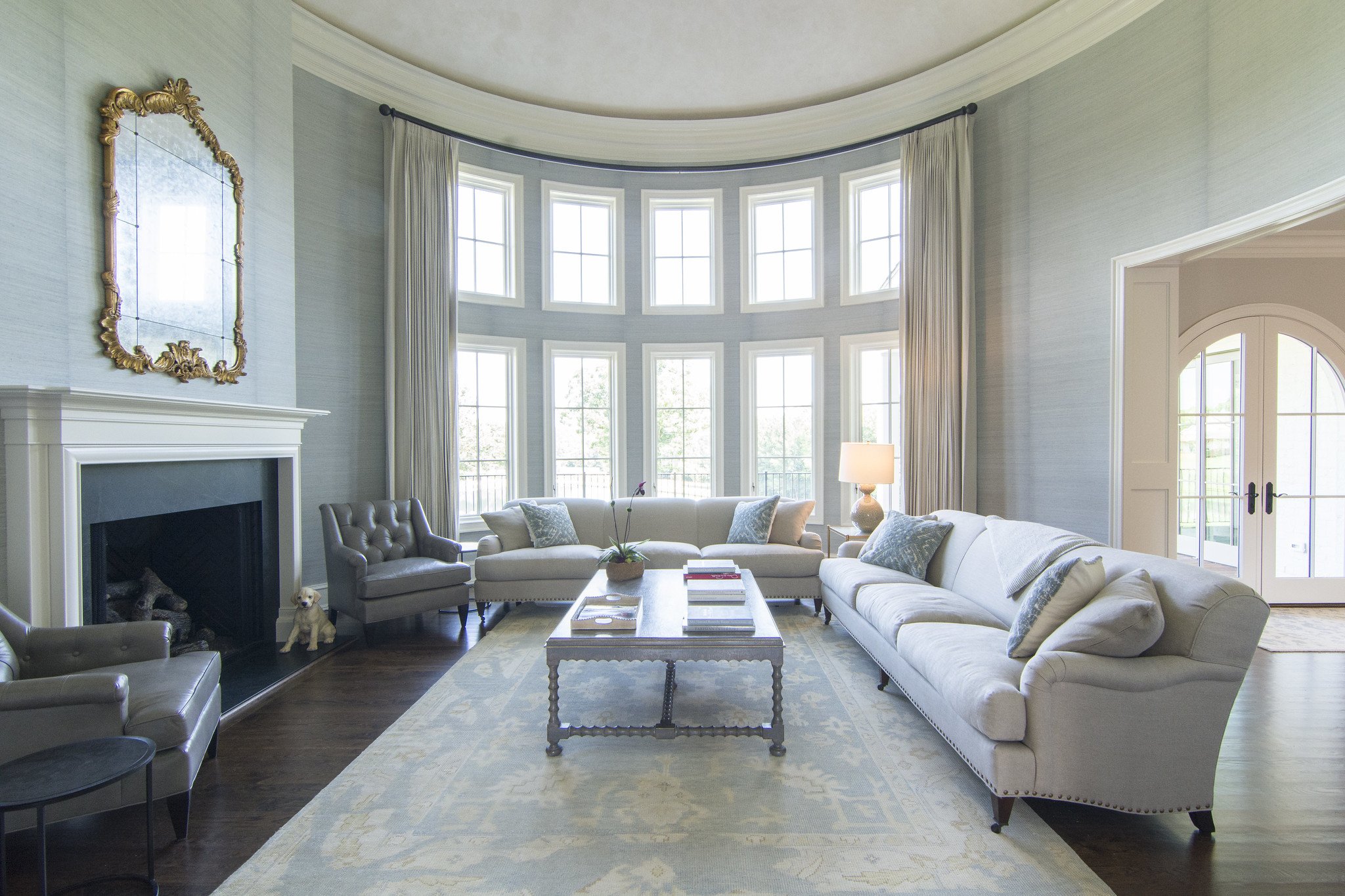
A light-filled living room inside a luxury Triangle custom home showcasing expansive curved windows, tall ceilings, and intentional room orientation designed to maximize natural light throughout the day. The arrangement of windows, seating areas, and interior finishes demonstrates how early light studies can influence comfort, privacy, furniture placement, and the overall experience of a home. This image reflects how custom homes in Chapel Hill, Durham, Raleigh, Cary, and surrounding Triangle communities are increasingly planned around sunlight patterns, helping homeowners determine the best locations for gathering spaces, outdoor connections, and daily living areas. Thoughtful natural light planning creates brighter interiors, stronger relationships to the landscape, and living environments that remain comfortable and functional for years to come.
Luxury Home Styles and Natural Light Planning
Natural light influences nearly every aspect of the homeowner experience. It affects comfort, mood, energy efficiency, furniture placement, views, privacy, and the overall atmosphere of interior spaces. Despite its importance, light planning is often overlooked during the early stages of custom home design.
At Will Johnson Building Company, light studies help homeowners better understand how sunlight moves across a property throughout the day and throughout the year. These evaluations can significantly influence layout decisions before plans become finalized.
Morning Light Versus Afternoon Light
Different areas of the home benefit from different types of natural light. Kitchens and breakfast spaces often benefit from morning sun, while outdoor living areas may require afternoon shade for comfort during warmer months.
Primary suites, home offices, wellness spaces, and gathering areas may each have unique lighting priorities depending on how the homeowner intends to use them. Understanding these relationships early helps create more comfortable living environments.
Managing Solar Exposure
Large windows provide beautiful views and abundant natural light, but they also affect heat gain, glare, energy performance, and privacy. Strategic overhangs, covered porches, window placement, landscaping, and building orientation help balance these competing priorities.
Particularly on estate properties, light studies often reveal opportunities that would otherwise be missed. A small shift in building orientation can dramatically improve views, reduce unwanted heat gain, and create more enjoyable outdoor spaces.
The Relationship Between Home Style and Interior Design
Luxury homes feel most successful when the home design and interior design are developed together rather than separately. Exterior style establishes expectations that should continue naturally throughout the interior experience.
A European Manor residence should feel cohesive from exterior arrival through interior detailing. Likewise, a contemporary minimalist home should maintain consistency in materials, lighting, cabinetry, and spatial organization throughout the entire residence.
This level of cohesion often requires collaboration among builders, interior designers, cabinetmakers, lighting specialists, and homeowners throughout the planning process.
Interior Design Supporting Home Design Intent
In traditional homes, interiors may emphasize custom millwork, layered materials, decorative lighting, and carefully detailed trim packages. Contemporary homes often rely on cleaner material transitions, simplified detailing, integrated lighting, and restraint.
The most successful interiors support the home style rather than competing with it. Consistency creates a more refined and memorable experience throughout the home.
Custom Cabinetry and Built-In Solutions
Cabinetry often represents one of the largest opportunities to personalize a luxury home. Kitchens, baths, libraries, mudrooms, sculleries, wine rooms, dressing rooms, and entertainment spaces can all benefit from highly customized storage and organizational systems.
These built-in solutions improve functionality while contributing to the home's overall character and craftsmanship.
Homeowners interested in highly personalized interiors may find additional inspiration within the interiors portfolio, custom kitchens, and luxury bath spaces.

A historic-inspired luxury estate home in the Triangle positioned within a mature tree canopy and approached by a long, curved driveway that creates a strong sense of arrival. The home reflects how thoughtful renovations and historically influenced designs can preserve timeless character while improving functionality, comfort, and long-term livability. The relationship between the residence, the surrounding landscape, and the generous setbacks demonstrates the importance of respecting a property's natural features during planning. This image represents the approach many homeowners in Chapel Hill, Durham, Raleigh, and established Triangle communities take when updating historic properties or creating homes inspired by traditional estate design, where preserving scale, craftsmanship, and a connection to the land remains a central priority.
Historic Homes and Luxury Renovation Opportunities
Not every luxury home begins as a new custom build. Throughout Chapel Hill, Durham, Raleigh, and surrounding communities, many homeowners choose to renovate exceptional existing homes while preserving their original character.
Historic homes often possess design details, mature landscapes, craftsmanship, and neighborhood settings that would be difficult to replicate today. Thoughtful renovations allow homeowners to preserve these qualities while improving functionality, comfort, efficiency, and livability.
Preserving Character While Improving Function
The most successful renovations identify the elements that should remain while carefully integrating modern improvements. Original millwork, masonry, flooring, windows, staircases, and details often contribute significantly to the home's identity.
At the same time, kitchens, baths, mechanical systems, storage, circulation patterns, and outdoor living areas may benefit from significant modernization.
Luxury Renovations Across the Triangle
Renovation opportunities exist throughout the region, including historic Chapel Hill neighborhoods, established Durham communities, Raleigh's Inside-the-Beltline districts, and older estate properties across Orange County and Wake County.
Homeowners considering major renovations may benefit from reviewing luxury renovations that respect history, historic Chapel Hill renovations, luxury renovation services, and location-specific renovation resources.
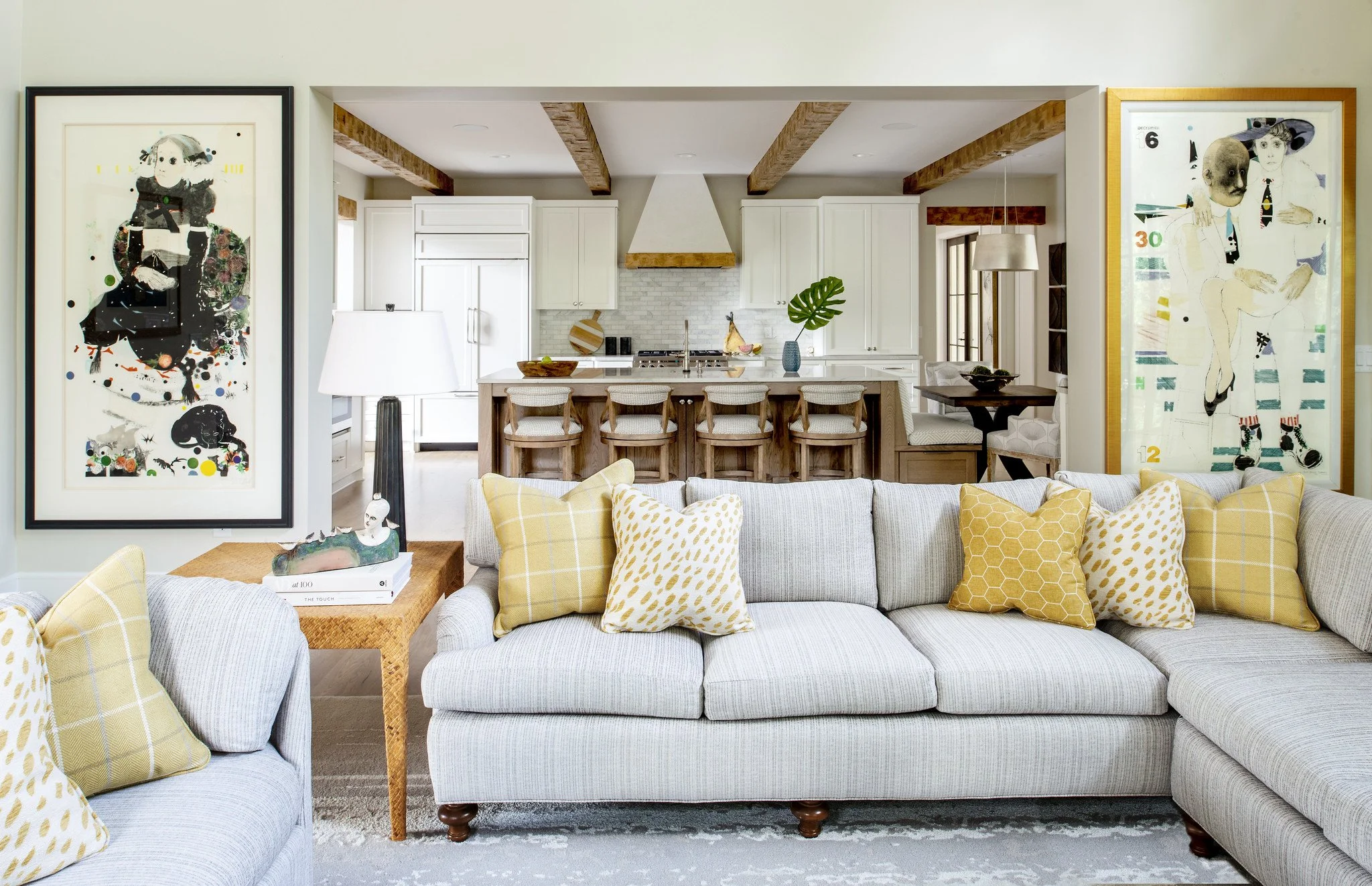
An open-concept living and kitchen space inside a Triangle custom home designed to support everyday routines, entertaining, and long-term comfort. Integrated gathering areas, layered textures, custom finishes, and personalized décor create a welcoming environment that balances functionality with timeless design. The seamless connection between the living room and kitchen illustrates how many homeowners relocating to Chapel Hill, Durham, Raleigh, Cary, and surrounding Triangle communities prioritize spaces that encourage interaction, flexibility, and ease of use. This image represents a lifestyle-focused approach to custom home planning, where room flow, gathering spaces, and personalized details are intentionally designed to support the way families live, work, and entertain for years to come.
Relocating to the Triangle and Selecting the Right Community
Many luxury home clients are relocating from other parts of North Carolina or from outside the state entirely. Choosing the right home design style is important, but selecting the right community can be equally influential in determining long-term satisfaction.
Each Triangle area offers unique advantages related to lifestyle, schools, commuting, lot availability, privacy, recreation, culture, and overall atmosphere.
Chapel Hill and Orange County
Chapel Hill appeals to homeowners seeking mature landscapes, academic influence, established neighborhoods, wooded homesites, and a strong sense of community. Luxury homes often emphasize privacy, natural surroundings, and timeless character.
Durham and Hope Valley
Durham offers a blend of historic neighborhoods, contemporary development, cultural amenities, and diverse design opportunities. Hope Valley remains one of the area's most recognizable luxury communities, known for mature landscapes and established residential character.
Raleigh and Cary
Raleigh and Cary provide access to business centers, cultural attractions, golf communities, established neighborhoods, and a wide variety of luxury home opportunities. Home styles range from traditional estate homes to highly contemporary custom residences.
For homeowners exploring relocation, planning a move to North Carolina offers additional guidance.

The Value of a Structured Custom Home Process
Luxury custom homes require thousands of decisions throughout planning and construction. Without a clear process, those decisions can quickly become overwhelming. A structured approach helps homeowners move confidently through each phase while maintaining alignment with project goals.
Effective planning reduces uncertainty, improves communication, protects budgets, supports scheduling, and helps ensure that the finished home reflects the original vision.
Discovery and Vision Development
The earliest planning conversations often focus on lifestyle, land, design preferences, long-term goals, family needs, and project priorities. These discussions establish the foundation for all future decisions.
Schematic Design and Early Planning
Schematic planning explores broad design concepts, room relationships, site integration, and overall project direction before detailed design begins. This phase helps identify opportunities and challenges while preserving flexibility.
Design Development and Documentation
As planning progresses, the project becomes increasingly refined. Materials, systems, finishes, dimensions, and construction details are developed to create greater clarity before building begins.
Homeowners interested in these phases may wish to review:

A timeless living space inside a Triangle custom home designed to prioritize comfort, natural light, and long-term livability. Expansive windows, indoor-outdoor connections, layered textures, and classic finishes create an environment that feels welcoming and enduring rather than trend-driven. The thoughtful proportions, warm materials, and inviting gathering areas demonstrate how homes built through the lens of legacy are designed to remain functional and beautiful for decades. Throughout Chapel Hill, Durham, Raleigh, Cary, and surrounding Triangle communities, homeowners increasingly prioritize spaces that can evolve alongside changing family needs while preserving quality, comfort, and timeless appeal. This image represents an approach to custom home building centered on creating a lasting legacy that supports everyday life, future generations, and long-term value.
Luxury Home Styles Through the Lens of Legacy
Beyond design trends, finishes, and amenities, luxury homes often represent something more significant. They become gathering places for holidays, milestones, celebrations, and daily family life. Many are intended to serve multiple generations while preserving memories, traditions, and shared experiences.
Whether a homeowner chooses a Southern Colonial estate, a European-inspired manor, a refined farmhouse, or a contemporary custom residence, the ultimate goal remains the same: creating a home that serves the people who live there exceptionally well.
The most successful luxury homes are not defined by a particular style. They are defined by thoughtful planning, exceptional craftsmanship, strong relationships to the land, and a clear understanding of how the home will support the people who call it home for years to come.
Additional perspective can be found in building a legacy through estate home design and planning your custom home.
```html
Luxury Home Styles by Lifestyle Priorities
While a home’s style creates a home's visual identity, lifestyle determines whether the home truly succeeds over time. Two homeowners may be drawn to the exterior style while needing completely different floor plans, room relationships, outdoor spaces, and specialty areas. Understanding how a family lives often reveals more about the ideal home than inspiration alone.
Throughout Chapel Hill, Durham, Raleigh, Cary, Pittsboro, Hope Valley, Orange County, and Chatham County, homeowners increasingly prioritize personalization over convention. Rather than selecting a style first and adapting their lives to fit it, they begin by evaluating how they want to live and then shape the home design around those goals.
This philosophy aligns closely with designing around lifestyle instead of square footage alone, where every planning decision supports long-term enjoyment and functionality.
Homes Built Around Entertaining
For some homeowners, entertaining serves as one of the primary drivers behind custom home planning. Large family gatherings, charitable events, holiday celebrations, business functions, and social occasions all require spaces capable of accommodating guests comfortably.
Luxury entertaining homes often include expansive kitchens, secondary prep areas, sculleries, wine rooms, formal dining spaces, covered outdoor living rooms, outdoor kitchens, pool terraces, media spaces, guest accommodations, and carefully designed circulation patterns.
Home styles such as Southern Colonial Revival, European Manor, and Modern Transitional frequently support entertaining exceptionally well because they can balance formal and informal spaces while maintaining a natural flow between rooms.
Homes Focused on Privacy and Retreat
Other homeowners place greater emphasis on privacy, wellness, and personal retreat. These residences may prioritize secluded primary suites, private courtyards, meditation rooms, home spas, libraries, exercise spaces, and strong connections to nature.
Contemporary homes, transitional designs, and thoughtfully planned estate residences often excel in creating private environments where homeowners can disconnect from daily demands while remaining connected to the beauty of their surroundings.
The article on private retreat-focused primary suites provides additional insight into this growing priority among luxury homeowners.
Homes Designed for Remote Work and Flexibility
The way homeowners use their homes has changed significantly. Dedicated offices, conference-capable workspaces, creative studios, wellness rooms, exercise spaces, and flexible multipurpose areas have become increasingly important components of luxury home planning.
Many homeowners now require multiple work environments throughout the residence. Formal offices, secondary workstations, library spaces, and outdoor work areas may all contribute to a more productive and enjoyable daily routine.
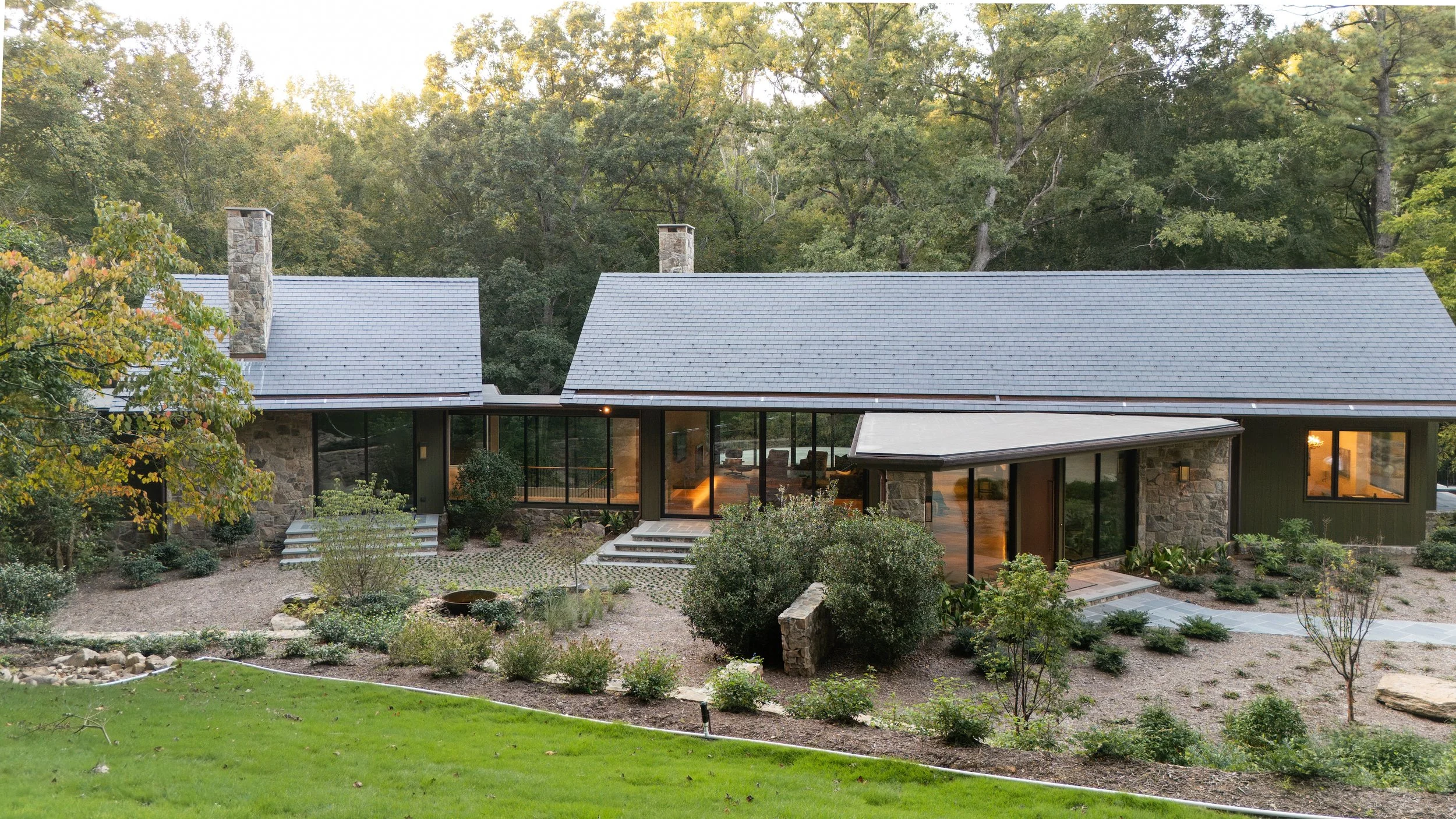
A site-responsive luxury custom home in the Triangle thoughtfully designed to complement the property's natural topography, mature tree canopy, and surrounding landscape. Expansive glass, natural stone accents, generous setbacks, and layered landscaping demonstrate how successful homes are planned around the land rather than forcing a predetermined layout onto the property. The home's low profile, connected living spaces, and strong indoor-outdoor relationships create a seamless transition between the residence and its environment. This image reflects a planning approach commonly used throughout Chapel Hill, Durham, Raleigh, Cary, Pittsboro, and Chatham County, where careful site evaluation helps determine the ideal placement, orientation, privacy strategies, and long-term functionality of a custom home.
Luxury Home Styles and Site-Specific Design
No two homesites are exactly alike. Even neighboring properties may have dramatically different opportunities related to sunlight, privacy, views, topography, drainage, tree coverage, and outdoor living potential. This is why the most successful luxury homes are designed specifically for their sites rather than adapted from generic plans.
Understanding the property often reveals opportunities that influence style, layout, window placement, outdoor living areas, garage location, driveway approach, and long-term enjoyment of the home.
Building Around Existing Trees and Natural Features
Mature trees represent one of the most valuable assets on many Triangle homesites. Preserving significant tree coverage can improve privacy, reduce heat gain, enhance views, and create a more established appearance immediately upon completion.
Rather than forcing a design onto the site, thoughtful planning often allows the home design to work alongside natural features. This creates a stronger connection between the home and the surrounding landscape.
Maximizing Views and Outdoor Connections
Views do not always require mountains or waterfront settings. Carefully framed views of gardens, woodlands, golf courses, courtyards, pools, and outdoor gathering spaces can become defining features within a luxury home.
Window placement, outdoor living design, room orientation, and landscape planning all contribute to how these views are experienced throughout the home.
Grading, Drainage, and Long-Term Performance
Many homeowners focus understandably on visible design elements while overlooking site engineering considerations. However, grading, drainage, stormwater management, and foundation planning play critical roles in the long-term performance of a luxury home.
Early site evaluation helps identify challenges before construction begins while uncovering opportunities that can strengthen the overall design.
Additional guidance can be found in feasibility and site study planning and site selection for luxury homes in the Triangle.
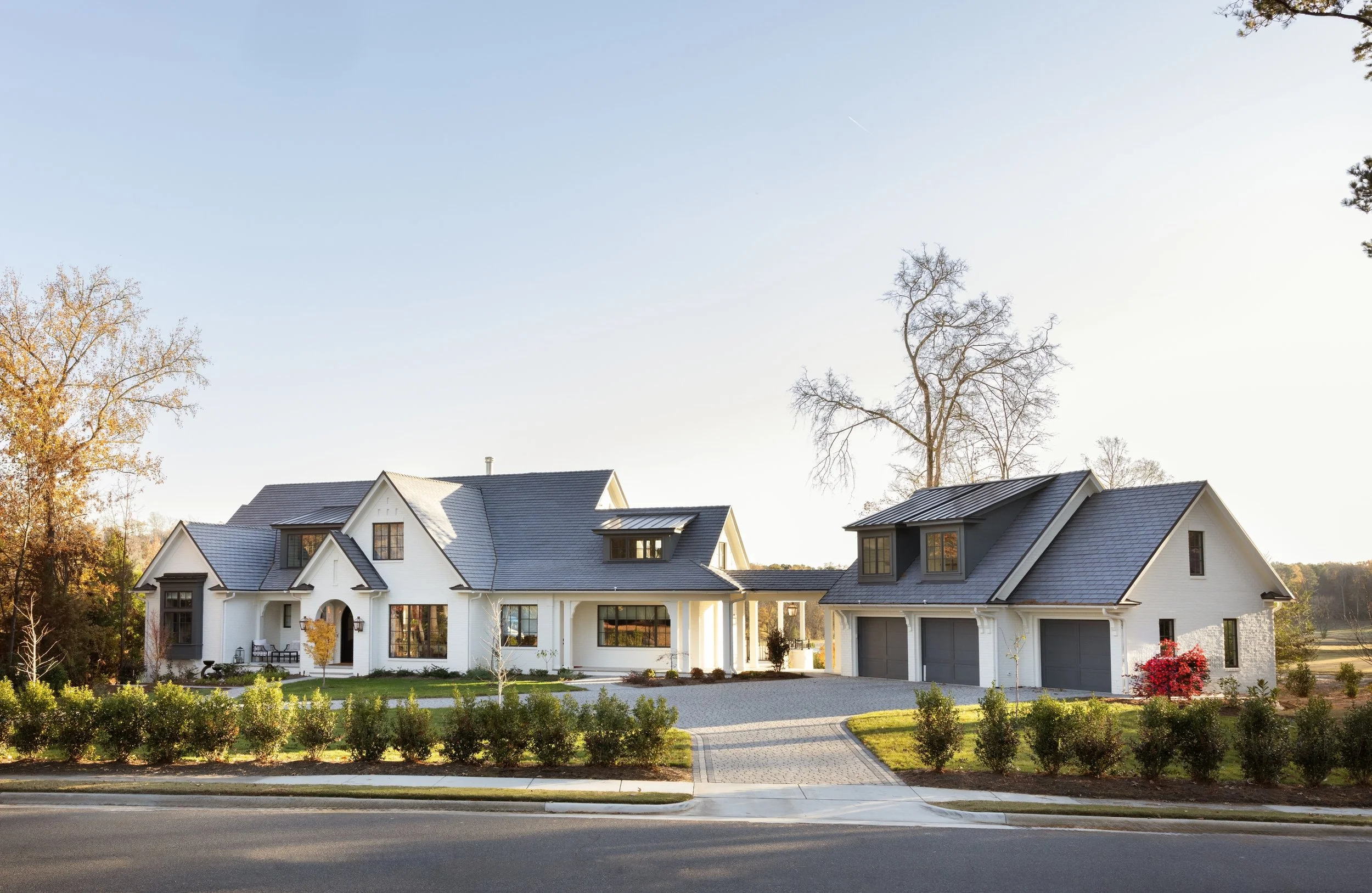
A luxury custom home in the Triangle showcasing white brick, black-framed windows, layered rooflines, a detached garage structure, and carefully planned landscaping. The home blends traditional and modern design elements, making it a strong visual transition into a comparison of luxury home styles across Chapel Hill, Durham, Raleigh, Cary, Pittsboro, and surrounding Triangle communities. Its balanced proportions, warm exterior details, strong curb appeal, and organized site layout reflect how different home styles can be adapted to the land, neighborhood setting, and long-term lifestyle goals of the homeowner.
Comparing Popular Luxury Home Styles Across the Triangle
Each luxury home style offers distinct advantages depending on the property, the homeowner's goals, and the desired living experience. While every custom home should be personalized, understanding the strengths of each style can help homeowners narrow their direction during the planning process.
Modern Transitional Homes
Balanced blend of traditional and contemporary design.
Highly adaptable across neighborhoods and lot types.
Strong resale appeal due to broad market acceptance.
Works well for entertaining and family living.
Supports a wide range of material palettes.
Southern Colonial Revival Homes
Strong design presence.
Timeless curb appeal.
Excellent fit for established neighborhoods.
Supports formal entertaining spaces.
Natural connection to North Carolina traditions.
European Manor Estates
Distinctive estate-level character.
Strong relationship with larger homesites.
Exceptional opportunity for custom detailing.
Works well with extensive landscaping and outdoor rooms.
Creates a sense of permanence and legacy.
Refined Modern Farmhouse Homes
Comfortable and approachable aesthetic.
Strong indoor-outdoor relationships.
Excellent fit for larger properties and acreage.
Supports family-focused layouts.
Flexible design language with broad appeal.
Contemporary Minimalist Homes
Emphasis on light, openness, and simplicity.
Strong indoor-outdoor integration.
Ideal for homeowners seeking modern living environments.
Highlights natural materials and craftsmanship.
Requires exceptional design and construction precision.

Working with a Design-Build Team During Style Selection
Many homeowners begin the planning process with hundreds of inspiration images but little clarity regarding which style truly fits their property and goals. This is completely normal. One of the advantages of a design-build approach is the ability to evaluate style decisions through the lens of construction knowledge, site conditions, budget alignment, and long-term performance.
Rather than separating design conversations from construction realities, homeowners can evaluate both simultaneously. This often leads to stronger decisions and a more efficient planning experience.
Evaluating Home Style Inspiration
Inspiration images can be extremely valuable, but they rarely tell the complete story. A home that appears perfect in a photograph may rely on unique site conditions, a significantly different climate, specialized materials, or a budget structure that differs substantially from the homeowner's project.
Experienced custom builders help translate inspiration into practical planning while preserving the qualities that originally attracted the homeowner to a particular design.
Understanding Budget Implications Early
Different home design styles can influence construction costs in meaningful ways. Roof complexity, window systems, masonry requirements, specialty finishes, structural spans, custom detailing, and site conditions all affect overall investment levels.
Discussing these considerations early allows homeowners to prioritize the features that matter most while protecting overall project goals.
Additional insight can be found in value engineering for luxury homes and understanding the cost-plus approach.

Building a Home That Will Continue to Work for You Years From Now
A timeless gathering space inside a luxury Triangle custom home showcasing natural stone walls, arched black-framed windows, expansive natural light, and thoughtfully layered finishes that support long-term living. The room demonstrates how future-focused home planning extends beyond aesthetics to create flexible spaces that can adapt alongside changing family needs and lifestyles. Large gathering areas, durable materials, and strong indoor-outdoor connections reflect the priorities many homeowners in Chapel Hill, Durham, Raleigh, Cary, Pittsboro, and surrounding Triangle communities consider when building a home designed to remain functional and beautiful for decades. This image illustrates a legacy-minded approach where craftsmanship, comfort, and adaptability work together to create a residence that will continue to support everyday life and future generations.
Building a Home That Reflects Your Family's Future
The most successful luxury homes are designed not only for the present but also for the future. Family needs evolve. Children grow older. Careers change. Retirement approaches. Parents age. New hobbies emerge. Homes that can adapt gracefully to these changes often provide the greatest long-term satisfaction.
Future-focused planning does not mean sacrificing beauty. It simply means making intentional decisions that support flexibility, accessibility, and evolving lifestyles without compromising design quality.
Homeowners planning long-term residences often benefit from reviewing universal design principles, forever home planning, and legacy-focused estate home design.
Moving from Inspiration to Action
Luxury home styles provide inspiration, but successful custom homes require thoughtful planning, careful site evaluation, strong collaboration, and exceptional execution. Whether your vision leans toward a timeless Southern Colonial Revival estate, a European-inspired manor, a refined farmhouse, a modern transitional residence, or a contemporary custom home, the path forward begins with understanding how residential home design, land, and lifestyle intersect.
For homeowners exploring custom homebuilding throughout Durham, Chapel Hill, Raleigh, Cary, Pittsboro, Orange County, Chatham County, Hope Valley, and the broader Triangle, the next step is often a conversation about goals, property conditions, and long-term vision.
To learn more about the planning process, explore custom home services, review completed projects, browse additional insights within the Will Johnson Building Company blog, or connect directly through the contact page.
```html
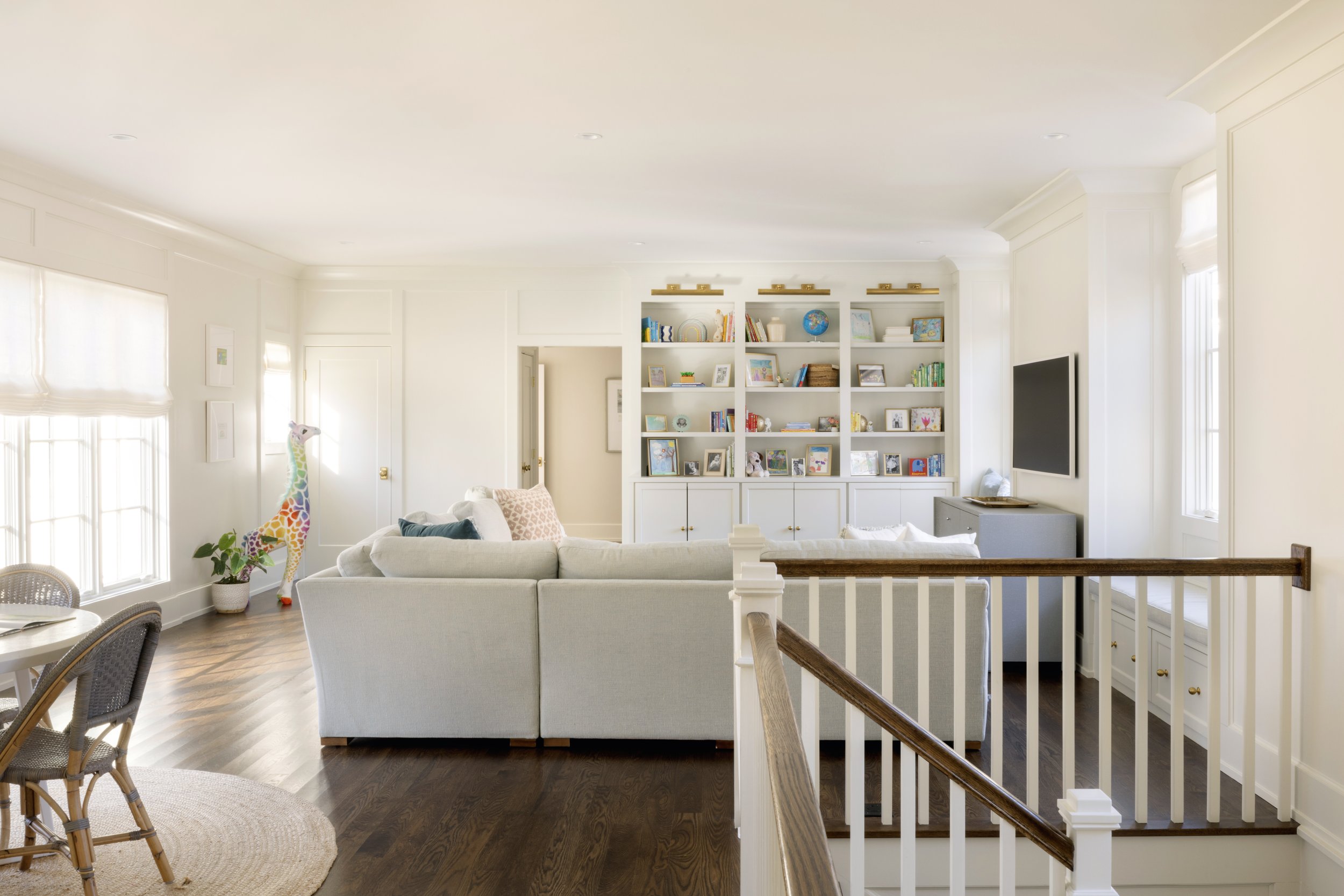
A thoughtfully designed family living area inside a Triangle custom home showcasing integrated built-in shelving, coordinated millwork, and a consistent material palette that creates visual continuity throughout the space. The room demonstrates how successful design cohesion extends beyond individual finishes to connect lighting, storage, furniture placement, and design details into a unified living environment. Carefully planned transitions, warm wood flooring, and custom built-ins contribute to a home that feels intentional, functional, and timeless. This image reflects how homeowners throughout Chapel Hill, Durham, Raleigh, Cary, Pittsboro, and surrounding Triangle communities prioritize cohesive design decisions that support everyday living while maintaining long-term flexibility, comfort, and lasting value.
Luxury Home Styles and the Importance of Design Cohesion
One of the defining characteristics of exceptional luxury homes is cohesion. The exterior style, interior finishes, site design, outdoor living spaces, and overall homeowner experience should feel connected rather than assembled from unrelated ideas. Cohesion is often what separates a truly custom home from one that simply contains expensive materials.
Regardless of style, every design decision should support the larger vision. Materials, rooflines, window proportions, millwork details, landscape elements, lighting, cabinetry, flooring, and outdoor spaces all contribute to the home's identity. When these elements work together, the result feels natural, timeless, and highly refined.
This level of consistency requires careful planning and collaboration throughout the design and construction process. Homeowners exploring custom homebuilding often discover that the most memorable residences are not necessarily the largest or most elaborate. They are the homes where every element feels intentional.
Consistency from Exterior to Interior
A luxury home should tell a consistent story from the moment guests arrive. The design language established by the exterior should continue throughout the interior spaces, creating a natural progression from room to room.
For example, a Southern Colonial Revival home may feature formal symmetry, classic detailing, custom millwork, and traditional materials throughout the property. A contemporary residence may rely on clean lines, expansive glass, minimalist detailing, and restrained material palettes that reinforce its identity.
When interior and exterior design support one another, the home feels more authentic and enduring.
Landscape Design as an Extension of Home Style
Landscape planning is often one of the most overlooked contributors to luxury home design. Driveways, arrival sequences, gardens, retaining walls, lighting, hardscape features, water elements, and outdoor gathering areas all influence how the home is experienced.
The most successful estate properties treat landscaping as an extension of the home itself. Rather than decorating the property after construction, the landscape becomes part of the original vision.
This is particularly important on larger properties throughout Pittsboro, Chatham County, Chapel Hill, Orange County, and estate communities where the relationship between the residence and the land plays a major role in the overall experience.
Luxury Home Styles and Resale Considerations
Most luxury homeowners are focused on creating a residence that supports their personal lifestyle rather than maximizing resale value. However, understanding how certain design decisions may affect future marketability can still be valuable.
Homes with timeless design foundations, thoughtful layouts, quality construction, and durable materials often maintain stronger long-term appeal than highly specialized or trend-focused designs.
Broad Appeal Versus Highly Personalized Design
Every custom home should reflect the homeowner's priorities, but some design choices have broader appeal than others. Home styles such as Modern Transitional, Southern Colonial Revival, and thoughtfully executed European-inspired homes often attract interest across multiple buyer groups because they balance personality with flexibility.
Highly personalized features can still be worthwhile when they significantly improve quality of life. The key is understanding where personalization enhances the home and where it may unnecessarily limit future adaptability.
Floor Plans That Age Well
Open gathering spaces, well-positioned primary suites, flexible rooms, strong indoor-outdoor connections, adequate storage, and thoughtful circulation patterns tend to remain desirable regardless of changing design trends.
These planning fundamentals often contribute more to long-term value than any single finish selection or stylistic detail.
The Role of Craftsmanship in Defining Luxury Homes
Luxury home styles may vary dramatically, but craftsmanship remains a common denominator across all exceptional residences. The materials used in a home matter, but the quality of execution often matters even more.
Custom millwork, cabinetry, masonry, trim details, flooring installation, tile work, lighting integration, stone fabrication, and finish carpentry all influence how a home feels once construction is complete.
Details That Are Felt More Than Seen
Some of the most important aspects of craftsmanship are not immediately visible. Tight material transitions, properly aligned finishes, consistent reveals, smooth operation of doors and cabinetry, durable installations, and thoughtful detailing contribute to the homeowner experience every day.
These elements may not attract attention individually, but together they create a sense of quality that distinguishes exceptional homes from average construction.
Craftsmanship and Home Design Authenticity
Different luxury home styles require different types of craftsmanship. Traditional homes often rely on extensive trim packages, custom moldings, detailed masonry, and decorative woodwork. Contemporary homes may demand exceptional precision in areas where visual simplicity leaves little room for error.
In either case, craftsmanship helps preserve the design integrity of the home while reinforcing its intended character.

A thoughtfully planned luxury kitchen inside a Triangle custom home showcasing how decisions made before construction influence everyday living for years to come. Cabinet placement, appliance integration, natural light positioning, circulation paths, and material selections are all coordinated early in the process to create a cohesive environment that feels intentional rather than assembled later. Large windows connect the interior to the surrounding landscape while functional work zones support both daily routines and entertaining. This image reflects the importance of thorough pre-construction planning throughout Chapel Hill, Durham, Raleigh, and the broader Triangle, where successful custom homes begin with careful coordination between site conditions, homeowner priorities, and long-term lifestyle goals.
Understanding Luxury Home Planning Before Construction Begins
Many of the most important decisions in custom homebuilding occur long before construction starts. Early planning establishes the framework that guides every subsequent phase of the project.
Site evaluation, lifestyle discussions, exploration, budget alignment, material studies, light analysis, and feasibility reviews all contribute to stronger outcomes. The more thoroughly these areas are addressed during planning, the more efficiently construction can proceed.
Why Early Decisions Matter
Changes become increasingly expensive as projects progress. Decisions made during early planning often have the greatest influence on schedule, cost, functionality, and overall satisfaction.
This is why homeowners frequently benefit from investing significant effort into the planning process before final construction documents are completed.
Helpful resources include:
Frequently Overlooked Luxury Home Features
While kitchens, primary suites, and outdoor living spaces often receive significant attention, some of the most appreciated features in luxury homes are the ones homeowners initially overlook. These spaces may not appear prominently in inspiration galleries, yet they can have a tremendous impact on everyday convenience.
Sculleries and Secondary Prep Areas
Secondary kitchen spaces help support entertaining while keeping preparation, cleanup, and storage organized. These rooms are particularly valuable for homeowners who host frequently or enjoy cooking at a high level.
Well-Planned Mudrooms
Luxury homes often include highly organized transition spaces that help manage daily routines. Custom storage, charging stations, equipment storage, pet accommodations, and dedicated family organization areas contribute significantly to functionality.
Laundry and Household Management Spaces
Well-designed laundry rooms can simplify household operations while reducing clutter elsewhere in the home. Secondary laundry locations, folding areas, storage systems, and integrated household management features often improve day-to-day living.
Dedicated Storage Planning
Storage is frequently underestimated during the design process. Seasonal items, sports equipment, holiday decorations, luggage, collections, outdoor gear, and household supplies all require thoughtful accommodations.
Integrating storage into the design helps maintain a cleaner, more organized environment without sacrificing design quality.
Luxury Home Styles Across Multiple Generations
Many homeowners approach custom homebuilding with a multi-generational perspective. They want a residence capable of serving their family for decades while adapting to changing needs over time.
Home style certainly contributes to this goal, but flexibility, accessibility, durability, and thoughtful planning often prove equally important.
Designing for Changing Family Needs
Guest suites, flexible bonus rooms, adaptable office spaces, future elevator locations, wider circulation paths, and aging-in-place considerations can help homes remain functional through multiple stages of life.
These decisions often have minimal visual impact while significantly improving long-term livability.
Creating a Legacy Property
For some families, a luxury home becomes more than a residence. It becomes a gathering place for future generations. Holiday traditions, family milestones, celebrations, and shared experiences gradually become part of the property's story.
This perspective often influences decisions related to site selection, layout, materials, craftsmanship, durability, and overall scale.
Additional insight can be found in family compound planning, legacy home design, and universal design principles.
Beginning the Custom Home Journey
Luxury home styles provide inspiration, but successful projects ultimately depend on thoughtful planning, strong communication, careful site evaluation, quality craftsmanship, and a clear understanding of how the home will support everyday life.
Whether you are considering a custom home in Durham, Chapel Hill, Raleigh, Cary, Hope Valley, Pittsboro, Orange County, or Chatham County, the planning process presents an opportunity to align home design, lifestyle, and long-term goals into a cohesive vision.
To explore additional resources, homeowners can review custom home services, browse the project portfolio, learn more about Will Johnson Building Company, explore the blog resource library, or start a conversation through the contact page.
Turning Inspiration Into a Custom Home Plan
Luxury home inspiration is only the beginning. Translating design ideas into a buildable, functional, and enduring residence requires careful planning, site evaluation, budgeting, and collaboration. Every homesite, family, and vision is different, which is why the earliest stages of planning often have the greatest influence on the success of the finished home.
Whether you are evaluating land in Chapel Hill, planning a custom estate in Durham, exploring a renovation in Raleigh, or considering a future build in Pittsboro or Cary, the goal is to align home design, lifestyle, and long-term objectives before construction begins.
Will Johnson Building Company works closely with homeowners throughout the Triangle to evaluate properties, guide planning decisions, refine project goals, and create homes that reflect the way each family lives. Through a collaborative design-build process, every decision is approached with a focus on craftsmanship, transparency, and lasting value.
Learn more about our process, explore completed projects, or schedule a conversation to begin discussing your custom home or luxury renovation goals.
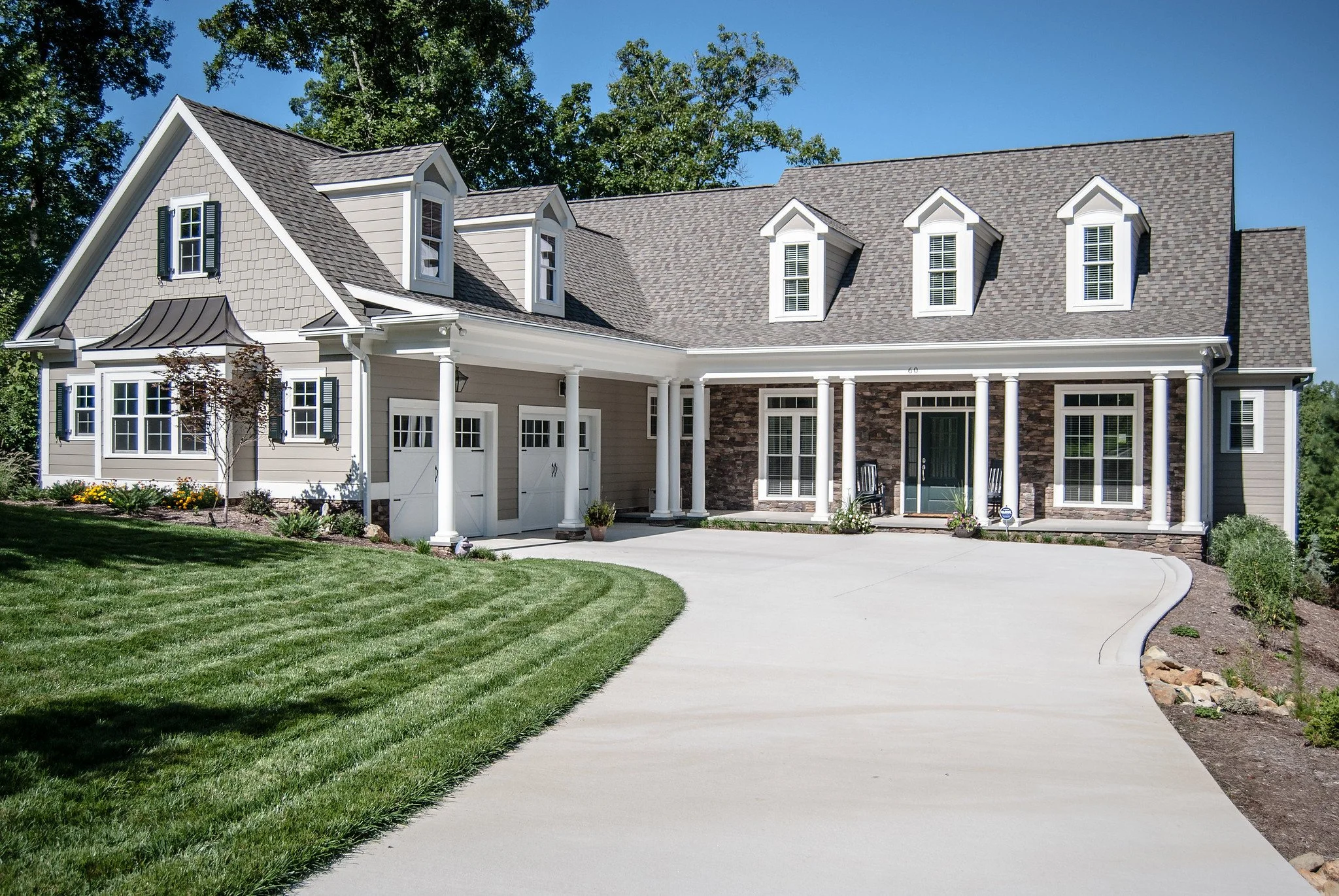
A timeless luxury custom home in the Triangle showcasing covered front porches, dormer windows, stone accents, and balanced design proportions that support long-term livability and enduring curb appeal. The home blends traditional design elements with practical functionality, creating a residence that feels welcoming, adaptable, and built to age gracefully over time. Thoughtful landscaping, integrated garage placement, and versatile exterior materials reflect the priorities many homeowners throughout Chapel Hill, Durham, Raleigh, Cary, Pittsboro, and surrounding Triangle communities consider when building a custom home. This image serves as a strong representation of the article's core themes, demonstrating how land, light, lifestyle, and craftsmanship work together to create homes designed to remain functional and beautiful for decades.
Frequently Asked Questions About Luxury Home Styles, Custom Home Design, and Estate Living in the Triangle
Selecting a luxury home style is about far more than choosing an exterior appearance. Design character, homesite conditions, natural light, lifestyle priorities, entertaining needs, long-term family goals, and construction considerations all influence the final design. Homeowners planning custom homes throughout Chapel Hill, Durham, Raleigh, Cary, Pittsboro, Hope Valley, Orange County, and Chatham County often have questions about how different styles perform, how properties shape design decisions, and what creates lasting value. The following questions address many of the topics homeowners explore while planning a custom home or luxury renovation in the Triangle.
Which luxury home style is most popular in the Triangle?
Modern Transitional homes remain among the most popular luxury home styles throughout the Triangle because they combine timeless design elements with modern functionality. These homes appeal to a wide range of homeowners by balancing warmth, elegance, and contemporary living. Southern Colonial Revival, refined Modern Farmhouse, European Manor, and Contemporary designs also remain highly desirable depending on the property location, neighborhood character, and homeowner preferences.
How do I determine which luxury home style is right for my property?
The property itself often provides many of the answers. Topography, tree coverage, views, privacy, natural light, neighborhood context, and outdoor living opportunities all influence which home design styles may work best. A wooded Chapel Hill homesite may support a different design approach than a golf-course property in Cary or an estate lot in Pittsboro. Evaluating the land before committing to a style typically leads to stronger design outcomes.
How much should the homesite influence the home's design?
The homesite should play a major role in shaping the design. The most successful luxury homes respond to their surroundings rather than forcing a predetermined concept onto the property. Orientation, drainage, sunlight, privacy, driveway access, outdoor living opportunities, and existing natural features all contribute to decisions involving layout, design, window placement, and overall site planning.
What home styles work best on large acreage properties?
Larger estate properties often provide flexibility for a variety of home design styles, but refined Modern Farmhouse, European Manor, Transitional Estate, and traditional Southern-inspired homes frequently perform especially well. These styles can take advantage of longer approach drives, expansive outdoor living areas, detached structures, gardens, guest accommodations, and multi-generational planning opportunities while maintaining a strong connection to the surrounding landscape.
What home styles work best on wooded lots?
Wooded homesites often benefit from designs that maximize natural light while preserving privacy and views. Transitional homes, Contemporary residences, refined Farmhouse designs, and European-inspired homes can all work beautifully when window placement, outdoor living spaces, and building orientation are carefully considered. Light studies are often particularly valuable on heavily wooded properties to better understand how sunlight moves throughout the day.
Are contemporary homes more difficult to build than traditional homes?
Both traditional and contemporary homes require a high level of expertise, but the complexity often differs. Traditional homes frequently involve extensive millwork, masonry, custom trim, and detailed features. Contemporary homes may appear simpler visually, but they often demand exceptional precision because clean lines, large-format materials, expansive glass, and minimal detailing leave very little room for construction inconsistencies.
How do light studies improve custom home design?
Light studies help homeowners understand how sunlight interacts with a property throughout the day and across different seasons. This information can influence room placement, outdoor living design, window sizing, covered porch depth, privacy planning, and overall comfort. Understanding natural light early in the design process often results in more enjoyable living spaces and stronger connections between the home and its surroundings.
Can a luxury home be designed to support aging in place?
Yes. Many luxury homeowners incorporate universal design principles that allow the home to remain comfortable and functional through different stages of life. Features such as wider hallways, accessible showers, main-level primary suites, minimal thresholds, future elevator planning, and flexible room arrangements can improve long-term livability without affecting the home's style and character.
What is the difference between a custom home and a production luxury home?
A custom home is designed specifically around the homeowner, the property, and the project's unique goals. Layouts, materials, details, site relationships, and features are tailored to the individual project. Production luxury homes often offer upgraded finishes and larger floor plans but typically follow predetermined designs with fewer opportunities for full personalization.
Can historic homes be renovated while maintaining their original character?
In many cases, yes. Thoughtful luxury renovations can preserve significant design features while updating kitchens, baths, mechanical systems, layouts, and overall functionality. The key is identifying which original elements contribute to the home's character and carefully integrating improvements that complement rather than compete with the existing home style.
What features add the most long-term value to a luxury home?
High-quality construction, durable materials, thoughtful floor plans, strong site integration, natural light, outdoor living spaces, custom millwork, timeless character, and functional layouts often contribute more long-term value than trend-driven finishes. Homes that balance beauty, functionality, and craftsmanship tend to perform well both as personal residences and long-term investments.
What should homeowners do before purchasing land for a custom home?
Before purchasing land, homeowners should evaluate access, topography, utilities, drainage, tree coverage, buildable area, zoning requirements, sunlight exposure, and potential construction challenges. A feasibility and site study can provide valuable insight into opportunities and limitations before significant commitments are made. Understanding the property's characteristics early often prevents costly surprises and supports more informed planning decisions.
