
Quiet Luxury at Home: Designing Primary Suites as Private Retreats

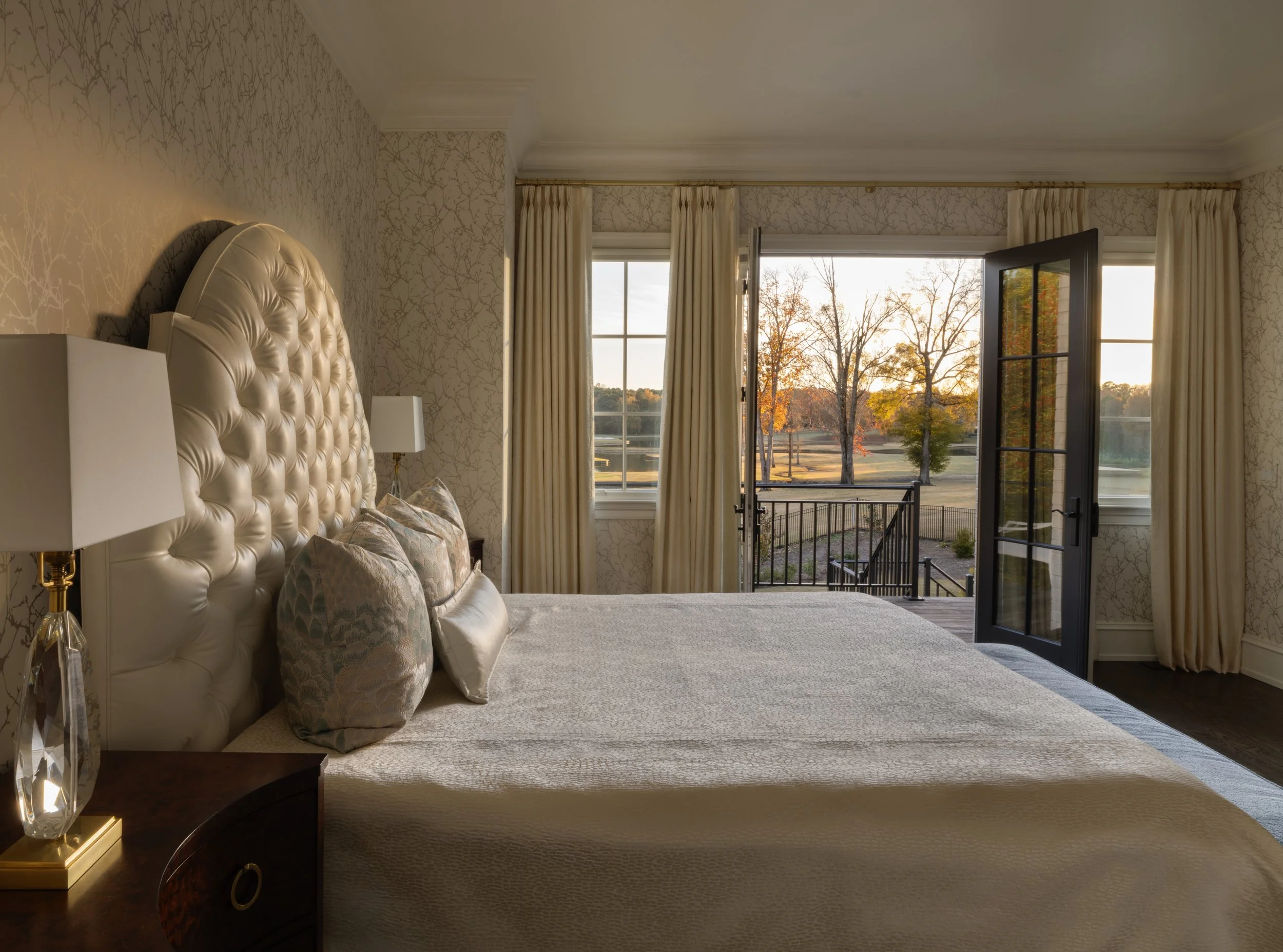
A primary suite feels most restorative when every element supports calm, not visual noise. Soft neutrals, a tailored upholstered headboard, and layered bedding create a composed foundation that reads refined without feeling formal. Balanced bedside lighting and clear circulation around the bed reinforce the “retreat” experience, keeping the room functional for real morning and evening routines. Thoughtful texture—wall finish, textiles, and a grounded area rug—adds depth while letting the space stay quiet, warm, and personal.
Quiet Luxury Begins Behind the Bedroom Door
Quiet luxury rarely announces itself with drama or excess. The experience arrives quietly instead, the moment a door closes and the outside world falls away. In a well-designed primary suite, that feeling shows up in small decisions that support rest, privacy, and ease. The proportions of the room, the way light moves across the floor, and the direct path between bed, bath, and closet all contribute to an atmosphere that feels composed and calm.
For many Triangle homeowners, the primary suite functions as a daily reset point. Mornings start there before the rest of the home wakes up, and evenings often end there long after guests say goodnight. Treating this space as a true retreat acknowledges how central it is to the rhythm of a day. A thoughtful design respects that reality with generous square footage, quiet zones for reading or work, and subtle technology that supports comfort without taking center stage.
Will Johnson Building Company approaches primary suites with the same care given to the main living areas of a custom home. Rather than a single bedroom attached to a bathroom, the suite becomes a sequence of spaces—entry vestibule, sleeping area, sitting zone, bath, dressing room, and sometimes a private porch or terrace. Each area has a role, yet the whole remains unified, calm, and deeply personal, which aligns with the design-build mindset described in the design-build difference and the detailed steps outlined in our process.

This dressing area illustrates how primary suites can function as composed, private environments rather than simple pass-through spaces. Built-in drawers provide generous concealed storage, while open shelving allows personal items, books, and artwork to be displayed in a way that feels intentional rather than cluttered. The concealed closet entry and consistent wall finish maintain visual continuity, reinforcing the suite’s calm rhythm. Thoughtful millwork proportions, soft neutral tones, and balanced storage create a boutique-like experience that supports daily routines while preserving the sense of retreat central to quiet luxury design.
Planning the Suite Layout: A Series of Calm Zones
Separating Public and Private Within the Home
A primary suite earns its retreat status when it sits slightly apart from household activity. Placement on the floor plan makes a significant difference. Many luxury homes position the suite on one end of the main level or on a private upper floor, buffered by a vestibule or gallery. That subtle separation lets owners move between entertaining guests and stepping into solitude with very little friction.
Orientation matters as well. Views of trees, gardens, or a pool terrace extend the feeling of sanctuary beyond the walls. Sound control plays a quiet but crucial role, especially in families with young children or multi-generational households. Thoughtful insulation, solid-core doors, and strategic placement away from noisy zones such as game rooms or laundry support deeper rest and better focus. For homeowners evaluating the bigger picture of land, placement, and long-term livability, the art of site selection adds useful context to these early layout decisions.
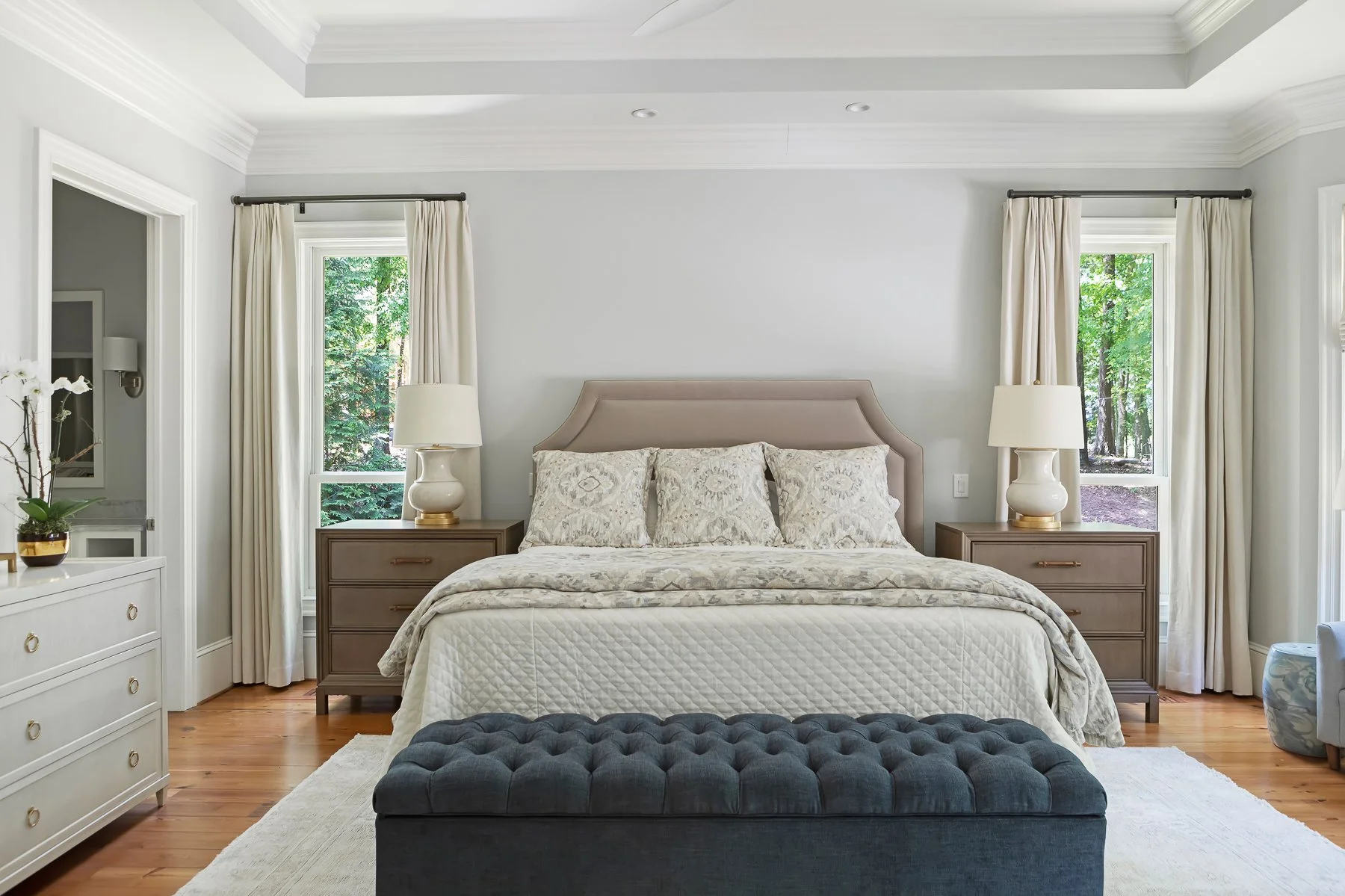
This primary bedroom demonstrates how proportion, symmetry, and restraint work together to create a calm, restorative environment. The upholstered headboard anchors the room without visual heaviness, while matched nightstands and lamps establish balance that supports rest rather than distraction. Layered bedding, soft neutral tones, and controlled natural light reinforce a sense of comfort that feels intentional, not styled for show. By keeping the layout clear and furnishings purposeful, the bedroom functions as the emotional center of the primary suite—designed for unwinding at night and easing into the morning with clarity.
Creating a Logical Flow Within the Suite
Inside the suite, circulation should feel intuitive. Many owners prefer a progression that moves gently: entry hall, bedroom, small sitting area, then bath and closets tucked further inside. That arrangement protects privacy if anyone enters the suite while someone else sleeps or works. A second door to the hallway, a pocket door between sleeping and sitting zones, or a discrete passage to a morning bar or study can increase flexibility without sacrificing quiet.
A well-planned suite often includes:
Entry vestibule: A buffer that reduces noise and creates a quiet transition, often with space for artwork, a console, or lighting that sets the tone.
Sleeping area: Clear wall space for the bed and nightstands, protected sightlines, and carefully placed windows that support privacy and calm.
Sitting area: Room for two chairs and a small table, creating a natural spot for morning coffee or late-night reading without leaving the suite.
Bath-to-closet link: A direct connection so dressing, showering, and laundry feel integrated rather than scattered across multiple zones.
When these elements align, the suite supports both daily routine and special moments—quiet Sunday mornings, late-night work sessions, and everything between. Owners who want a broader view of how early planning shapes finished outcomes often find it helpful to read planning your custom home alongside the resources in custom home design planning.

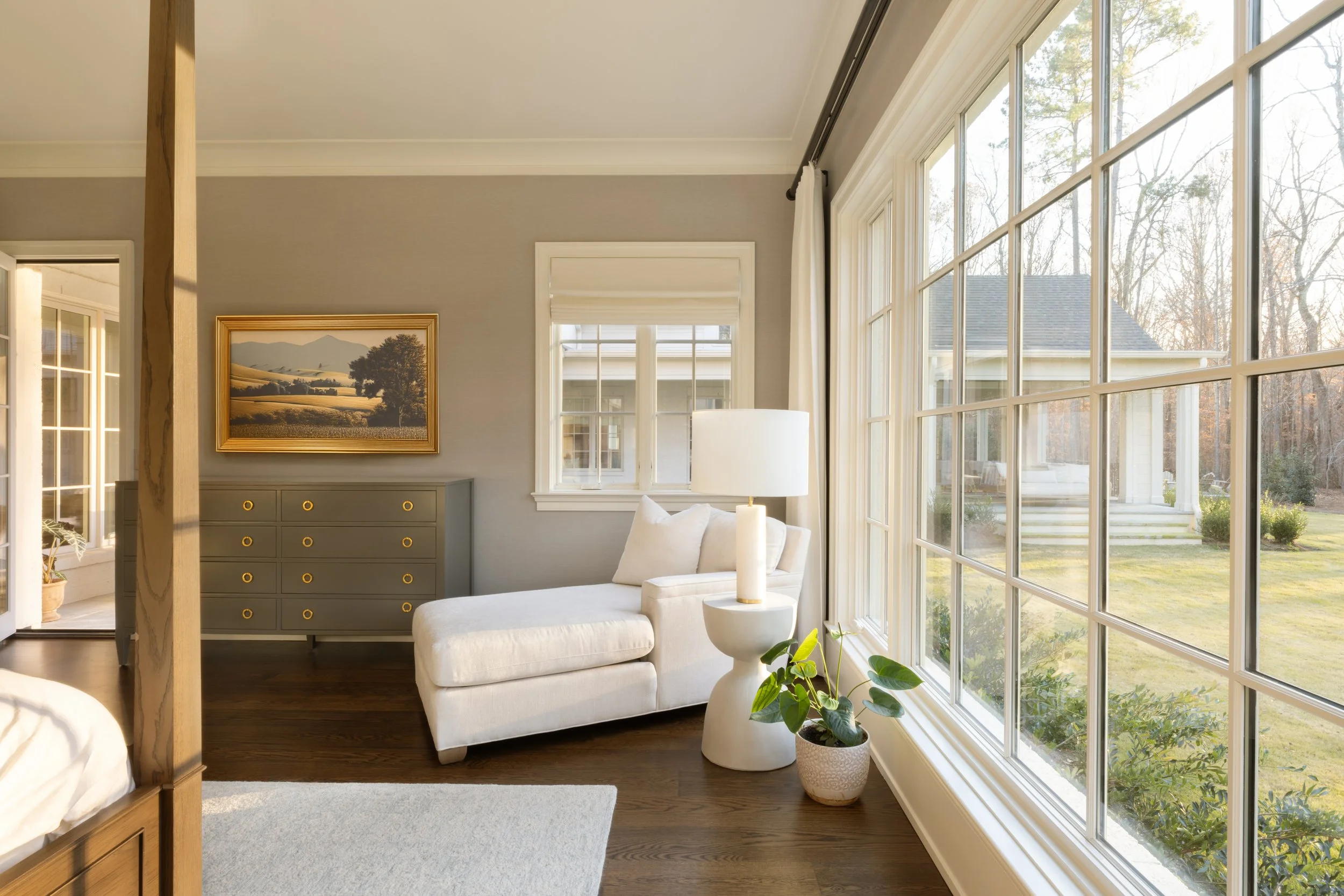
This sitting area shows how a primary suite can extend beyond sleeping into a space meant for pause and reflection. A single, well-scaled chair positioned near expansive glazing creates a natural place for reading, journaling, or quiet conversation, while views into the landscape reinforce a sense of separation from the rest of the home. The restrained palette, soft textures, and clear circulation keep the room feeling open rather than furnished. When private outdoor connections and interior seating work together, the suite functions as a true retreat—supporting calm moments throughout the day without drawing attention away from the simplicity of the space.
Designing the Bedroom as a Restful Centerpiece
Proportion, Ceiling Design, and Light
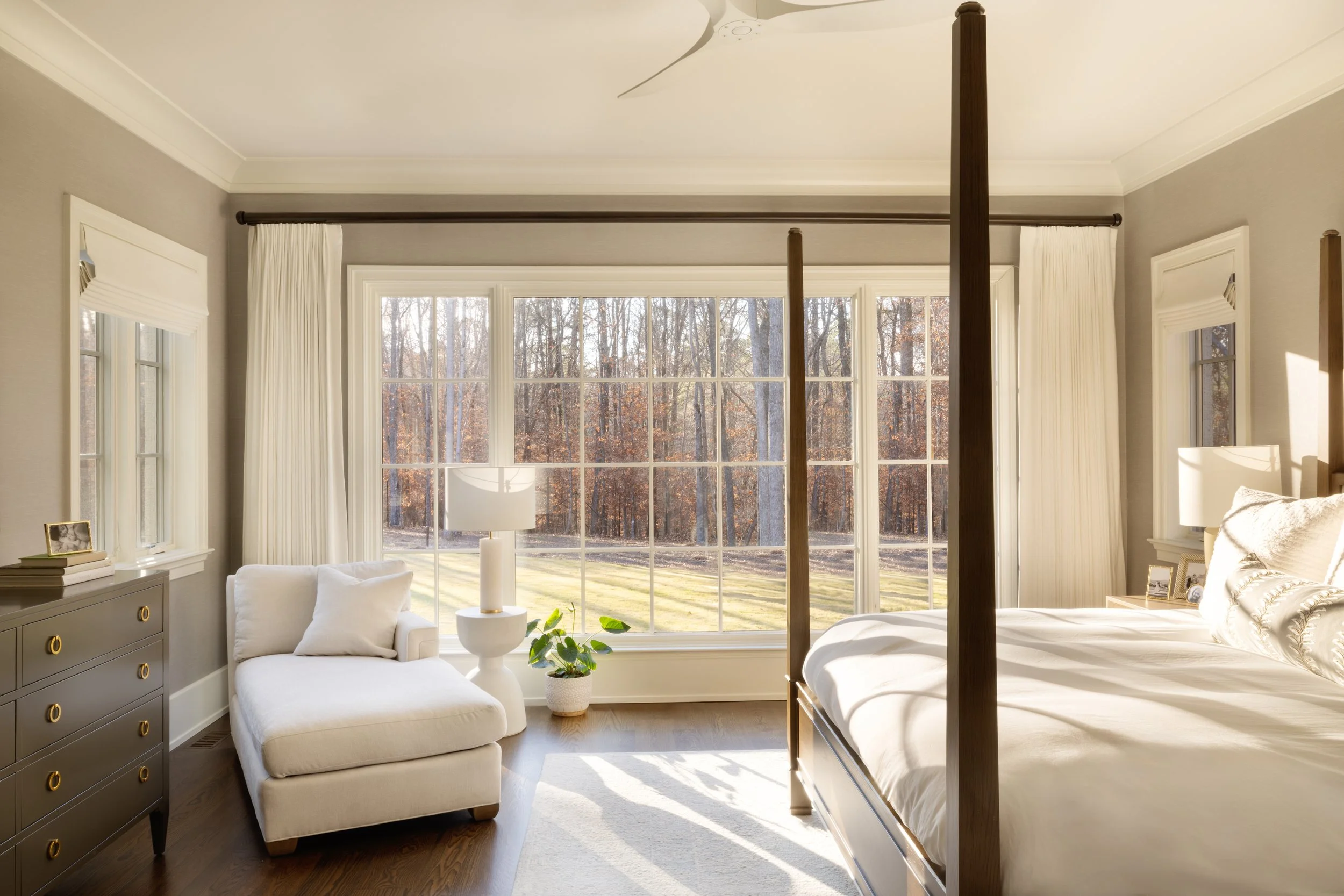
The bed sets the tone, yet proportion frames the experience. Rooms that feel gracious without drifting into oversize scale support intimacy and calm. Ceiling height can change the mood quickly. Slightly taller ceilings with beams, subtle coffers, or gentle vaults give the room presence while still keeping it warm and livable.
Window placement deserves the same level of care. Expanses of glass that frame trees or sky help the body and mind relax. Layered window treatments—sheers, lined drapery, and possibly motorized shades—allow control over privacy and light at any hour. When shades quietly lower with a single touch at night, the transition into rest feels considered rather than improvised.
Designing for longevity matters here, because the bedroom should feel quietly correct years after move-in. For a wider lens on making spaces feel enduring instead of trend-driven, building for timelessness offers a complementary perspective.
Furnishings That Support Quiet Living
Furniture selection completes the sense of quiet luxury. Instead of crowding the room with pieces, a restrained arrangement focuses on what actually supports daily routines: a well-scaled bed, generous nightstands, a soft bench or chaise at the foot, and perhaps a small writing desk or dressing table. Each piece earns its place.
Lighting layers finish the picture. Bedside sconces or articulated reading lights keep surfaces clear while providing focused illumination. A ceiling fixture adds gentle ambient light, while recessed fixtures on dimmers reinforce a soothing evening routine. When lighting scenes are pre-set—daytime, reading, night—the room stays flexible without sacrificing simplicity.
To keep the suite cohesive with the rest of the home, many owners align bedroom materials and lighting language with adjacent interior spaces. Reviewing interiors and curated examples in our work can help define a consistent, restrained direction that still feels warm and personal.

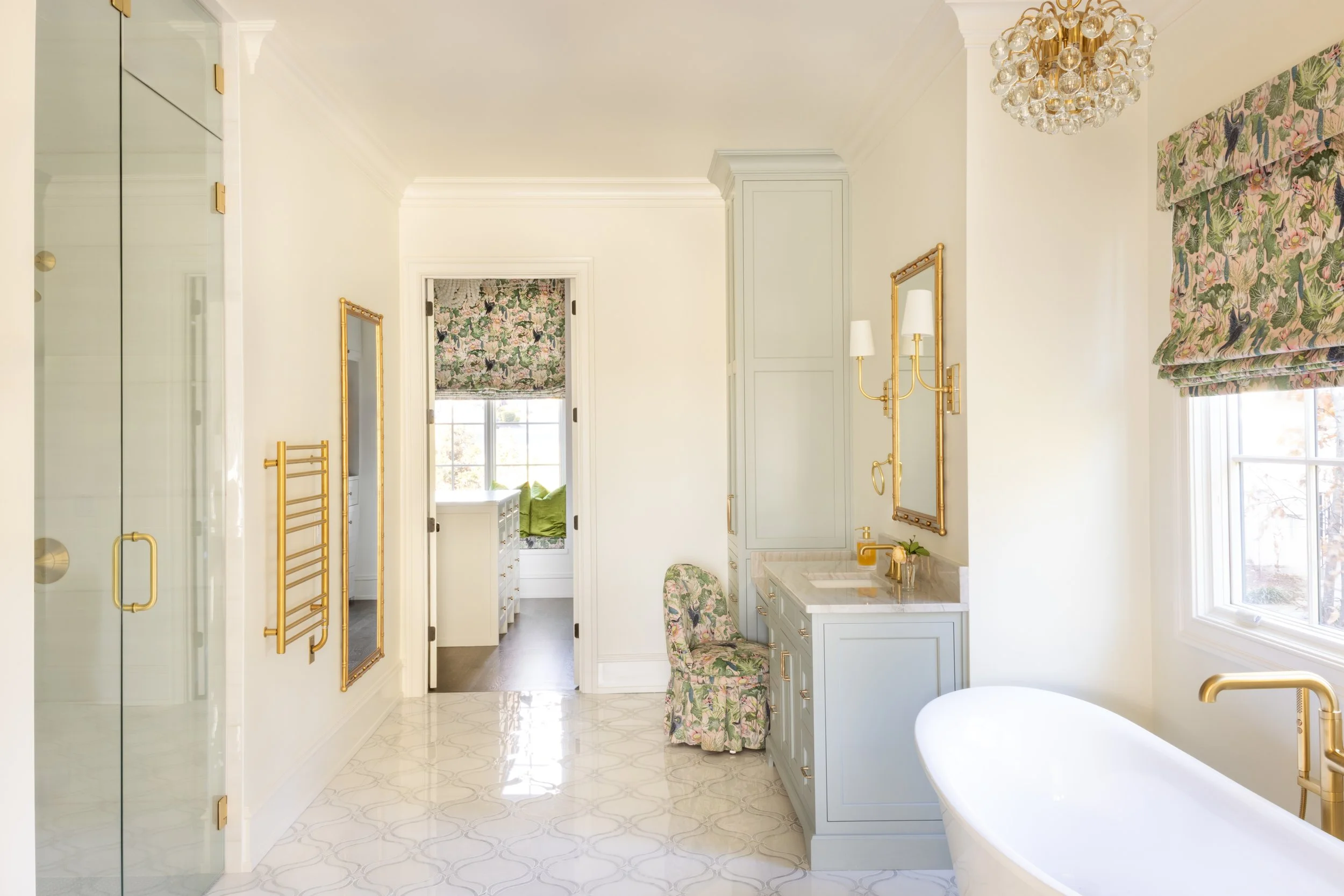
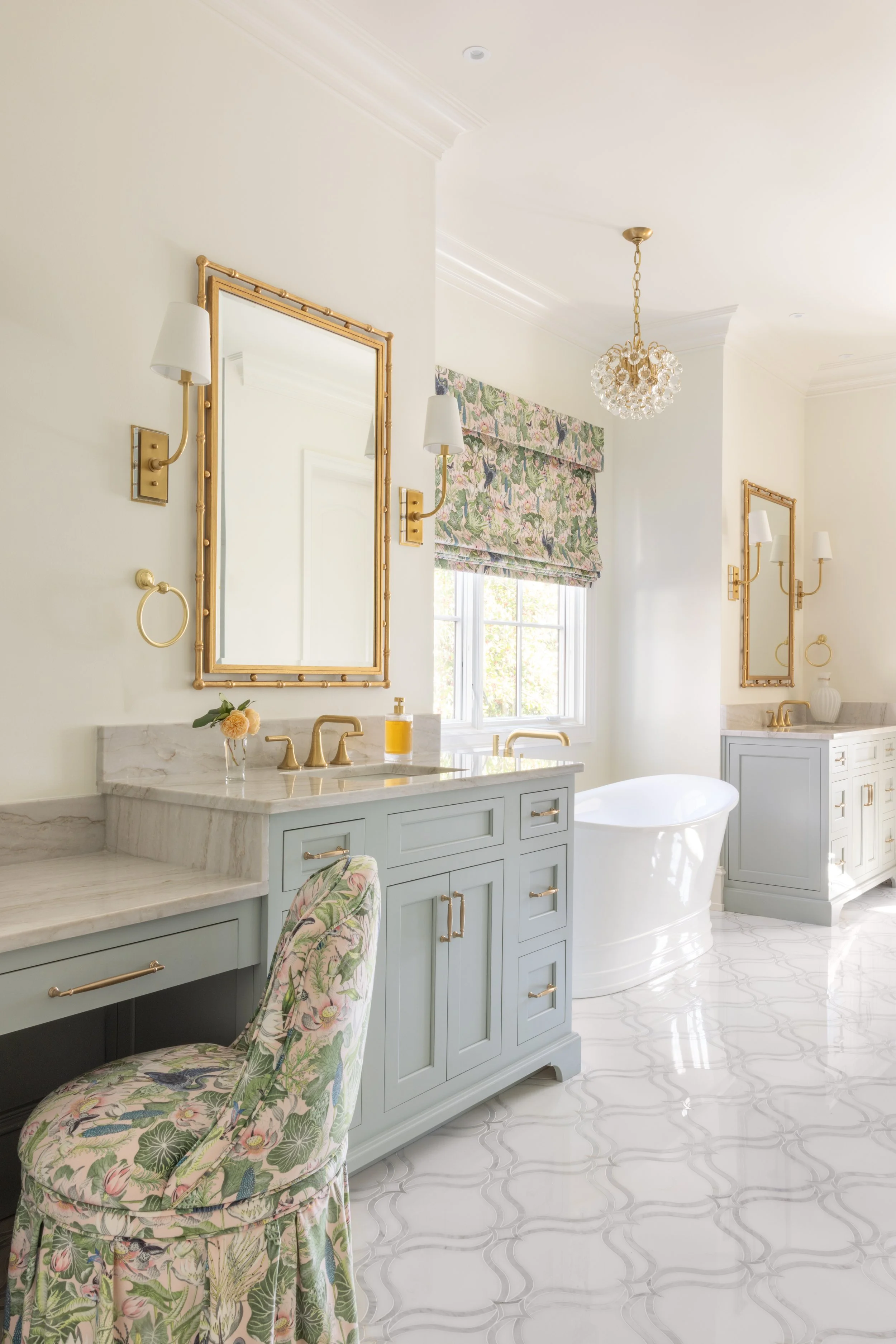
This primary bath is designed as a place of restoration rather than a purely functional room. Natural stone surfaces, restrained detailing, and warm metal fixtures create a calm visual rhythm that allows the space to feel grounded and timeless. The separation between vanity and bathing areas supports daily routines without crowding, while generous windows introduce soft daylight that shifts throughout the day. When materials, light, and proportion work together quietly, the bath becomes a daily ritual space that reinforces the primary suite’s role as a private retreat.
Creating Spa-Level Baths That Reset the Day
The Primary Bath as a Daily Ritual Space
A primary bath built around quiet luxury treats daily routines as unhurried rituals rather than rushed tasks. Generous circulation, layered lighting, and materials that invite touch turn the space into a private spa. Walk-in showers with stone or tile underfoot, framed views, and integrated benches feel less like utilitarian fixtures and more like small sanctuaries.
Separate vanities often serve two distinct purposes. One may function as a true grooming station with a seated makeup area and flattering side lighting, while the other acts as a streamlined everyday surface with minimal clutter. Thoughtfully designed storage keeps counters clear, detail and materials to remain visible.
Soaking Tubs, Showers, and the Question of Priority
Not every owner needs a large soaking tub, yet for many clients it becomes a symbolic anchor of the bath. Placement near a window, next to a fireplace, or beneath a statement light fixture elevates the entire room. The water view, the sound of a gas flame, or soft overhead light all contribute to a feeling of retreat that belongs solely to the suite’s occupants.
Showers handle the majority of daily use, so details matter. Niches built at comfortable heights, hidden drains, hand showers with thoughtful placement, and easily reached controls increase comfort each day. Steam options, radiant heated floors, and towel warmers extend the spa experience while maintaining a quiet visual language. When all technical elements appear understated, the room feels calm even while offering high performance.
Materials, Color, and Acoustics
Material selections carry much of the emotional weight in a primary bath. Natural stone, finely detailed tile, and warm metals feel timeless and substantial. Soft neutrals paired with subtle patterns keep the eye relaxed. Rather than loud contrast, gentle variation—veining in marble, texture in handmade tile, warmth in aged brass—creates depth.
Acoustics deserve serious attention. Solid doors, soft textiles, and even simple details like cork or felt pads under cabinet accessories can transform how the room sounds. Reduced echo allows conversation in a normal tone, even with water running. That sense of quiet support signals a space designed for restoration, not just function.
Owners can explore additional finish approaches through baths, and for those balancing classic with modern comfort, luxury renovations that respect history connects material restraint with long-term livability.

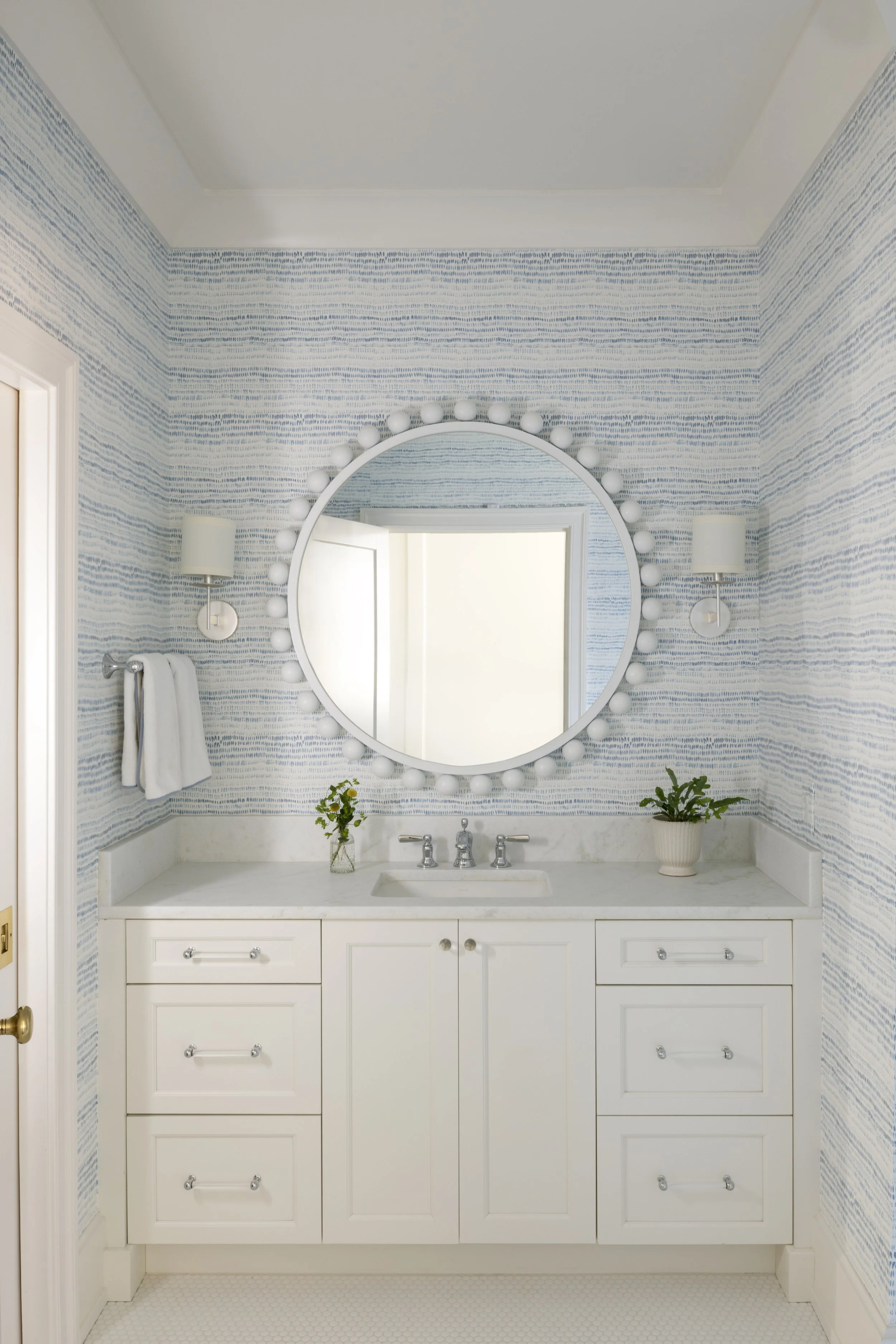
This bathroom balances refinement and restraint through classic materials and disciplined detailing. The marble vanity and warm brass fixtures provide depth without visual excess, while the glass-enclosed shower maintains openness and clear sightlines across the room. Integrated storage keeps everyday items concealed, allowing surfaces to remain calm and orderly throughout daily use. When baths are designed with this level of intention, they function less as utility spaces and more as restorative environments that quietly support both morning routines and end-of-day decompression.
Dressing Rooms and Closets That Work Like Private Boutiques
Layout That Matches Lifestyle
Closet planning often becomes the hidden engine of a successful primary suite. A well-designed dressing room organizes the day before it begins. Hanging sections divided by length, adjustable shelving, and dedicated storage for shoes, handbags, and accessories allow everything to remain visible yet orderly. A central island with drawers keeps small items contained, while a nearby full-length mirror and comfortable seat encourage thoughtful dressing rather than hurried decisions.
Planning starts with lifestyle. Wardrobes heavy on workwear, formal attire, or sports clothing require different ratios of hanging vs. shelving. Seasonal storage, luggage, jewelry, and even specialty items like hats or uniforms all deserve zones of their own. When every category has a logical place, the closet supports clarity rather than clutter.
Integrating Lighting, Power, and Convenience
Lighting once again shapes experience. LED strips in hanging sections, softly lit display shelves, and a chandelier or flush-mount fixture above the island create layers that make selection effortless. Color rendering matters; high-quality lighting helps fabrics appear true, which makes it easier to coordinate outfits before leaving the house.
Subtle conveniences reinforce the feeling of a private boutique:
Built-in hampers: Quietly sort laundry without introducing clutter or visual noise.
Velvet-lined drawers: Protect jewelry and watches while keeping everyday pieces accessible.
Discreet charging drawer: Keep phones, headphones, and smartwatches organized and out of sight.
Hooks for tomorrow’s outfit: Create a simple routine point for planning the day ahead without rushing.
For some homeowners, direct access between closet and laundry room simplifies daily routines even further. A short, private corridor or pocket door allows clothing to move efficiently while keeping views tidy in both spaces. This kind of functional clarity often shows up when owners understand the sequencing described in from concept to completion and align it with the expectations established in services.

This primary bath illustrates how layout and connection to nature elevate daily routines into restorative moments. Warm wood cabinetry and restrained hardware bring softness to the room, while integrated shelving keeps essentials organized and visually calm. Direct access to a private balcony or terrace extends the suite beyond its walls, allowing fresh air and natural views to become part of the bathing experience. When interior finishes, circulation, and outdoor connections align, the bathroom functions as a quiet transition space that supports reflection, comfort, and unhurried living throughout the day.
Morning Bars, Reading Nooks, and Other Suite Amenities
Small Luxuries That Change Daily Life
Quiet luxury often reveals itself through small amenities that consistently save time and energy. A compact morning bar within the suite eliminates the early trek to the kitchen. Under-counter refrigeration, a small sink, and concealed storage for coffee or tea create a self-contained station that resets mornings and late evenings alike.
A sitting area with two comfortable chairs and a small table encourages actual use of the room beyond sleeping. Many owners appreciate a place to read, answer email early in the day, or share a glass of wine late in the evening while the rest of the home stays busy. When the sitting zone faces a fireplace, terrace, or expansive window, the sense of retreat deepens.
Private Outdoor Connections
Direct outdoor access can transform the feel of a primary suite. French doors or a large sliding door that opens to a small terrace, balcony, or screened porch lets fresh air, birdsong, and natural light become part of the daily routine. Early coffee on a private porch, or a quiet moment outside after an evening event, turns the suite into a resort-like experience that belongs solely to the owners.
Landscape design plays a role here. Low plantings, privacy screens, and careful grading keep lines of sight controlled while preserving openness. Lighting integrated into steps, railings, or planters allows outdoor use long after sunset without harsh glare.
Because terrace access and privacy often depend on the lot itself, these conversations frequently connect back to planning and site orientation. Location-specific resources—such as custom home planning for Raleigh 27608—can help frame how outdoor access and privacy are handled in a way that suits the setting.
This primary bath is organized around balance and clarity rather than visual drama. A freestanding soaking tub anchors the room as a place for restoration, while custom cabinetry and glass-front storage keep everyday essentials accessible without cluttering the space. Natural light filtered through layered window treatments softens the room throughout the day, reinforcing a calm, unhurried atmosphere. When bathing areas, vanities, and storage are composed as a single environment, the bath supports daily routines while quietly functioning as a personal retreat within the home.
Technology That Supports, Not Dominates
Subtle Smart Home Integration
Technology can quietly support the restorative function of a primary suite when integrated with restraint. Motorized shades that close at bedtime and open gradually in the morning, climate control that adjusts automatically, and a discreet audio system for music or guided meditation all contribute to comfort without turning the room into a gadget showcase.
Thoughtful control placement matters. Wall keypads with clearly labeled scenes, simple bedside controls for lighting and shades, and hidden wiring keep visual clutter low. Charging locations built into nightstands or drawers keep cords out of sight yet accessible. When technology fades into the background, attention returns to natural light, texture, and proportion—the elements that truly define quiet luxury.
Security and Peace of Mind
Many high-end homeowners value a sense of security as part of their retreat. Discreet cameras near exterior doors, monitored systems, and controlled access points can all integrate into the broader home infrastructure. Inside the suite, a small safe or locked cabinet, concealed behind millwork, provides a place for jewelry, important documents, or personal items. That peace of mind supports relaxation and deep sleep, core goals of any primary retreat.
Security planning often sits alongside site planning, exterior openings, and landscaping. Those decisions can shift depending on the area and the lot itself. Location-specific planning resources—such as custom home planning for Raleigh 27608—can help frame how privacy and access are handled in a way that suits the setting.

This primary bath is organized around symmetry and balance to create a sense of calm that feels intentional rather than ornamental. Dual vanities frame the space while a freestanding soaking tub sits centered beneath a large window, reinforcing the bath’s role as a place for restoration. Operable shutters allow natural light and privacy to be adjusted throughout the day, keeping the room adaptable without visual clutter. When layout, light control, and proportion align this precisely, the bathroom becomes a true daily retreat—supporting unhurried routines and quiet moments of reset.
Designing Suites Around Daily Reset Points
Morning Routines
A successful primary suite supports mornings with ease. Clothing laid out in a dedicated zone, a bath that allows two people to move comfortably, and a morning bar for coffee or sparkling water reduce friction at the start of the day. Natural light near the vanity, views of trees rather than neighboring structures, and quiet acoustics help the mind prepare for whatever comes next. The suite becomes a calm runway into the day instead of a rushed checkpoint.
Many homeowners build small rituals around these features. Reading for a few minutes in the sitting area before stepping into the wider home can set the tone for the day. Journaling at a small desk or stretching beside the bed becomes easier when there is room to do it without moving furniture or clearing clutter. The environment supports routine because the space was planned for real life, not just appearance.
Morning routines can also shift based on how the household uses other areas of the home, especially kitchens and living zones that may become busy early. When the suite offers a contained start to the day, the entire home can feel more organized. Owners often find it helpful to review cohesive interior planning through the larger portfolio and inspiration hubs, including interiors and our work, then translate those lessons into suite-specific priorities.
Evenings and End-of-Day Decompression
Evenings demand a different kind of support. Lighting scenes that soften gradually, a bath configured for soaking or steam, and textiles that invite relaxation all help the body and mind wind down. The ability to step onto a terrace and look out across a quiet yard, or to sit near the fire with a book, can reset the nervous system after demanding days.
Storage plays a quiet yet important role here as well. When everything has a place, surfaces remain clear. A room that feels ordered makes it easier to set aside the noise of emails, notifications, and to-do lists. That calm visual field reinforces the suite’s identity as a true private retreat.
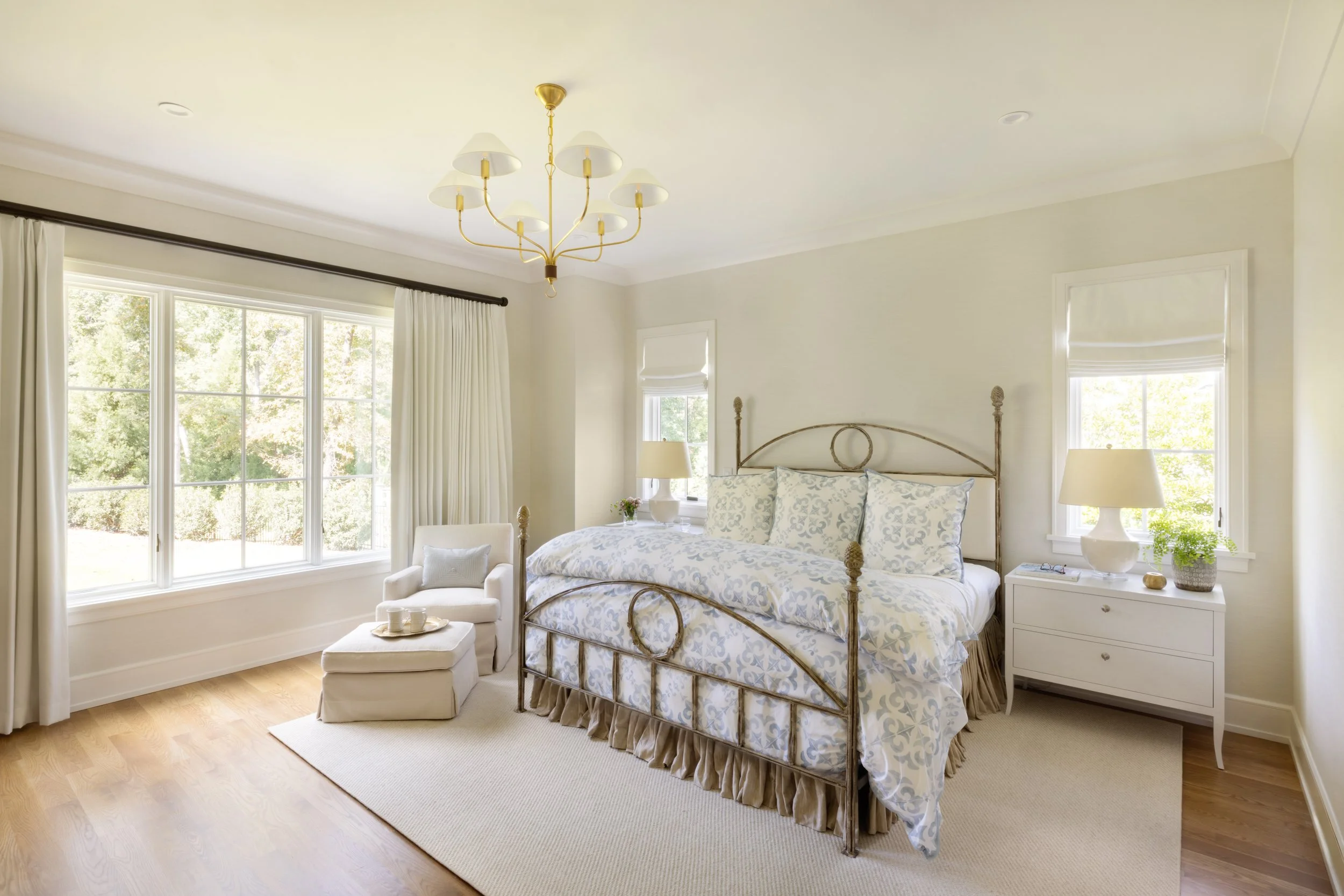
This primary bedroom emphasizes comfort through balance, light, and restraint rather than scale or ornament. The classic metal bed provides a refined focal point while layered textiles and soft neutrals keep the room grounded and welcoming. Generous windows introduce daylight from multiple directions, allowing the space to feel calm and open throughout the day. When furnishings, lighting, and circulation are kept intentional, the bedroom becomes a place that supports rest, reflection, and a slower rhythm—central to the idea of a private retreat within the home.
Primary Suites as Long-Term Investments in Well-Being
Primary suite design often carries more emotional weight than almost any other area in a custom home. These spaces support health, rest, relationships, and quiet thinking on a daily basis. Investing in thoughtful layouts, materials, and amenities creates value that extends far beyond resale considerations. Owners tend to feel the impact every morning and night.
For Will Johnson Building Company, quiet luxury in primary suites arises through conversation and collaboration. Careful listening to routines, preferences, and long-term plans allows the team to shape suites that fit the rhythms of each household. Over time, these rooms become the backdrop for birthdays, early-morning flights, late-night conversations, and countless ordinary days that matter more than any single event.
A well-designed primary retreat does more than look refined. It supports the way owners want to live, think, and rest over many years. The result is an environment that feels grounded, gracious, and deeply personal—quiet luxury, expressed in square footage, sunlight, and daily rituals behind a single, well-crafted door. If you want to explore related thinking on designing homes around real daily life, beyond square footage is a strong companion read, and for a direct conversation about your project, visit contact us.
