
Modern Transitional Custom Homes in Chapel Hill, Durham, and Raleigh

A covered outdoor living space at a modern transitional custom home featuring a spacious patio with clean-lined design, black-framed glass doors, porcelain tile flooring, and comfortable outdoor dining. The elevated terrace overlooks a scenic golf course and mature landscape, illustrating how thoughtful outdoor living design can extend everyday gathering spaces while strengthening the connection between the home and its natural surroundings across Chapel Hill, Durham, and Raleigh.
Modern Transitional Custom Homes Designed for Timeless Living Across the Triangle
Modern transitional custom homes have become one of the most desirable home styles across Chapel Hill, Durham, Raleigh, and the broader Triangle because they balance enduring character with modern function. These homes are not overly traditional, overly ornate, or starkly contemporary. Instead, they bring together clean lines, warm natural materials, simplified detailing, abundant natural light, and highly livable spaces designed around the way families actually use their homes.
For homeowners planning a custom residence in North Carolina, this style offers flexibility without sacrificing refinement. A modern transitional home can feel appropriate on a wooded Chapel Hill homesite, an established Durham property, a Raleigh Inside-the-Beltline lot, a Cary estate setting, or a larger property in Pittsboro, Orange County, Chatham County, or Wake County. The success of the home depends on how carefully the design responds to the land, natural light, privacy, neighborhood character, and long-term lifestyle goals.
At Will Johnson Building Company, modern transitional home planning begins with the property and the people who will live there. Through thoughtful custom home design planning, careful site evaluation, and a clear understanding of construction realities, each decision is made to support comfort, craftsmanship, functionality, and long-term value.
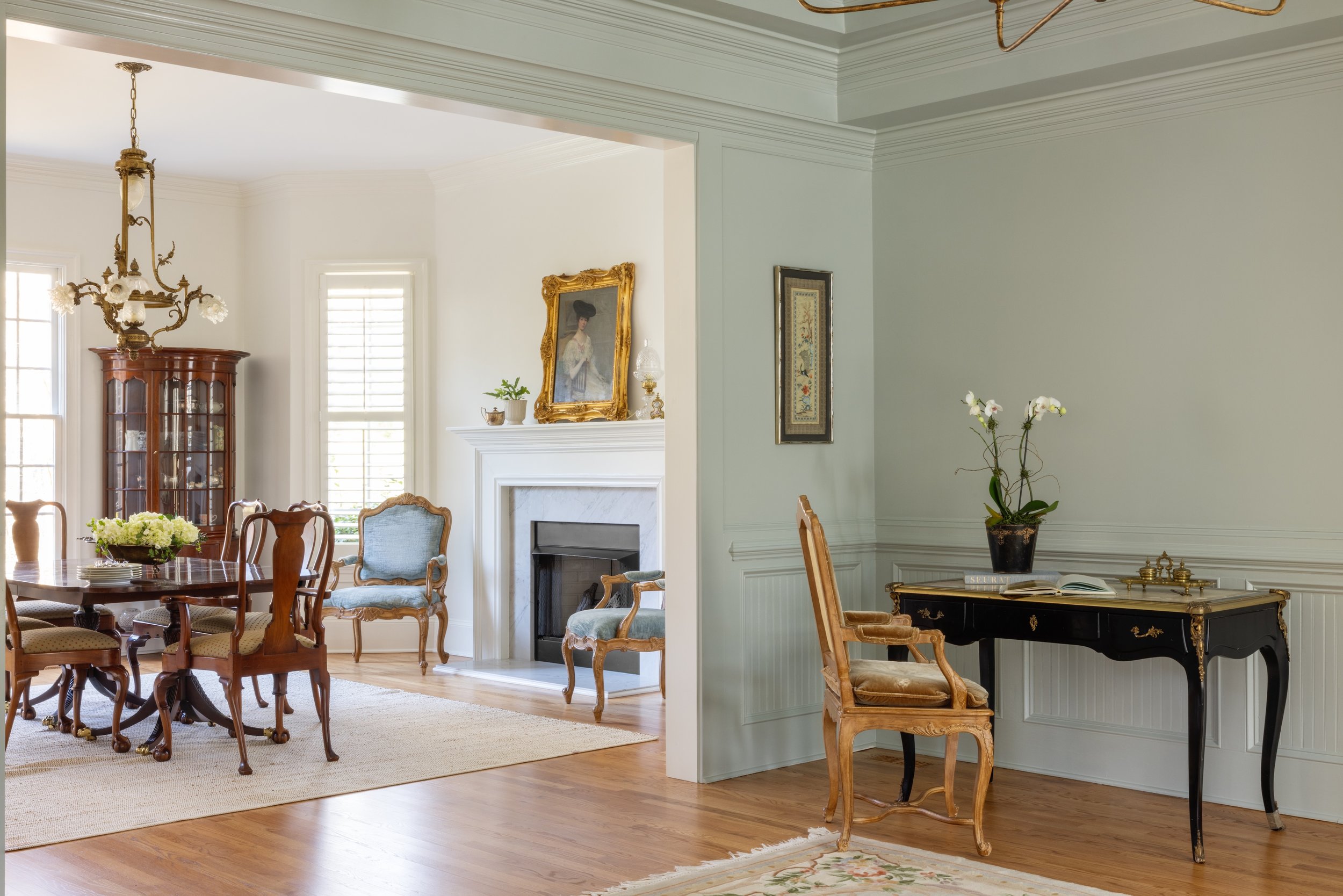
An elegant modern transitional interior featuring a formal dining room, marble fireplace, detailed millwork, and an adjoining home office. Traditional furnishings are paired with bright natural light, neutral finishes, and cleanly designed details to create a timeless living environment that balances classic craftsmanship with modern functionality for custom homes throughout Chapel Hill, Durham, Raleigh, and the Triangle.
What Makes a Home Modern Transitional
A modern transitional home blends timeless residential character with cleaner, more current detailing. It avoids the heaviness of highly traditional homes while preserving warmth, proportion, and material richness. It also avoids the coldness that can sometimes come with purely contemporary design by incorporating natural textures, inviting spaces, and carefully layered finishes.
Common elements include generous windows, balanced rooflines, simplified trim, natural stone, white oak or walnut accents, custom cabinetry, warm metal finishes, refined lighting, open gathering areas, and indoor-outdoor connections. The best modern transitional homes feel calm, cohesive, and highly intentional.
This style is especially effective for homeowners who want a residence that feels current today but will still feel appropriate decades from now. The goal is not to chase trends. The goal is to create a home that supports daily routines, family gatherings, entertaining, privacy, work, wellness, and long-term livability.
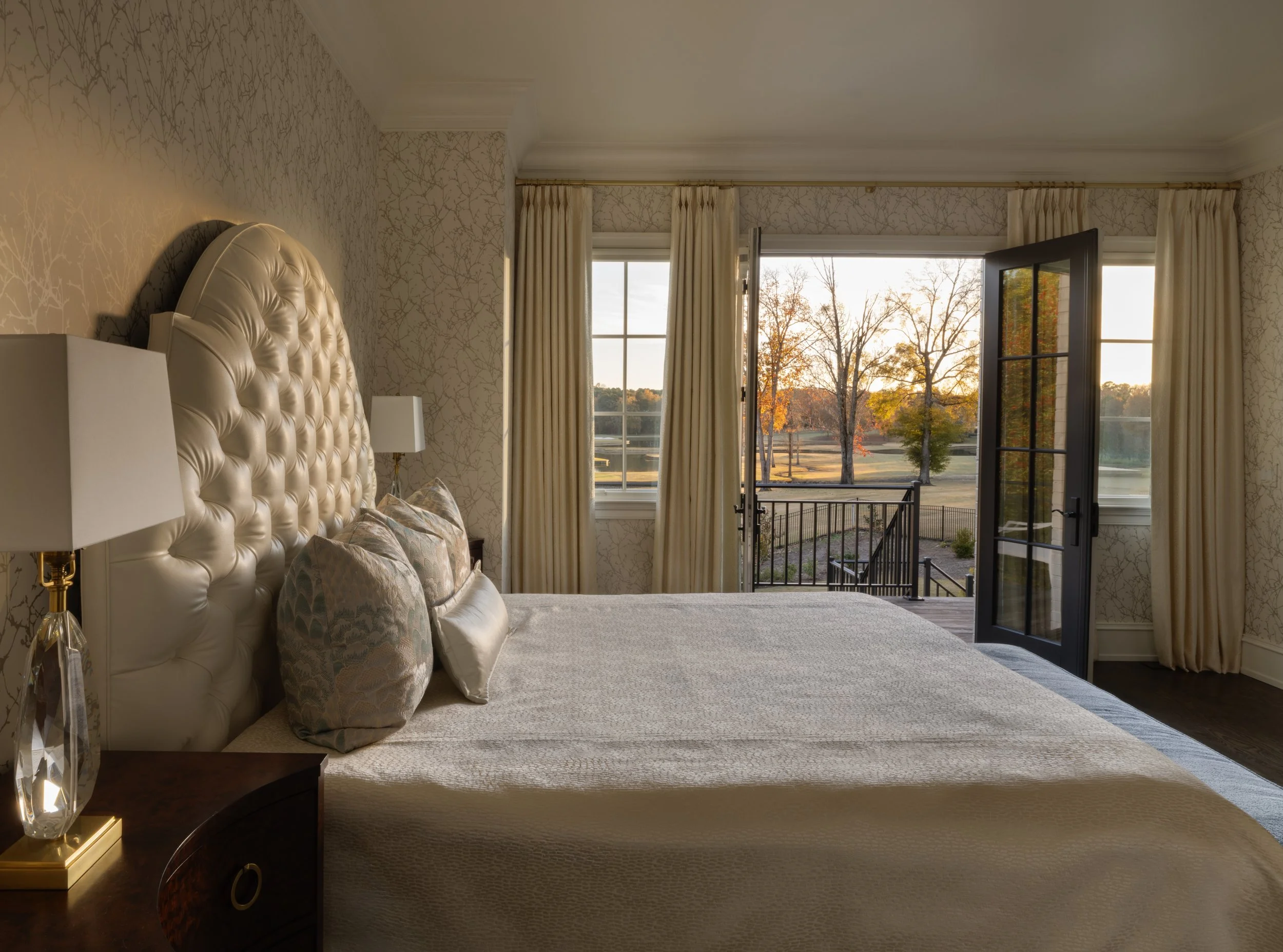
A serene modern transitional primary suite featuring a tufted upholstered bed, layered neutral finishes, abundant natural light, and French doors leading to a private outdoor terrace overlooking the landscape. The design demonstrates how thoughtful bedroom placement, natural light, and seamless indoor-outdoor connections create a relaxing retreat that supports comfort, wellness, and everyday living in custom homes throughout Chapel Hill, Durham, Raleigh, and the Triangle.
How Modern Transitional Homes Balance Timelessness and Modern Living
The strength of modern transitional design is balance. Traditional homes often rely on heavier trim, formal room divisions, and more decorative detailing. Contemporary homes often rely on sharper geometry, minimal ornamentation, and expansive glass. Modern transitional homes sit between those two points, using restraint, warmth, and proportion to create spaces that feel both refined and comfortable.
Inside, this may mean open kitchen, dining, and living areas that still feel defined through ceiling details, cabinetry, lighting, flooring transitions, or furniture placement. It may also mean using classic materials in simplified ways, such as natural stone fireplaces, wide-plank hardwood flooring, custom built-ins, painted millwork, and clean-lined cabinetry.
Outside, the style may include painted brick, natural stone, horizontal siding, vertical siding, standing seam metal accents, dark window frames, deep porches, understated columns, and carefully planned landscaping. The final result should feel grounded, not trendy.
Why Modern Transitional Homes Work So Well in North Carolina
Modern transitional homes are especially well suited for North Carolina because they respond well to the region’s climate, tree canopy, outdoor living culture, and variety of homesites. In the Triangle, no two properties are exactly alike. Chapel Hill often offers wooded lots and mature landscapes. Durham includes established neighborhoods, Hope Valley properties, and more contemporary custom home opportunities.
Raleigh includes both Inside-the-Beltline lots and larger properties across Wake County. Cary, Pittsboro, Orange County, and Chatham County each bring their own property conditions and lifestyle priorities.
This flexibility makes the modern transitional style valuable. It can be adapted to wooded settings, estate lots, infill properties, golf-course homesites, and renovation projects. The same design language can feel warm and private in Chapel Hill, polished and established in Durham, and refined yet functional in Raleigh.
For homeowners still evaluating location and property fit, resources such as site selection for custom homes in the Triangle and feasibility and site study planning can help clarify how the land itself should influence the final home.
Designing Around How Families Actually Live
A modern transitional custom home should begin with lifestyle, not square footage alone. The way a family moves through the home each day should influence the layout as much as the exterior style. Morning routines, school schedules, remote work, pets, guests, entertaining habits, hobbies, storage needs, aging-in-place goals, and future family transitions all matter.
For some homeowners, the kitchen and family room become the center of daily life. For others, outdoor living, a private primary suite, a home office, or a wellness space may be just as important. Families with young children may prioritize sightlines, mudrooms, laundry placement, durable materials, and flexible play areas. Empty nesters may care more about main-level living, guest suites, privacy, and low-maintenance outdoor spaces.
This is why modern transitional homes should never be treated as a template. The style works best when the floor plan, room connections, material selections, and outdoor spaces are shaped around the people who will use the home every day. The article on designing custom homes around lifestyle is a strong companion resource for this planning mindset.
Before You Begin Planning
Before selecting materials, fixtures, or even floor plans, homeowners should answer several foundational questions.
How do you envision using your home every day?
How important are natural light and privacy?
How often do you entertain?
Will you need flexible rooms in the future?
Do you anticipate multi-generational living?
How important is outdoor living?
What type of property best supports your lifestyle?
What spaces will become central gathering places for your family?
Answering these questions early often leads to better decisions throughout the entire project.
Designing Around Land, Light, and Lifestyle
The most successful modern transitional homes are rooted in the property itself. Before finalizing a layout or exterior direction, homeowners should understand the homesite’s slope, tree canopy, views, privacy conditions, drainage, driveway approach, neighboring homes, and natural light patterns.
In Chapel Hill, that may mean preserving mature trees while still allowing sunlight into main living spaces. In Durham, it may mean respecting an established neighborhood while improving daily comfort and flow. In Raleigh, it may mean balancing streetscape presence with privacy, parking, outdoor living, and modern family function.
Light studies are especially useful during early planning. They help determine where morning and afternoon light enter the home, how shadows move across the property, and which rooms should be positioned for the best daily experience. This can influence kitchen placement, primary suite orientation, porch depth, window sizing, outdoor living areas, and home office locations.
Homeowners beginning this stage may find value in schematic design planning, design development and construction documents, and Will Johnson Building Company’s process.
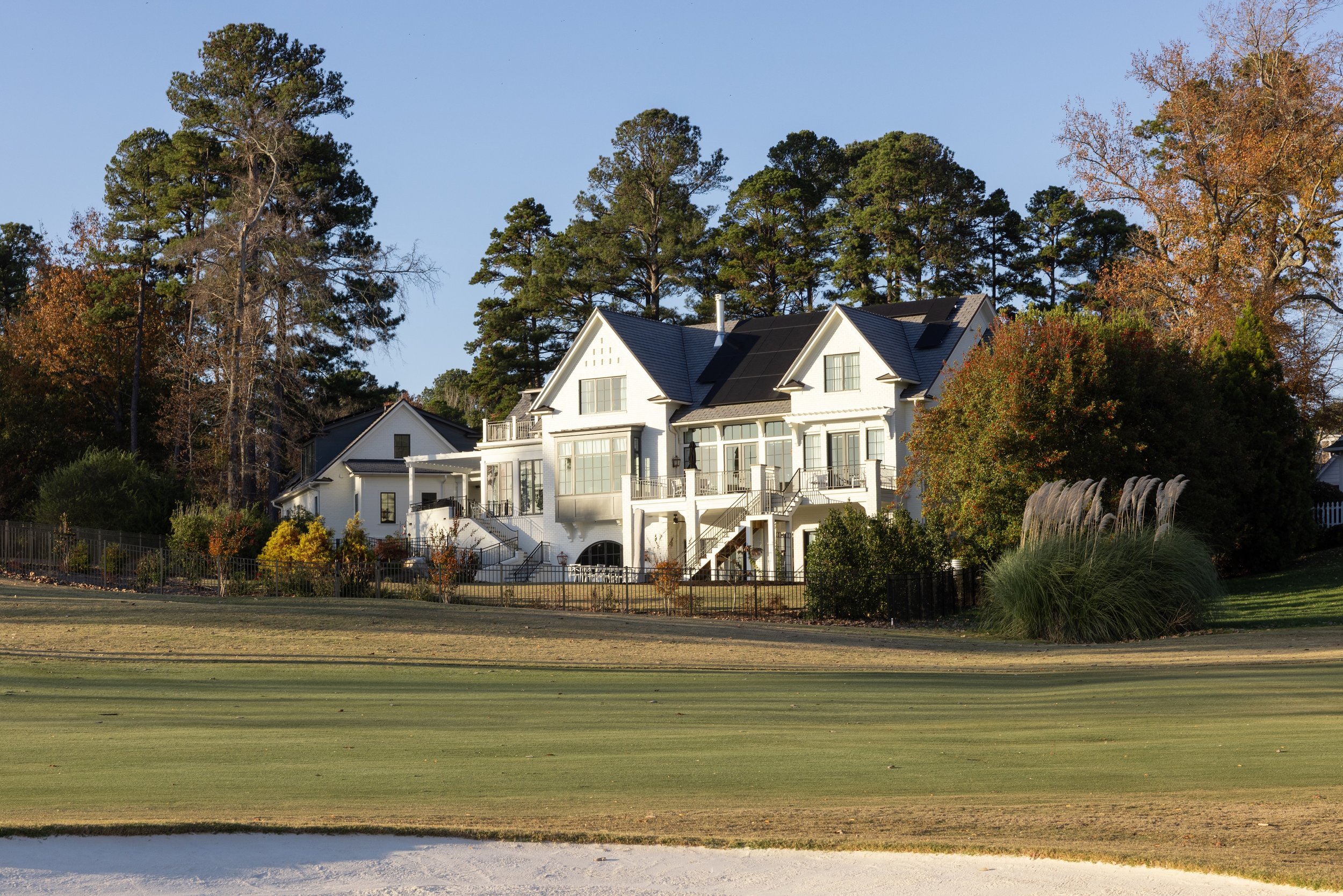
A modern transitional custom home set along a golf course, showcasing painted brick, steep rooflines, expansive windows, layered outdoor living spaces, and mature landscaping. The home reflects how timeless design proportions, thoughtful site planning, and strong connections to the surrounding landscape create a residence that feels refined, functional, and enduring throughout Chapel Hill, Durham, Raleigh, and the greater Triangle region.
How Modern Transitional Homes Compare to Traditional and Contemporary Home Styles
Modern transitional homes are often appealing because they avoid extremes. Traditional homes can be beautiful, but they may include formal separations, heavier detailing, and more decorative finishes than some homeowners want today. Contemporary homes can feel clean and striking, but some homeowners find them too minimal, sharp, or visually cool for everyday family living.
Traditional Homes
Traditional homes often emphasize symmetry, formal rooms, detailed trim, decorative millwork, classic masonry, and more defined entertaining spaces. These homes can work beautifully in Chapel Hill, Durham, and Raleigh, especially in established neighborhoods and renovation settings. However, some homeowners want a lighter and more open interpretation of timeless design.
Contemporary Homes
Contemporary homes often emphasize minimal detailing, expansive glass, sharp lines, open volume, and simplified materials. They can be extremely effective on the right property, especially wooded or view-oriented homesites. However, they require very precise execution and may not provide the warmth some families want in a long-term home.
Modern Transitional Homes
Modern transitional homes combine the strongest qualities of both directions. They offer cleaner lines and open layouts while still preserving warmth, proportion, craftsmanship, and material depth. This makes them highly adaptable across Chapel Hill, Durham, Raleigh, Cary, Pittsboro, and other Triangle communities.

Mature trees, generous front setbacks, and timeless exterior materials create a welcoming modern transitional custom home that feels naturally connected to its surroundings. Painted siding, balanced proportions, covered porches, and thoughtfully designed landscaping illustrate how careful site planning and enduring design choices create lasting curb appeal for custom homes throughout Chapel Hill, Durham, Raleigh, and the Triangle.
Modern Transitional Homes in Chapel Hill
Chapel Hill is one of the strongest settings for modern transitional custom homes because many properties offer mature trees, privacy, slope, and natural beauty. A modern transitional home in Chapel Hill should feel connected to the land rather than placed on top of it. The best homes in this setting use window placement, outdoor rooms, natural materials, and carefully planned circulation to create a strong relationship between interior spaces and the surrounding landscape.
Homeowners planning in Chapel Hill can begin with Chapel Hill custom homes and custom home planning in Chapel Hill for location-specific context.
Designing Around Chapel Hill’s Mature Tree Canopy
Many Chapel Hill homesites are defined by mature trees, layered shade, and natural privacy. These features are valuable, but they also require thoughtful planning. A heavily wooded lot can feel peaceful and private, but it can also limit daylight if the home is not positioned carefully.
Modern transitional homes can respond well to these conditions by using larger windows, glass doors, clerestory windows, light wells, screened porches, and carefully placed outdoor living areas. Preserving trees while allowing light into the home often requires early planning, especially around driveway placement, grading, root zones, and construction access.
Preserving Privacy While Maximizing Natural Light
Privacy is one of the reasons many homeowners choose Chapel Hill, but privacy should not come at the expense of natural light. Window placement should be studied carefully so that main living spaces feel bright without exposing private rooms to neighboring properties or street views.
Strategic landscaping, courtyard planning, covered porches, and thoughtful room orientation can help create privacy while preserving openness. This is especially important for primary suites, home offices, kitchens, and gathering areas.
Materials That Complement Chapel Hill Properties
Modern transitional homes in Chapel Hill often benefit from natural material palettes. Stone, painted brick, white oak, cedar, walnut, limestone, quartzite, plaster textures, and warm metal finishes can create a home that feels refined but not overly formal.
Interior planning should feel equally connected. Custom cabinetry, built-ins, fireplace surrounds, stair details, lighting, and trim should work together rather than feel selected in isolation. The interiors portfolio, kitchen portfolio, and bath portfolio provide helpful examples of how finish selections influence the full home experience.

Modern transitional design complements this Durham custom home through classic gray shingle siding, crisp white trim, balanced proportions, and professionally landscaped grounds surrounded by mature trees. Clean lines, timeless exterior materials, and thoughtfully planned living spaces create lasting curb appeal while respecting the character of established Durham neighborhoods.
Modern Transitional Homes in Durham
Durham offers a wide range of opportunities for modern transitional custom homes, from established neighborhoods with mature landscaping to larger properties where privacy, outdoor living, and flexible family spaces can shape the entire design. A modern transitional home in Durham should respect the character of its setting while improving the way the home supports daily life.
In areas such as Hope Valley, homeowners often want a home that feels established and timeless but still offers modern kitchens, larger gathering spaces, improved natural light, better storage, and stronger outdoor connections. For homeowners planning in this market, Durham custom homes, custom home planning in Durham, and Hope Valley custom homes are important supporting resources.
Designing for Hope Valley and Established Durham Neighborhoods
Hope Valley and many established Durham neighborhoods require a careful balance between character and modern function. A home should feel appropriate to its surroundings while still serving the expectations of today’s homeowners. This may involve refined exterior materials, thoughtful window placement, updated interior flow, expanded kitchens, improved primary suites, and more functional outdoor living areas.
Modern transitional design works especially well in this context because it does not need to feel overly new or disconnected from the neighborhood. It can use warm materials, balanced proportions, and simplified detailing to create a home that feels current without appearing out of place.
Balancing Character with Updated Living
Many Durham homeowners are not looking for a home that feels showy or temporary. They want a residence that respects the property while making everyday life more comfortable. This may include opening up main living areas, adding a scullery, creating better mudroom storage, improving bedroom privacy, or connecting indoor living areas to covered porches and terraces.
For existing properties, renovation planning can be especially important. A modern transitional renovation may preserve key elements of the home while improving layout, light, function, and long-term durability. Homeowners considering this path can review Durham renovations and luxury renovations for additional context.
Flexible Spaces for Growing Families
Modern transitional homes are particularly useful for families because the style supports flexibility. Rooms can be designed to evolve over time rather than serve only one narrow purpose. A playroom may later become a study space. A guest suite may support long-term visitors or aging parents. A home office may become a creative studio, library, or wellness room.
For families planning a long-term home in Durham, this flexibility can be one of the most valuable aspects of the design. The home should support current routines while leaving room for future changes in work, school, family structure, hobbies, and accessibility needs.
Homes Designed Around Entertaining and Connection
Durham homeowners often value homes that can support both quiet everyday life and larger gatherings. Modern transitional homes can create this balance through connected kitchen, dining, and living areas, secondary prep spaces, screened porches, outdoor fireplaces, and guest-friendly layouts.
The goal is not simply to create an open floor plan. The goal is to create a thoughtful sequence of spaces where people can gather naturally without sacrificing privacy, storage, or comfort. A well-planned home should make hosting easier while still feeling calm and livable when the house is quiet.
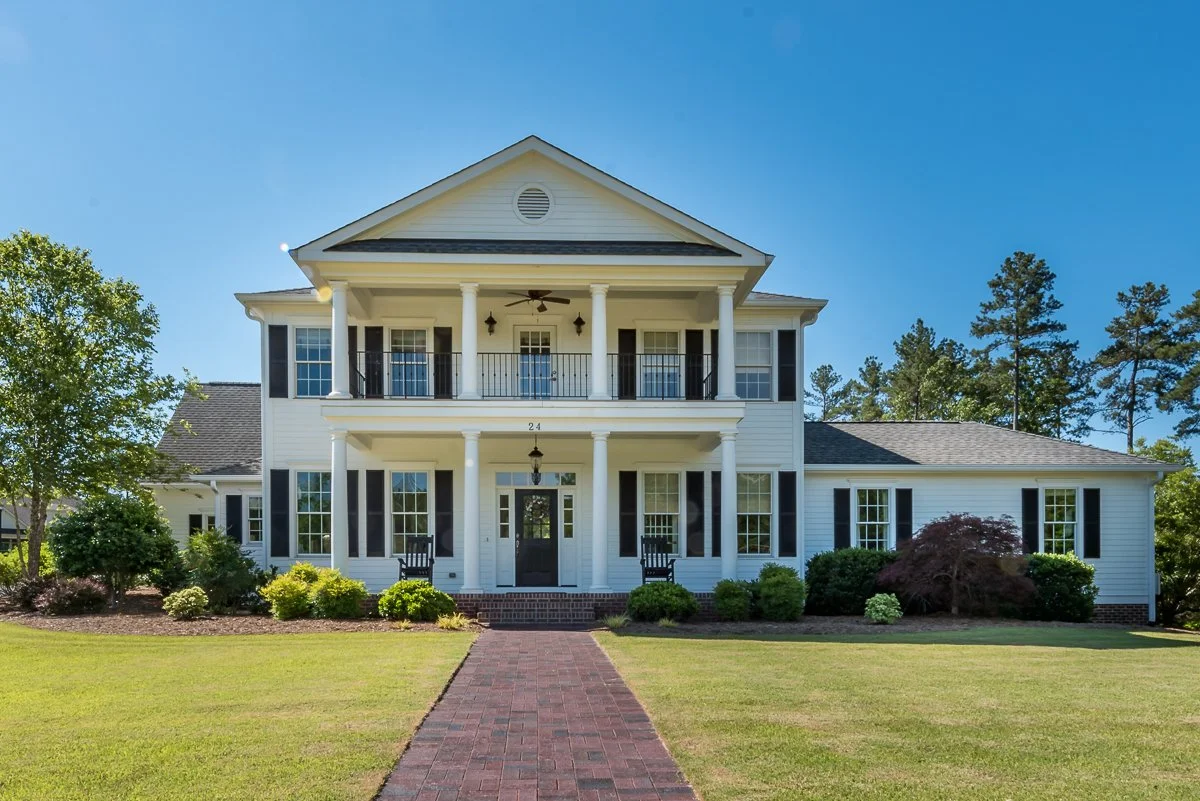
Double front porches, crisp white siding, black shutters, and balanced proportions give this modern transitional custom home a timeless yet welcoming presence. Clean exterior lines, generous outdoor living spaces, and carefully planned landscaping reflect an approach to custom home building that emphasizes everyday functionality, lasting curb appeal, and enduring design throughout Chapel Hill, Durham, Raleigh, and the Triangle.
Modern Transitional Homes in Raleigh
Raleigh brings a different set of design considerations. Inside-the-Beltline properties, established neighborhoods, and custom homes across Wake County all require careful attention to streetscape, scale, privacy, parking, outdoor living, and long-term value. A modern transitional home in Raleigh should feel refined from the street while still functioning beautifully for daily life inside.
For homeowners planning in Raleigh, useful resources include Raleigh custom homes, custom home planning in Raleigh, custom home planning in 27608, and custom homes in 27608.
Modern Transitional Living Inside the Beltline
Inside-the-Beltline Raleigh properties often require a different type of discipline than larger estate lots. Lot size, neighboring homes, mature trees, existing streetscape, driveway placement, and outdoor privacy all influence the final home. A modern transitional home can work very well in this environment because it allows a refined exterior presence while creating modern function inside.
In neighborhoods near Five Points, Hayes Barton, Anderson Heights, and other established Raleigh areas, homeowners often want updated kitchens, better primary suites, improved storage, flexible offices, and outdoor spaces that feel private despite tighter neighborhood conditions. Modern transitional design can support these needs while still respecting the broader character of the area.
Balancing Neighborhood Character with Modern Functionality
A Raleigh modern transitional home should not feel like a generic design dropped into an established neighborhood. The scale, rooflines, exterior materials, window placement, and landscape approach all need to feel considered. At the same time, the home should provide the modern comforts that homeowners expect from a custom build.
This balance may involve a more traditional street-facing presence with cleaner, more open living areas toward the rear of the home. It may also involve covered porches, private courtyards, detached structures, or rear outdoor living spaces that make the most of the lot without overwhelming it.
Creating Timeless Street Presence
Street presence matters in Raleigh, especially in established neighborhoods where homes contribute to the overall feel of the block. Modern transitional homes can create strong curb appeal through balanced proportions, refined materials, thoughtful landscaping, and restrained detailing.
Painted brick, stone accents, dark-framed windows, warm wood doors, layered rooflines, and carefully designed entry sequences can all contribute to a home that feels substantial without feeling overdone. When these choices are handled with restraint, the home can feel both current and enduring.
Designing for Everyday Efficiency
Luxury is not only about appearance. In a Raleigh custom home, everyday efficiency can define the living experience. Mudrooms, laundry rooms, pantry storage, garage access, kitchen workflow, guest parking, delivery zones, and family entry points should all be studied early.
Modern transitional homes often perform well because they allow refined interiors to coexist with practical planning. The home can feel polished while still supporting backpacks, pets, groceries, sports equipment, remote work, and daily household management.
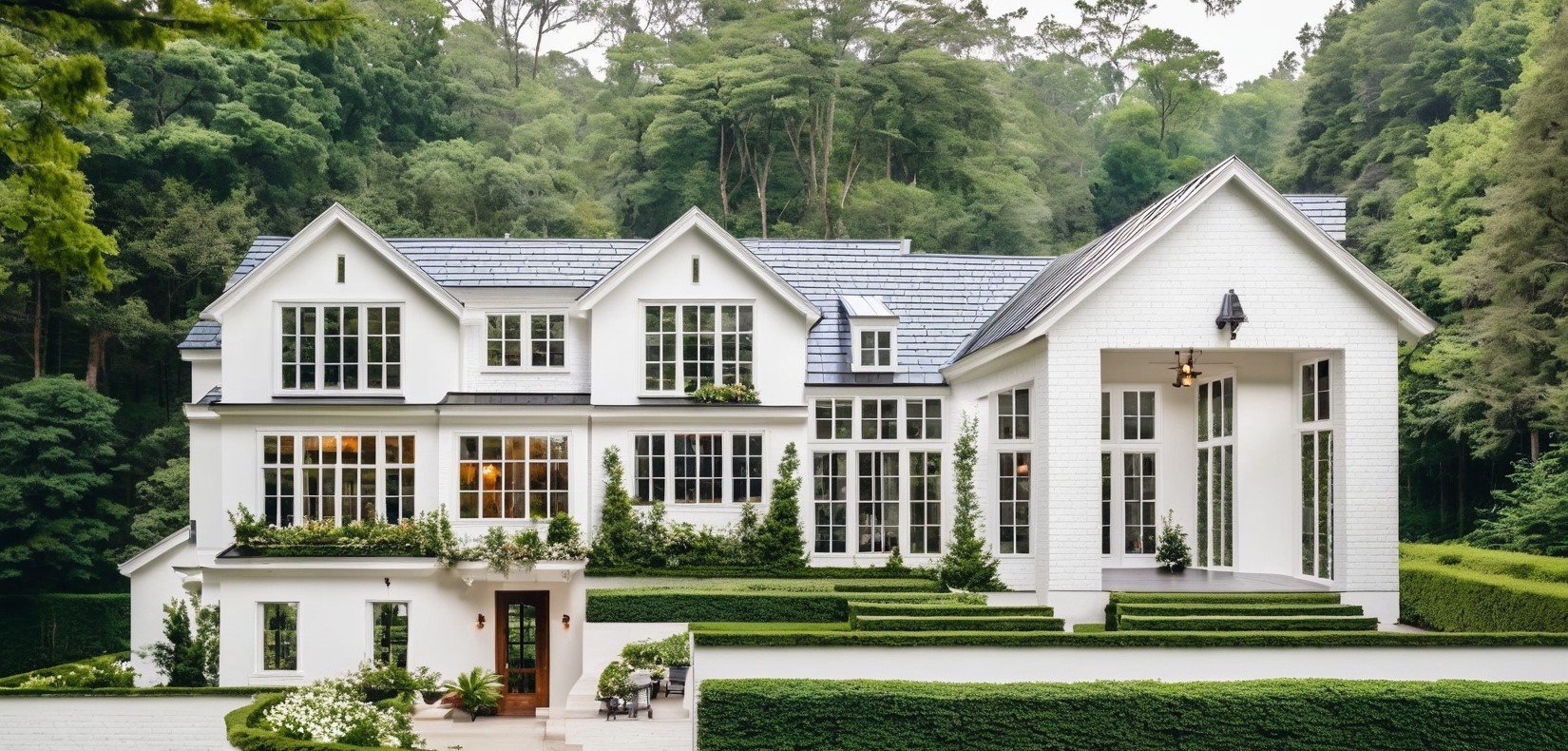
Expansive windows, painted white brick, steep gabled rooflines, and carefully layered landscaping define this modern transitional estate home nestled against a mature wooded backdrop. Strong connections between the home and its natural surroundings, generous natural light, and thoughtfully integrated outdoor living spaces illustrate how modern transitional design creates timeless custom homes that respond beautifully to their setting throughout Chapel Hill, Durham, Raleigh, and the Triangle.
Modern Transitional Homes in Cary, Pittsboro, Orange County, and Chatham County
Although Chapel Hill, Durham, and Raleigh are central to this topic, modern transitional homes also work beautifully in Cary, Pittsboro, Orange County, and Chatham County. These areas often offer different property conditions, including larger lots, golf-course settings, wooded acreage, estate communities, and opportunities for multi-structure living.
Homeowners evaluating these areas may want to review Cary custom home builders, custom home planning in Cary, Pittsboro custom homes, custom home planning in Pittsboro, Orange County custom homebuilders, and custom home planning in Orange County.
Cary Modern Transitional Homes
Cary properties often emphasize curb appeal, family function, golf-course views, outdoor entertaining, and polished neighborhood living. Modern transitional homes are a natural fit because they can feel refined and welcoming without becoming overly formal.
In Cary, window placement, privacy, terrace orientation, screened porches, and kitchen connections often matter significantly. A home may need to frame views while protecting privacy from neighboring homes, streets, or golf-course activity.
Pittsboro and Chatham County Estate Properties
Pittsboro and Chatham County properties often offer more land and more long-term planning opportunities. Modern transitional homes can work well in these areas because the style supports both estate-level design and relaxed everyday living.
Larger properties may include guest cottages, detached garages, pool houses, pavilions, gardens, long driveways, and outdoor gathering areas. The article on guest cottages, pool houses, and pavilions offers helpful insight for homeowners exploring multi-structure living.
Orange County Custom Homes
Orange County homesites often appeal to homeowners looking for privacy, mature landscapes, and a quieter setting while remaining connected to Chapel Hill, Durham, and the broader Triangle. A modern transitional home in Orange County should respond to the property’s natural features while supporting comfort, entertaining, and long-term flexibility.
For some homeowners, this may mean a forever home designed around aging in place. For others, it may mean a family compound, outdoor living retreat, or custom residence with space for guests, hobbies, and future generations.
Material Palettes That Define Modern Transitional Homes
Material selection is one of the most important ways modern transitional homes create warmth and longevity. The right materials give the home depth without making it feel heavy. They also help connect the home to the property and surrounding community.
Exterior Materials
Exterior material palettes often include painted brick, natural stone, cedar, horizontal siding, vertical siding, stucco, steel or aluminum-clad windows, warm wood doors, and standing seam metal accents. These materials can be combined in different ways depending on the home’s setting.
A wooded Chapel Hill property may benefit from warmer natural textures. A Raleigh Inside-the-Beltline home may lean toward painted brick, refined siding, and a restrained entry sequence. A Cary or Pittsboro estate property may allow more expansive material combinations, larger roof forms, and broader landscape integration.
Interior Materials
Interior materials often include white oak, walnut, limestone, marble, quartzite, natural stone, plaster textures, handmade tile, warm metals, and tailored cabinetry. These materials help modern transitional homes feel elevated while remaining comfortable.
For homeowners comparing finish options, interiors, kitchens, and baths can help illustrate how material selections shape the finished home.
Materials That Age Beautifully
A successful modern transitional home should not rely on materials that only feel current for a few seasons. Durable materials, natural textures, and disciplined detailing tend to age more gracefully. Stone, brick, hardwood, quality windows, custom cabinetry, and well-executed millwork often retain their appeal far longer than trend-driven finishes.
For more perspective on longevity, homeowners may want to review building for timelessness.
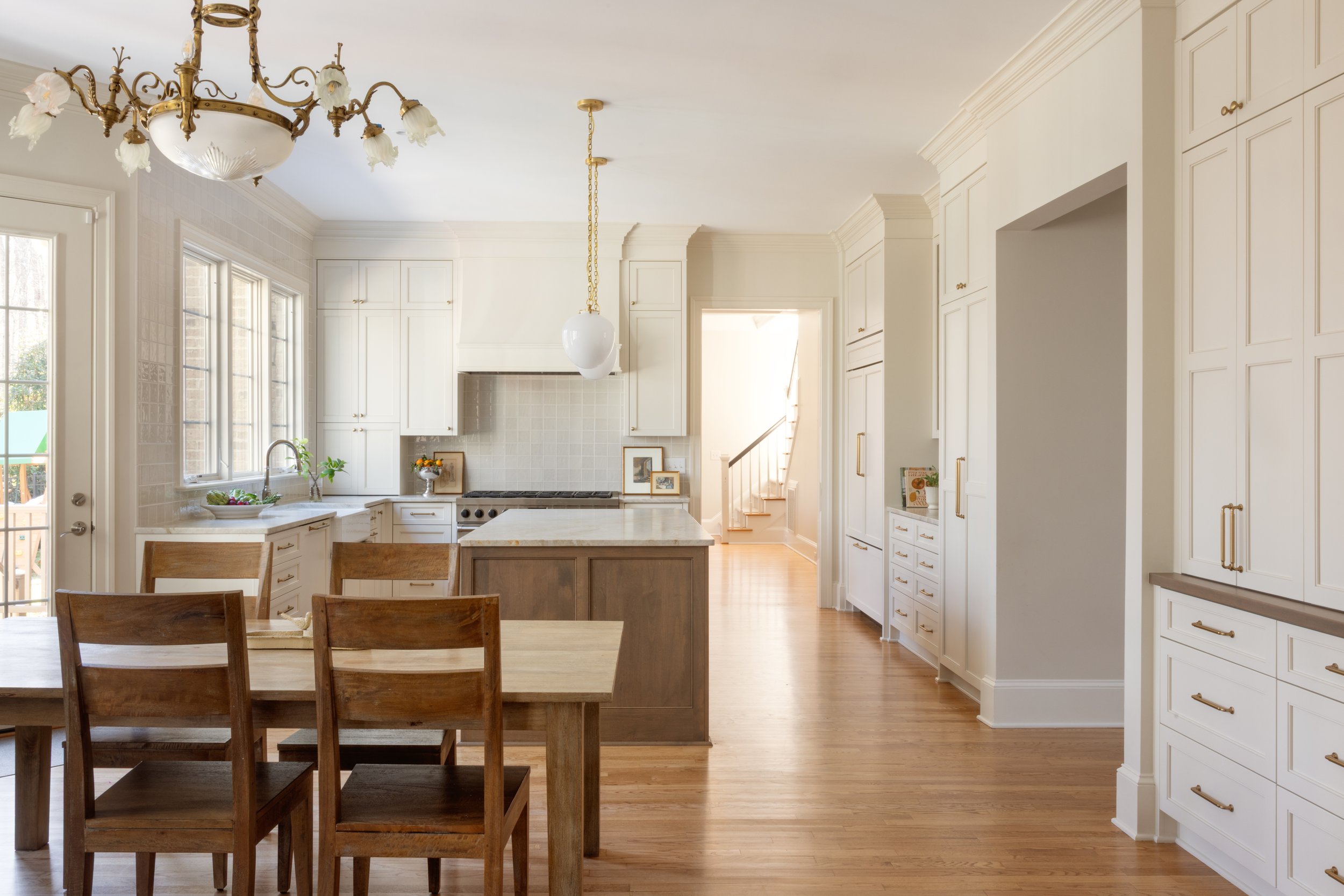
Natural light, custom white cabinetry, warm wood accents, and a generously sized island create a modern transitional kitchen designed for both everyday routines and entertaining. Thoughtful storage, efficient circulation, timeless finishes, and seamless connections to adjacent living spaces demonstrate how careful kitchen planning supports long-term functionality in custom homes throughout Chapel Hill, Durham, Raleigh, and the Triangle.
Professional Kitchens in Modern Transitional Homes
The kitchen is often the heart of a modern transitional custom home. It must look refined, but it also needs to function under real daily pressure. Weeknight meals, holidays, catered gatherings, school mornings, casual entertaining, and family routines all place different demands on the space.
A modern transitional kitchen may include an oversized island, custom cabinetry, integrated refrigeration, professional-grade appliances, stone countertops, beverage storage, walk-in pantry space, warm wood accents, and lighting designed around both task and atmosphere.
Kitchen Planning for Daily Life
Kitchen planning should begin early because appliance locations, plumbing, ventilation, cabinetry, lighting, ceiling details, and circulation all affect construction decisions. The most successful kitchens are planned around how the homeowner actually cooks, hosts, stores, cleans, and gathers.
For kitchen-specific inspiration, visit the kitchen portfolio.
Sculleries and Secondary Prep Spaces
Many modern transitional homes now include sculleries or secondary prep spaces. These rooms allow homeowners to keep the main kitchen clean during entertaining while still supporting serious cooking, storage, cleanup, and beverage service.
A scullery may include a second sink, dishwasher, refrigerator drawers, pantry storage, small appliances, prep counters, and custom cabinetry. When designed well, it becomes one of the most useful rooms in the home.
Kitchen Design by Location
A Chapel Hill kitchen may be designed to frame wooded views and connect to a screened porch. A Durham kitchen may support family gathering and entertaining in an established neighborhood setting. A Raleigh kitchen may need to maximize storage, function, and flow on a more compact lot. Modern transitional design can adapt to each of these priorities while preserving a cohesive overall feel.
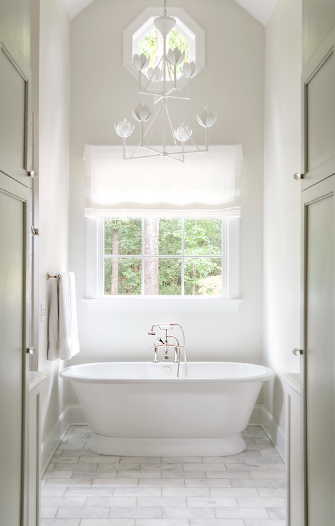
Primary Suites, Wellness Spaces, and Personal Retreats
Modern transitional homes often treat the primary suite as a private retreat rather than a simple bedroom and bath arrangement. Homeowners increasingly want spaces that support rest, privacy, wellness, and daily rhythm.
This may include a bedroom positioned for morning light, a sitting area, private terrace access, a spa-inspired bath, custom closets, heated floors, a morning bar, a steam shower, or improved connection to laundry and dressing areas.
Spa-Inspired Primary Suites
A spa-inspired primary suite should feel calm, functional, and personal. The bathroom layout, natural light, storage, shower configuration, tub placement, materials, and privacy should all be resolved during early planning.
Homeowners interested in retreat-focused design may also find value in quiet luxury primary suites and the bath portfolio.
Private Wellness Spaces
Wellness spaces can include home gyms, yoga rooms, meditation rooms, infrared sauna areas, recovery spaces, or quiet rooms designed for reflection. These spaces should be planned around privacy, light, acoustics, ventilation, storage, and daily use.
In modern transitional homes, wellness spaces can feel integrated rather than added on. Their finishes and placement should support the overall home while giving homeowners a dedicated place for health, movement, and restoration.
Dedicated Home Offices
Remote and hybrid work have changed how homeowners think about custom homes. A true home office should provide privacy, natural light, acoustic separation, storage, strong technology infrastructure, and a comfortable setting for focused work.
Some homes may require more than one work zone, especially when multiple household members work remotely or need study spaces. Modern transitional homes can accommodate formal offices, secondary workstations, creative studios, and flexible rooms that evolve as needs change.
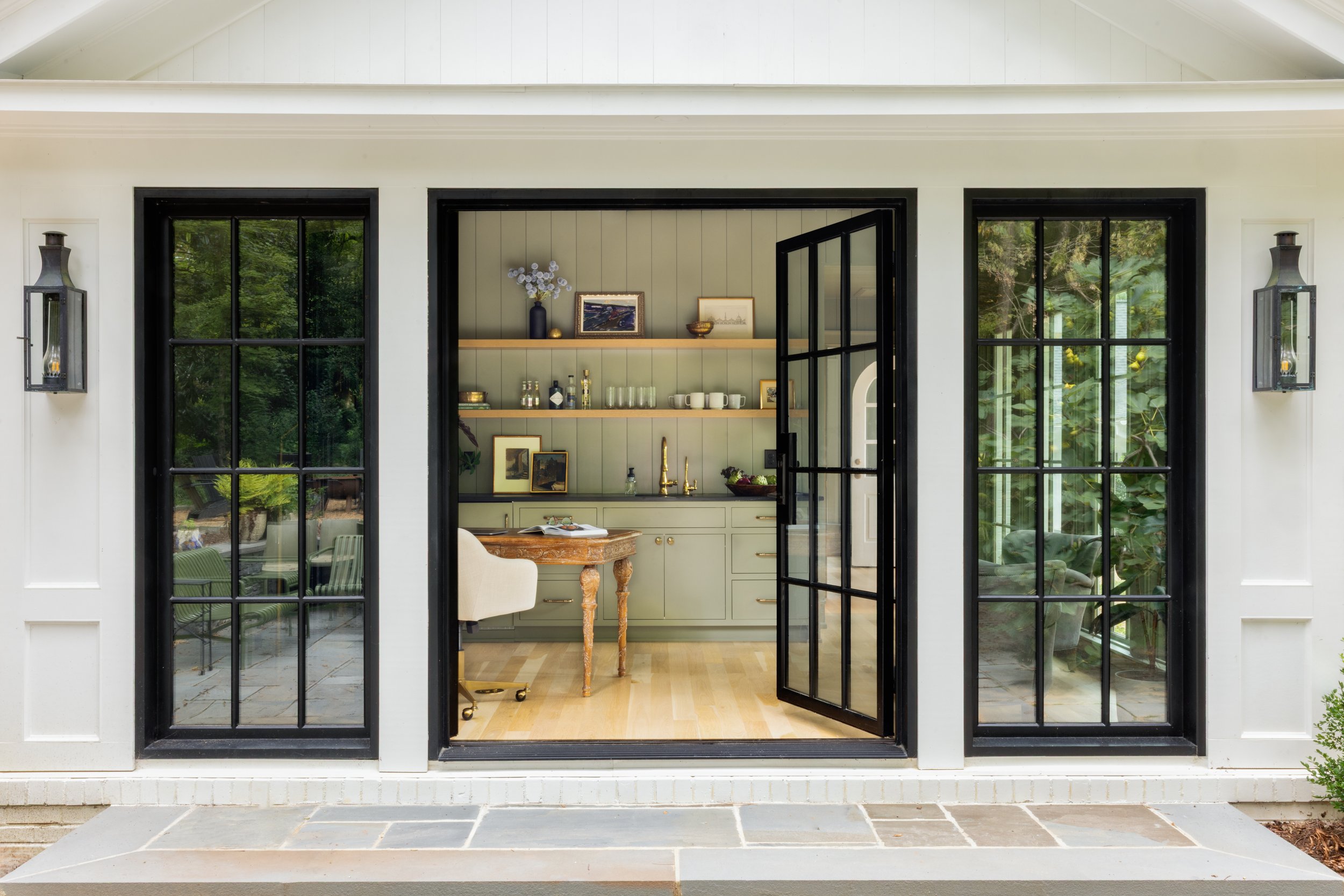
French doors, black-framed windows, custom built-in cabinetry, and open shelving create a modern transitional home office that feels connected to both the interior and outdoor living spaces. Natural light, functional storage, and timeless finishes support focused work while reinforcing the seamless flow and everyday livability that define thoughtfully planned custom homes throughout Chapel Hill, Durham, Raleigh, and the Triangle.
Indoor-Outdoor Living That Defines Modern Transitional Homes
Indoor-outdoor living is one of the defining characteristics of modern transitional homes throughout Chapel Hill, Durham, Raleigh, and the broader Triangle. Homeowners increasingly want residences that feel connected to their surroundings rather than separated from them. The outdoor environment should become an extension of everyday living instead of an afterthought.
Thoughtful planning can create a seamless relationship between gathering spaces, kitchens, covered porches, terraces, pools, gardens, and outdoor dining areas. Large sliding doors, steel-framed doors, oversized windows, and covered outdoor rooms can help blur the transition between inside and outside while preserving comfort throughout the year.
North Carolina's climate makes these spaces especially valuable. Spring, summer, and much of the fall allow homeowners to use outdoor spaces regularly, making these investments highly practical in addition to visually appealing.
Homeowners interested in this approach should review outdoor living masterpieces for additional inspiration.
Outdoor Spaces That Support Everyday Living
Outdoor living areas should be planned around daily routines rather than occasional entertaining. Morning coffee spaces, outdoor dining zones, covered lounges, reading areas, gardens, fire features, and wellness areas often become some of the most frequently used portions of the property.
By considering how homeowners naturally move throughout the day, these spaces can feel integrated instead of decorative.
Designing for All Four Seasons
Modern transitional outdoor spaces should remain comfortable throughout changing seasons. Covered structures, infrared heaters, ceiling fans, fireplaces, retractable screens, and thoughtful sun orientation can extend usability well beyond summer.
These additions allow homeowners to enjoy the outdoors during cooler months while still remaining protected during periods of intense summer sun.

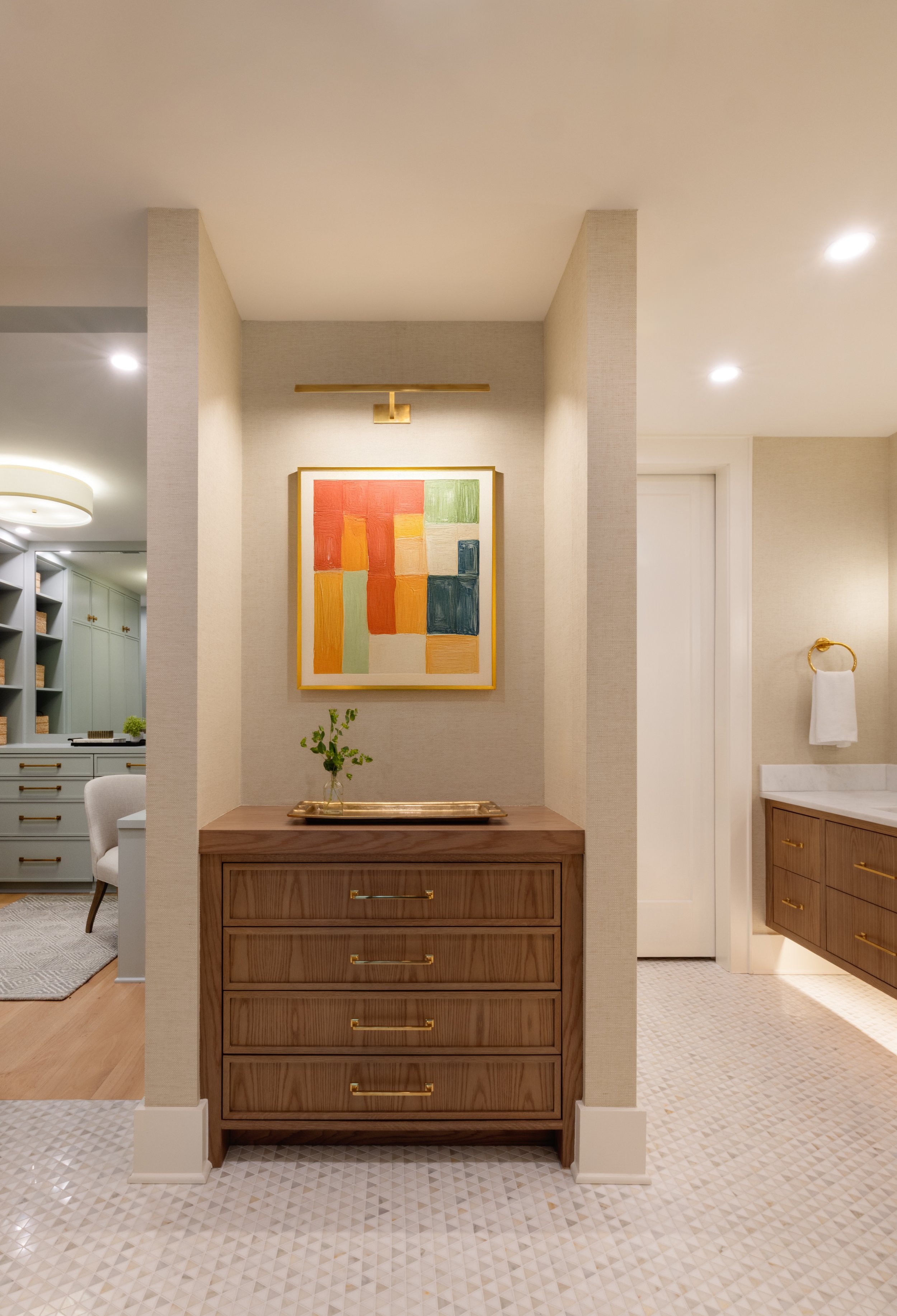
Custom millwork defines this modern transitional primary bathroom through detailed cabinetry, integrated shelving, crisp trim, and carefully proportioned vanities. Built-in storage, refined finish carpentry, and timeless craftsmanship create a cohesive space that balances everyday functionality with enduring quality, reflecting the attention to detail found throughout thoughtfully built custom homes in Chapel Hill, Durham, Raleigh, and the Triangle.
Artisan Millwork and High-End Interior Finishes
Millwork often separates a good custom home from an exceptional one. Modern transitional homes rely on thoughtful detailing rather than excessive ornamentation. The craftsmanship should feel intentional, refined, and consistent throughout the home.
Custom built-ins, ceiling treatments, cabinetry, fireplace surrounds, stair detailing, shelving systems, paneling, and trim work should all work together to create visual continuity.
The purpose of these details is not to overwhelm a space. Instead, they create subtle richness that elevates everyday living.
Creating Design Cohesion Throughout the Home
Every room should feel connected to the next. Flooring, lighting, cabinetry styles, material selections, and hardware should create a consistent visual language throughout the home without making every room feel identical.
Strong design cohesion helps the home age gracefully because decisions feel deliberate rather than trend driven.
When homeowners move from the kitchen to the living room, office, mudroom, or primary suite, there should be a sense of continuity that quietly ties everything together.
Built-Ins That Support Daily Life
Custom built-ins can become some of the most practical investments within a modern transitional home. Reading nooks, family rooms, office shelving, mudroom storage, beverage stations, and media centers allow homeowners to maintain organization while supporting daily life.
These solutions also reduce visual clutter, helping the home preserve its calm and intentional appearance.
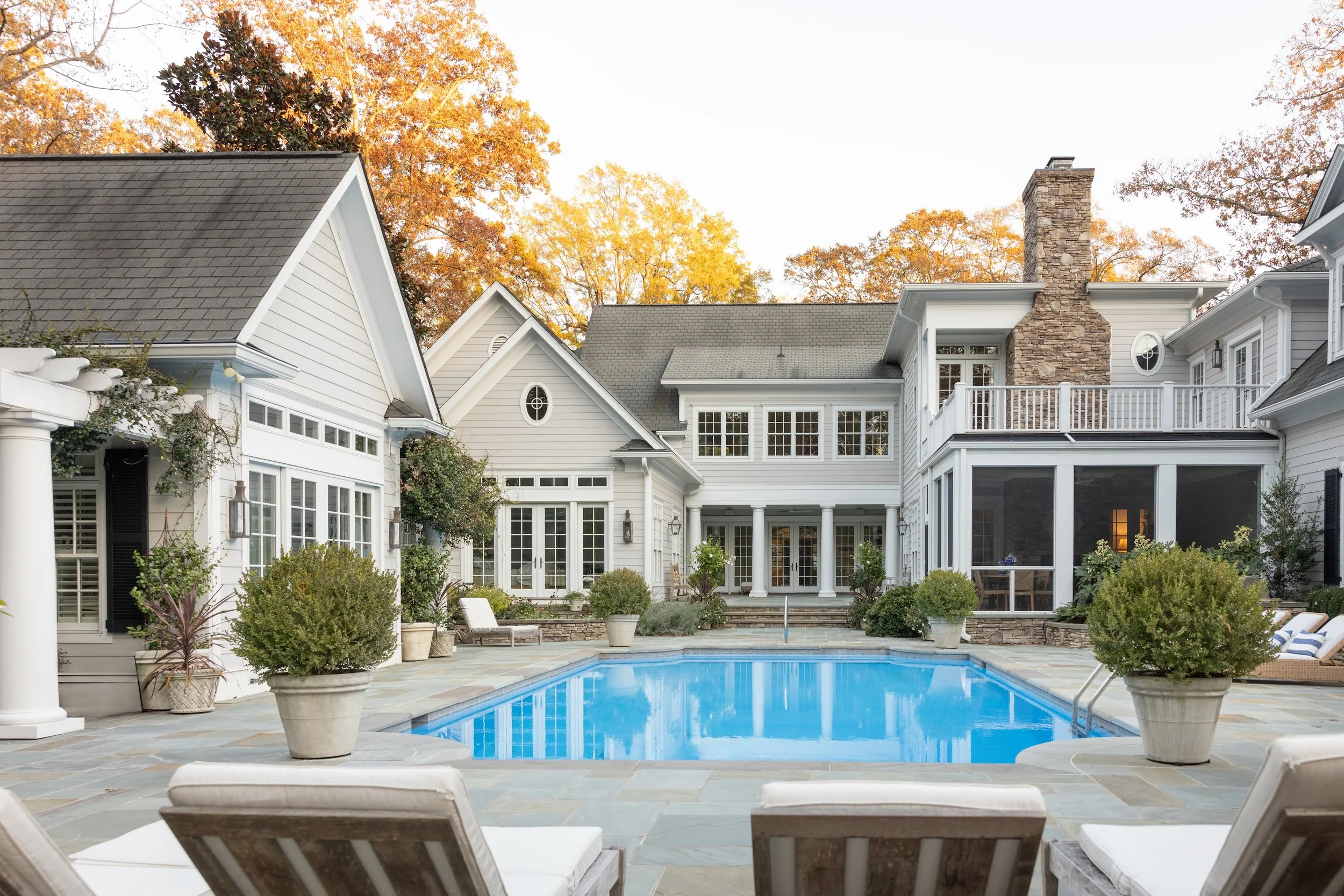
Seamless indoor-outdoor living spaces surround this modern transitional custom home, where a pool, covered porches, screened gathering areas, and expansive windows create an environment designed for comfort and convenience. Thoughtful planning allows lighting, climate control, security, and other integrated home systems to quietly support everyday living while preserving the home's timeless appearance and strong connection to the surrounding landscape.
Technology That Blends Into Everyday Living
Technology should support homeowners without becoming the centerpiece of the home. Modern transitional homes often hide technology in ways that preserve simplicity while improving convenience.
Integrated lighting controls, security systems, smart thermostats, whole-home audio, motorized shades, hidden charging stations, and energy management systems can all improve the living experience.
The goal is not to showcase technology. The goal is to make the home function effortlessly.
Invisible Technology Infrastructure
Planning technology early in the process is essential. Wiring pathways, equipment closets, speaker locations, networking infrastructure, and automation systems should be incorporated before construction begins.
This prevents costly retrofits and allows homeowners to upgrade systems in the future without significant disruption.
Technology That Supports Wellness
Technology can also support healthier living. Circadian lighting systems, air quality monitoring, advanced filtration systems, humidity controls, and energy-efficient climate systems can improve comfort throughout the year.
These investments often become invisible contributors to long-term quality of life.
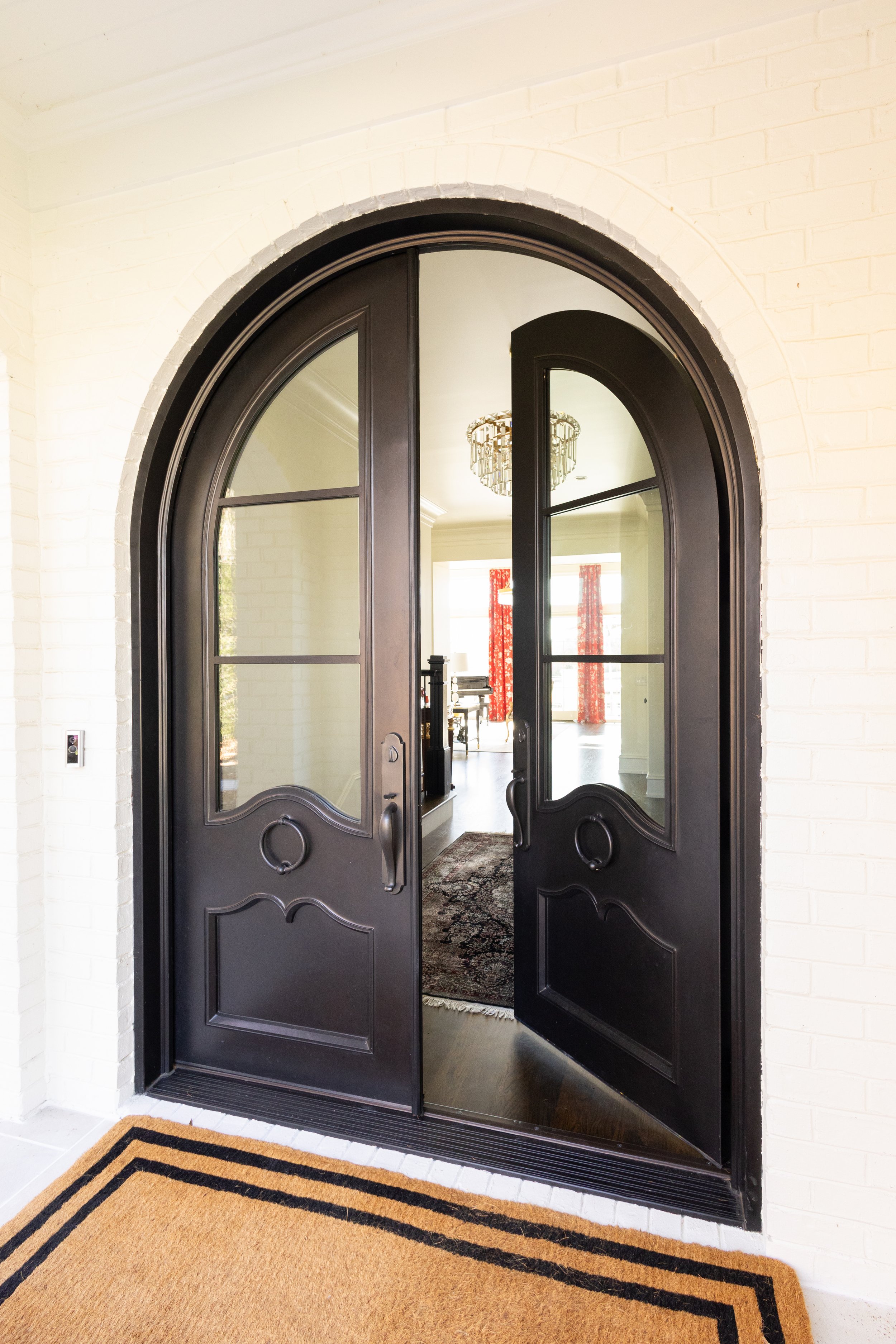
Flexible Spaces and Multi-Generational Living
Modern transitional homes perform exceptionally well for multi-generational living because they prioritize flexibility. Homes designed today should remain useful decades from now, adapting to changes in family dynamics and lifestyle priorities.
Families may eventually need accommodations for aging parents, adult children returning home, long-term guests, or future caregivers. Planning for these possibilities early creates a home that evolves naturally over time.
Homeowners may find additional value in reviewing multi-generational home planning and family compounds and forever homes.
Designing Homes That Adapt Over Time
Rooms should never feel locked into one permanent purpose. A nursery may later become a study space. A guest suite may become a caretaker suite. A bonus room may transform into a fitness area.
Designing with flexibility allows the home to evolve without major renovations.
Main-Level Living Considerations
Many homeowners are increasingly prioritizing long-term accessibility. Main-level primary suites, wider hallways, barrier-free showers, improved circulation, and fewer level changes can make the home more comfortable for decades.
These decisions do not need to feel clinical or institutional. They can be integrated seamlessly into a beautiful modern transitional design.
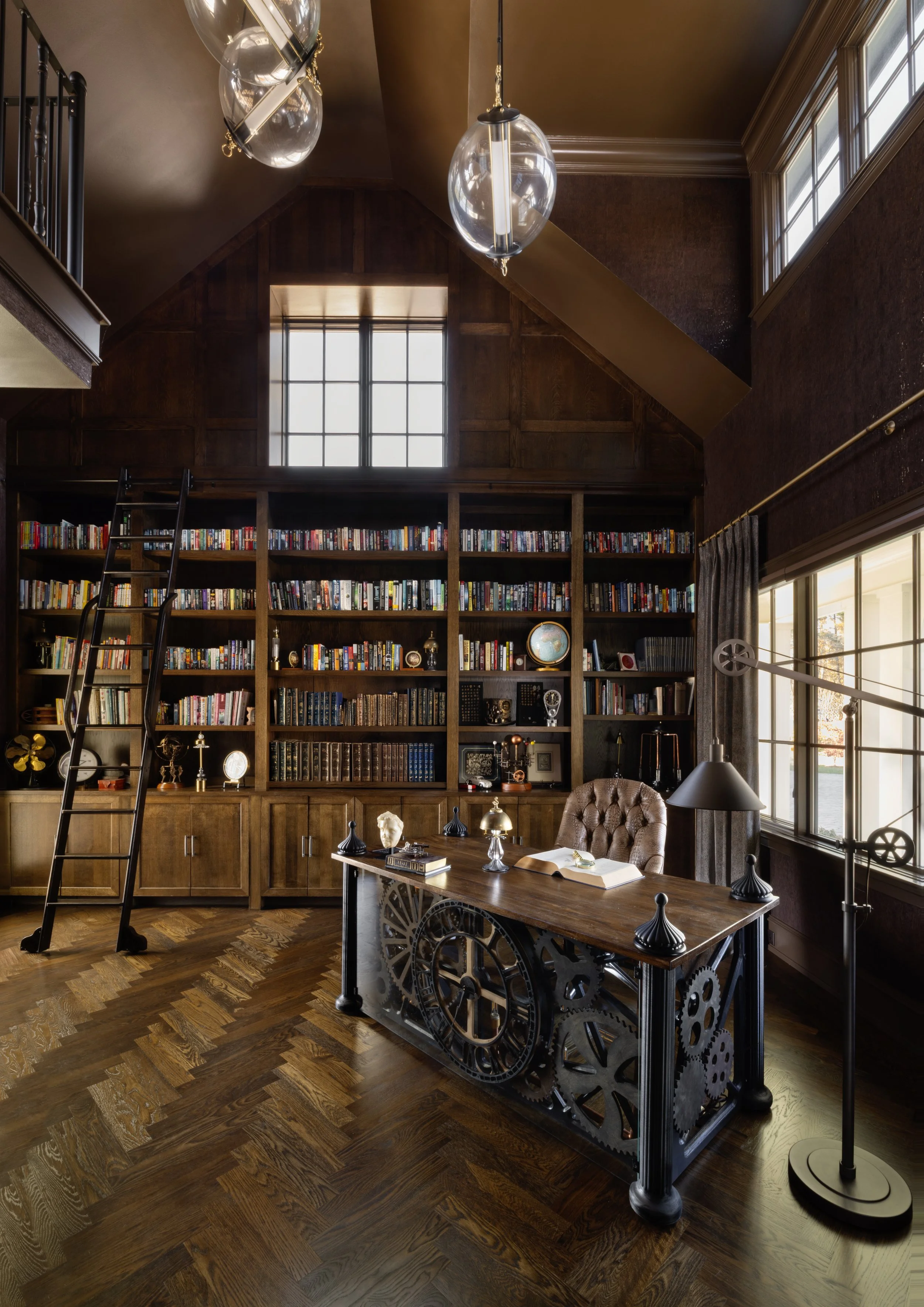
Building Through the Lens of Legacy
One of the most compelling reasons homeowners choose modern transitional design is because it supports long-term thinking. These homes are often intended to become forever homes that support multiple stages of life and potentially multiple generations.
Legacy planning involves more than choosing durable materials. It means creating a residence that can support traditions, celebrations, family gatherings, and future milestones.
For some families, this means creating a home that children may eventually return to with their own families. For others, it means building a gathering place that becomes part of the family story.
Additional perspective can be found in building a legacy and building your forever home.
Designing Beyond Current Needs
Legacy-focused planning asks homeowners to think beyond immediate priorities. Family traditions, hosting goals, aging in place, hobbies, wellness routines, and future accessibility should all influence the home's layout.
When these considerations are addressed early, the home can continue serving the family for decades without significant alterations.
Creating Lasting Emotional Value
The most memorable homes often create emotional connections that extend beyond aesthetics. Thoughtful gathering spaces, beautiful natural light, outdoor rooms, and intentional details become part of everyday memories.
These moments ultimately become the true value of a custom home.
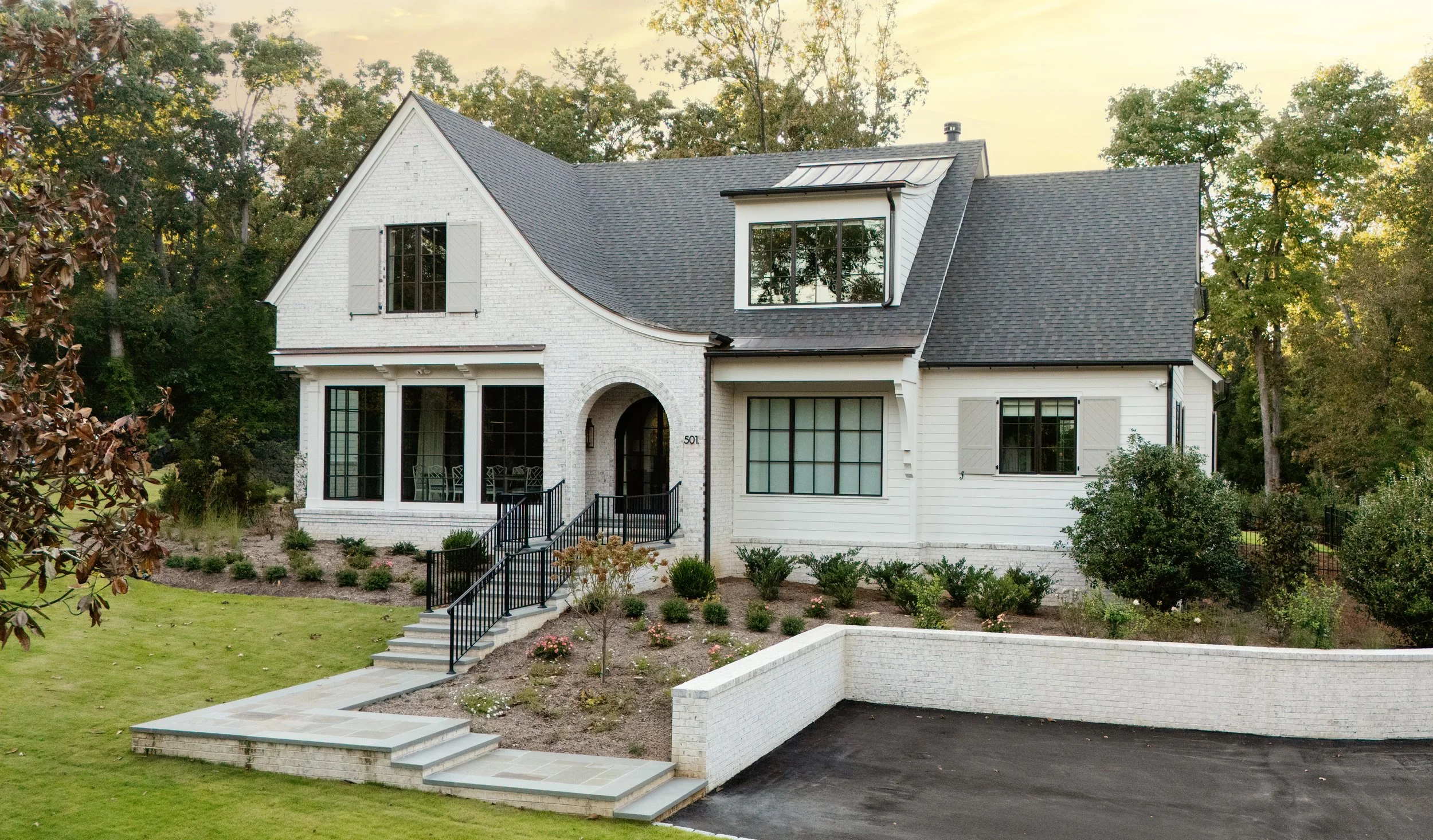
Painted brick, clean lines, thoughtfully scaled proportions, and a carefully planned homesite create a modern transitional custom home designed to stand the test of time. Durable materials, timeless curb appeal, and flexible living spaces reflect a long-term approach to custom home building that supports changing family needs while preserving lasting value throughout Chapel Hill, Durham, Raleigh, and the Triangle.
Understanding Planning Before Construction Begins
Successful modern transitional homes begin long before construction starts. Early planning decisions influence nearly every aspect of the final home, including budget, timeline, material selections, room orientation, outdoor living, and long-term functionality.
Investing additional time during this stage often reduces stress, prevents costly changes, and improves overall project quality.
Homeowners beginning this journey should review custom home design planning.
Understanding Feasibility Before Building
Feasibility studies help homeowners understand the realities of their property before major decisions are made. Tree preservation, grading, utility access, setbacks, drainage, driveway placement, and environmental conditions can all influence the home's design.
Resources such as feasibility and site studies can help establish this foundation.
Value Engineering Without Sacrificing Quality
Budget planning is not about removing quality. It is about making intentional decisions that preserve long-term value while aligning with financial goals.
Homeowners may find value in value engineering in luxury custom homes and understanding the cost-plus approach.
Why a Structured Process Matters
Clear communication, documented decisions, and collaborative planning improve the experience for everyone involved. Early alignment allows construction to progress more smoothly while reducing uncertainty.
For additional insight, homeowners can review from concept to completion and our process.
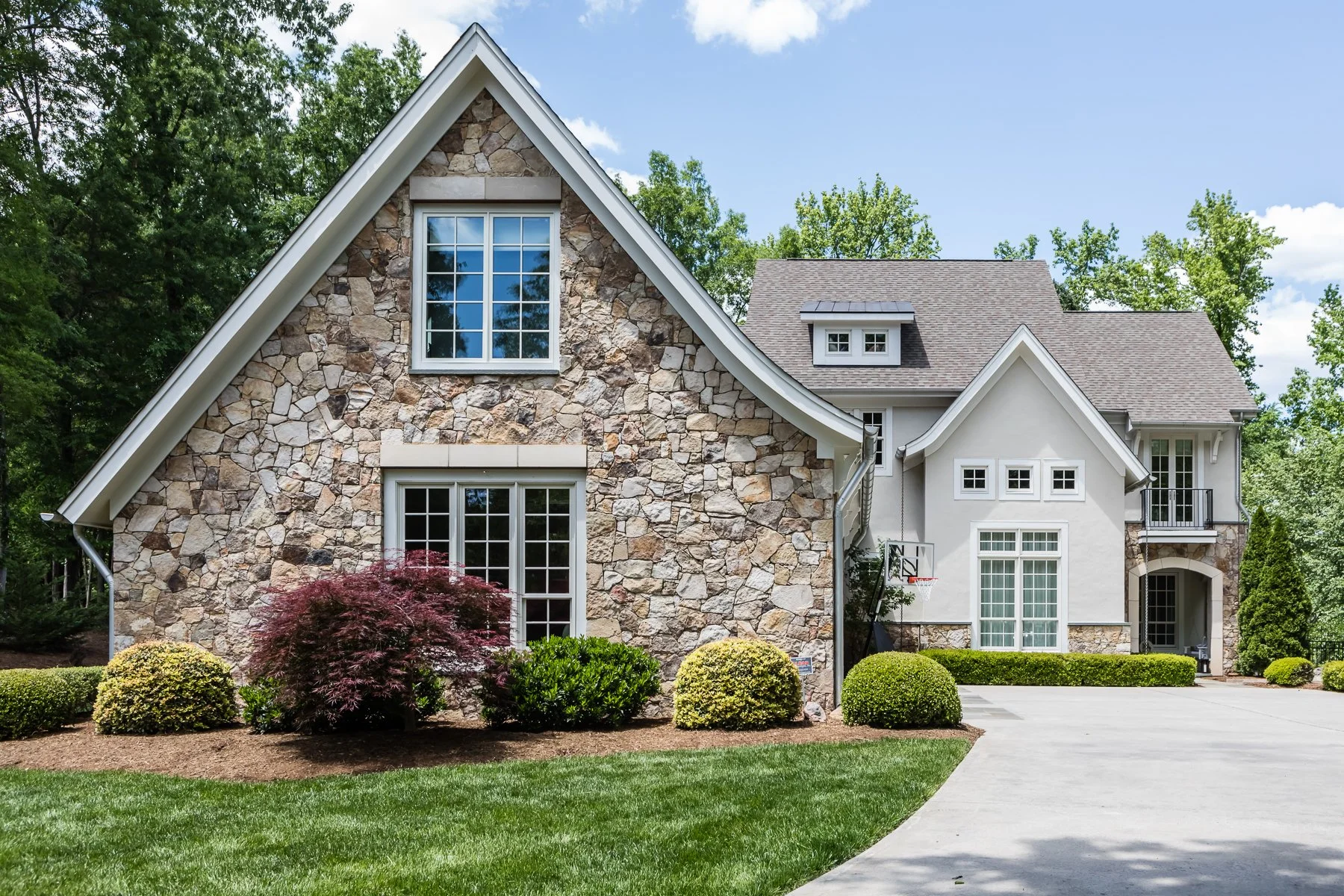
Natural stone, painted finishes, balanced rooflines, and carefully integrated exterior details demonstrate the value of a coordinated design-build approach. Bringing planning, design decisions, and construction together from the beginning helps create a cohesive custom home that aligns with the property, supports long-term goals, and delivers consistent craftsmanship throughout Chapel Hill, Durham, Raleigh, and the Triangle.
Why More Homeowners Are Choosing the Design-Build Approach
Modern transitional homes require a tremendous amount of coordination because every decision influences another. Window placement affects lighting plans. Kitchen layouts affect structural planning. Outdoor living spaces influence grading, drainage, and circulation. Material selections influence budget, lead times, and installation schedules.
This level of complexity is one reason many Triangle homeowners are choosing a design-build process. Bringing planning, communication, and construction oversight together allows decisions to happen earlier and more efficiently.
At Will Johnson Building Company, this collaborative process helps homeowners make informed decisions while keeping the larger vision intact throughout the project.
Homeowners can learn more by reviewing why homeowners choose design-build firms and the design-build difference.
Reducing Decision Fatigue Throughout the Process
One of the greatest challenges of custom home building is the sheer number of decisions involved. Exterior materials, windows, cabinetry, flooring, lighting, plumbing fixtures, appliances, hardware, paint selections, landscape planning, and outdoor features all require thoughtful consideration.
A structured process helps homeowners make these decisions in manageable phases rather than all at once. This reduces stress while preserving quality.
Maintaining a Unified Vision
Modern transitional homes work best when every decision supports the larger picture. Without a clear vision, projects can begin to feel disjointed as individual choices accumulate over time.
Consistent communication and organized planning help preserve cohesion from the earliest stages through final completion.
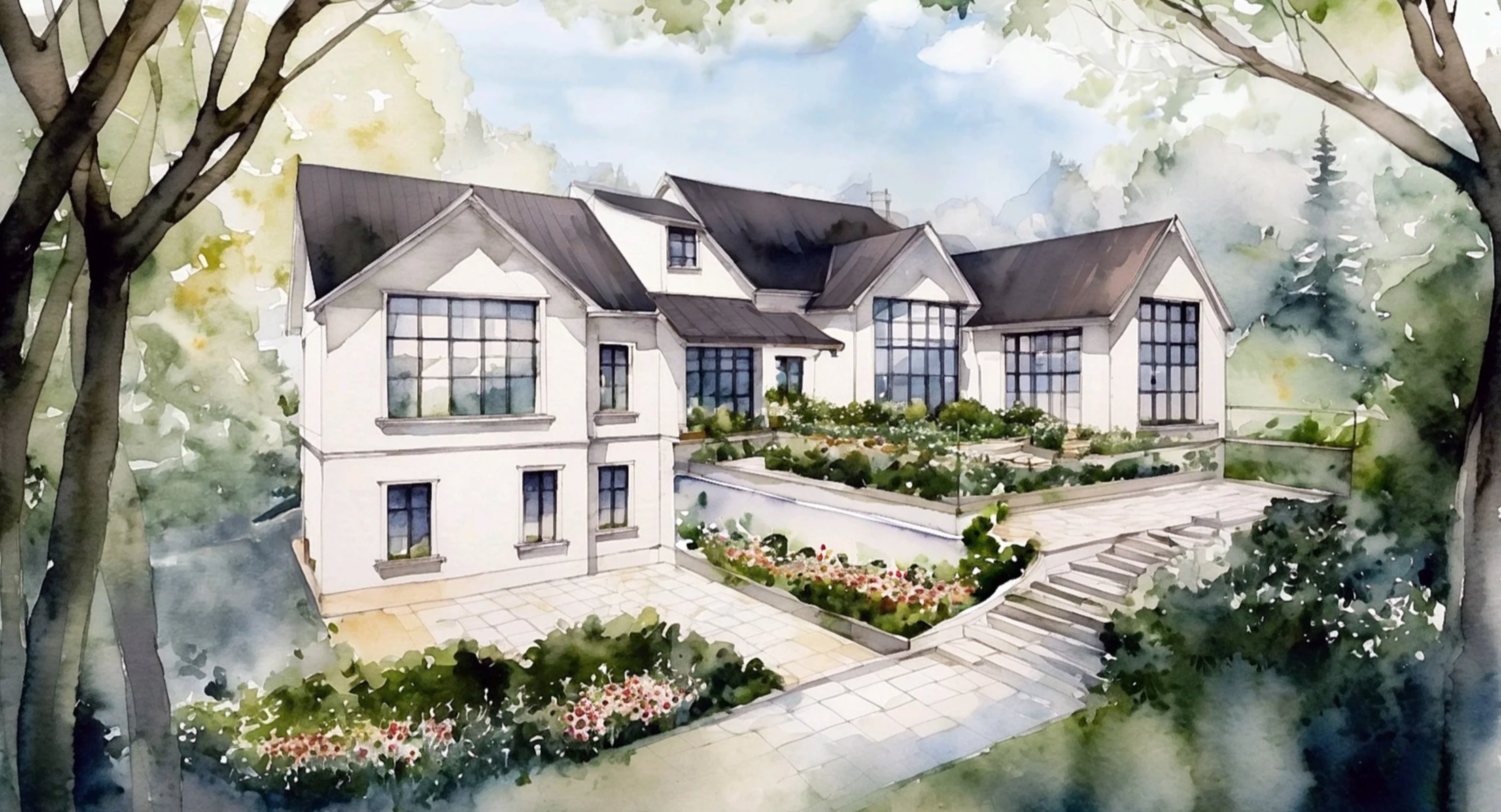
How Will Johnson Building Company Approaches Modern Transitional Home Planning
Every modern transitional home begins with understanding the homeowner's goals before discussing finishes or square footage. The focus is on lifestyle, property conditions, long-term priorities, and how the family intends to live inside the home every day.
Will Johnson Building Company uses a collaborative planning approach that emphasizes transparency, communication, and disciplined decision-making throughout the process. Rather than applying predetermined solutions, each home is tailored to its property and the people who will live there.
Whether building in Chapel Hill, Durham, Raleigh, Cary, Pittsboro, Orange County, Chatham County, Hope Valley, or Wake County, the same philosophy remains consistent: create homes that feel timeless, highly functional, and deeply connected to their surroundings.
Homeowners can learn more about the company through the About page, explore services, browse our work, and review custom home builder services.
Relocating to the Triangle and Building a Modern Transitional Home
Many homeowners building modern transitional homes are relocating to North Carolina from other states. The Triangle continues to attract families, professionals, retirees, and remote workers because of its strong economy, educational institutions, healthcare systems, and overall quality of life.
For homeowners unfamiliar with the area, understanding how Chapel Hill, Durham, Raleigh, Cary, Pittsboro, and surrounding communities differ can be one of the most important early decisions.
Resources such as planning a move to North Carolina can help homeowners understand these differences before committing to a property.
Choosing the Right Community
Each Triangle community offers a different experience.
Chapel Hill: Mature tree canopies, wooded properties, and strong connections to nature.
Durham: Established neighborhoods, cultural amenities, and flexible opportunities for both new builds and renovations.
Raleigh: Urban convenience, established Inside-the-Beltline neighborhoods, and strong long-term investment potential.
Cary: Family-oriented communities, golf-course properties, and highly functional neighborhood planning.
Pittsboro and Chatham County: Larger properties, estate opportunities, and long-term legacy planning.
The right location ultimately depends on how homeowners prioritize privacy, commute times, lot size, entertaining, schools, and long-term goals.

Thoughtful kitchen renovation featuring custom cabinetry, premium stone countertops, an oversized island, and improved natural light. Careful planning allows renovated kitchens to improve workflow, increase storage, modernize finishes, and create gathering spaces that better support everyday living while complementing the character of the home.
Modern Transitional Renovations Across the Triangle
Not every homeowner begins with vacant land. Many homeowners already own a property they love but need a home that better supports their lifestyle.
Modern transitional renovations can preserve the character of an existing residence while introducing improved functionality, updated materials, better natural light, and stronger indoor-outdoor connections.
Homeowners exploring renovation opportunities can review:
Balancing Existing Character with Modern Living
Modern transitional renovations work especially well because they preserve what makes an older home special while improving daily life.
Projects may involve opening gathering spaces, improving kitchens, reconfiguring primary suites, updating outdoor areas, and improving circulation without sacrificing the property's identity.
Homeowners interested in this approach may also review luxury renovations that respect history and renovating historic homes in Chapel Hill.
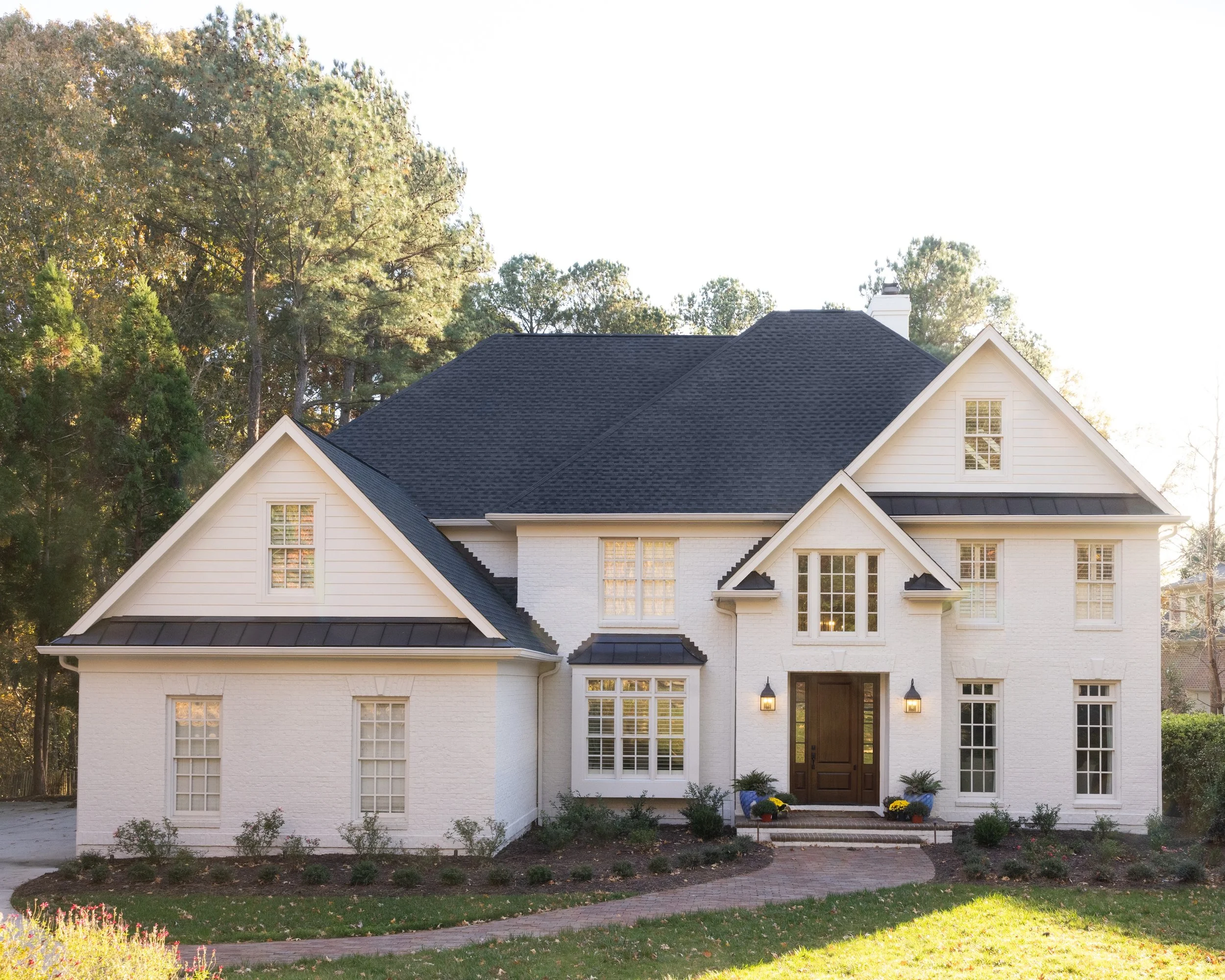
Building for the future means creating a home that adapts as life changes. This custom residence reflects thoughtful long-term planning with flexible living spaces, durable materials, and a timeless exterior designed to support growing families, changing routines, entertaining, and everyday comfort for decades to come.
Building a Home That Reflects Your Family's Future
The most successful modern transitional homes are not built for today's needs alone. They are designed to support decades of life experiences that have not happened yet.
Children will grow older. Careers may evolve. Families may expand. Parents may eventually move in. Hobbies will change. Entertaining priorities may shift. A home should be capable of adapting to these transitions without requiring significant reconstruction.
This long-term perspective often separates a forever home from a temporary home.
Thoughtful planning allows homeowners to create a residence that remains relevant through every season of life.
Thinking in Decades Instead of Years
Modern transitional homes perform well because they avoid short-term thinking. Material selections, room layouts, storage planning, outdoor spaces, and accessibility decisions are all made with longevity in mind.
By thinking decades ahead instead of a few years ahead, homeowners can make decisions that preserve both comfort and value.
Creating Spaces That Become Part of Family Traditions
The true value of a custom home is often measured by memories rather than square footage.
The kitchen where holidays are celebrated, the porch where mornings begin, the family room where children gather, and the backyard where generations spend time together often become the spaces people remember most.
Modern transitional homes are particularly effective at creating these experiences because they emphasize warmth, flexibility, and connection.
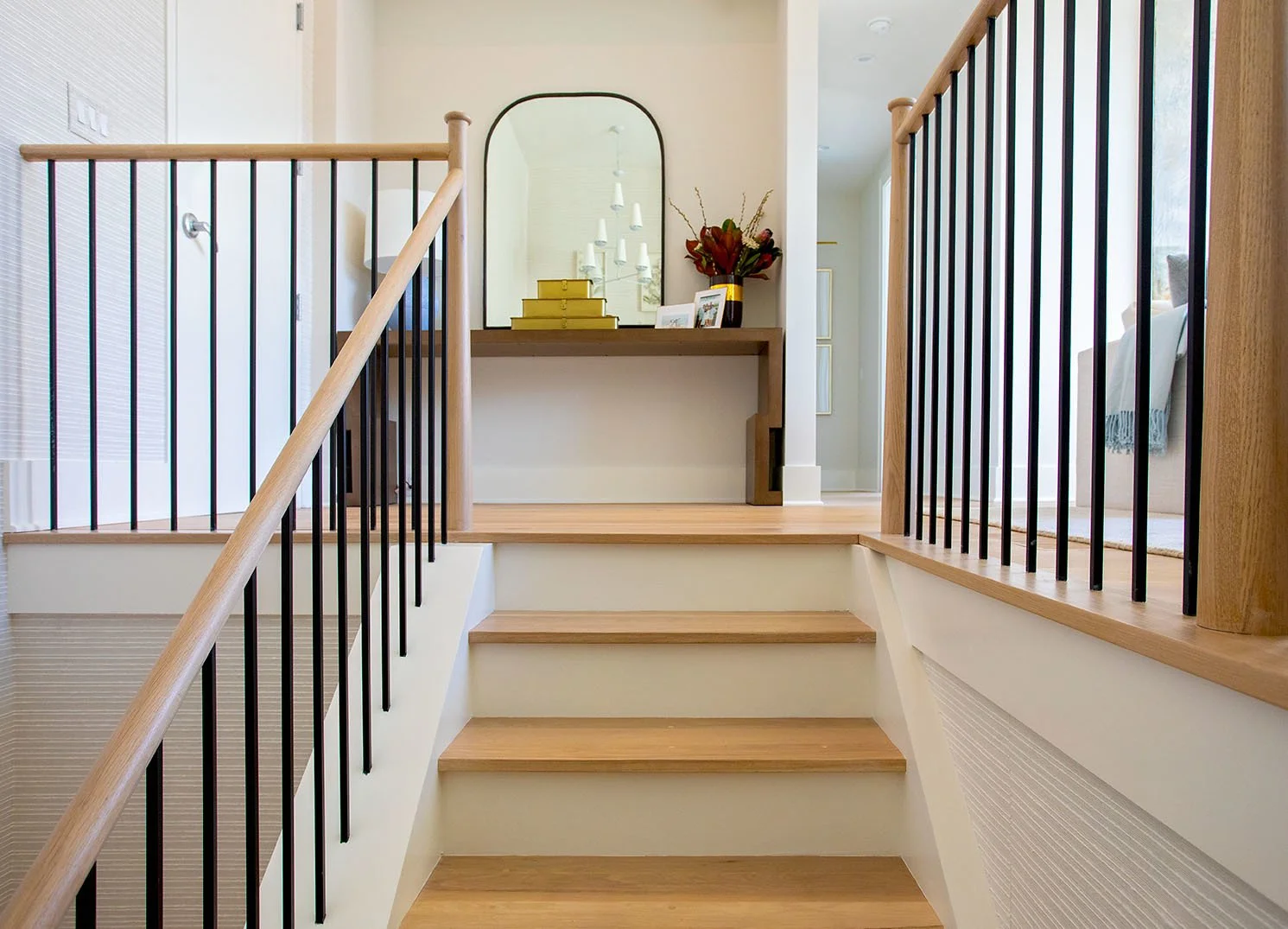
Long-term home planning extends beyond individual rooms to the way spaces connect and evolve over time. Open circulation, durable materials, and flexible layouts create a home that supports changing family needs, improves everyday functionality, and provides lasting comfort through every stage of life.
Final Perspective on Modern Transitional Living Across Chapel Hill, Durham, and Raleigh
Modern transitional homes have become one of the defining home styles throughout the Triangle because they strike a balance that many homeowners are seeking. They preserve timeless character while embracing modern functionality. They support entertaining while remaining practical for everyday life. They feel refined without becoming formal and current without becoming trendy.
Perhaps most importantly, these homes adapt exceptionally well to North Carolina living. Whether situated on a wooded Chapel Hill homesite, an established Durham property, an Inside-the-Beltline Raleigh lot, a Cary neighborhood setting, or a larger Pittsboro or Chatham County estate, modern transitional homes can be tailored to their surroundings while preserving a consistent sense of warmth and purpose.
When carefully planned, these homes become more than custom residences. They become long-term gathering places designed around land, light, lifestyle, and legacy.
Homeowners beginning their journey can explore Will Johnson Building Company, review the blog resource center, browse completed projects, and contact Will Johnson Building Company to begin planning a home tailored to their property and long-term goals.
What Sets Modern Transitional Homes Apart in the Triangle
Unlike highly traditional or highly contemporary homes, modern transitional residences have the ability to adapt to nearly every type of Triangle property. They work equally well on wooded Chapel Hill homesites, established Durham neighborhoods, Inside-the-Beltline Raleigh lots, Cary communities, and larger Pittsboro and Chatham County properties.
The flexibility of this style is one of its greatest strengths. The home can evolve alongside changing lifestyles without requiring dramatic updates or losing its sense of timelessness.
When approached intentionally, a modern transitional home becomes more than a custom residence. It becomes a long-term investment in comfort, functionality, and everyday living.
Related Reading for Homeowners Exploring Modern Transitional Living
Modern transitional homes touch nearly every aspect of custom home planning. Homeowners often begin by exploring one topic before realizing how closely site selection, light studies, material selections, outdoor living, and long-term planning all work together.
If you are continuing your research, the following resources provide additional guidance that complements modern transitional home planning throughout Chapel Hill, Durham, Raleigh, Cary, Pittsboro, Orange County, Chatham County, and surrounding Triangle communities.
Planning a Modern Transitional Home That Supports the Way You Live
Modern transitional homes are ultimately about balance. They create spaces that feel warm without becoming formal, current without feeling trendy, and highly functional without sacrificing craftsmanship.
At Will Johnson Building Company, each project is approached through the lens of land, light, lifestyle, and long-term livability. The result is a home that feels deeply connected to its setting while supporting the routines, traditions, and experiences that matter most to the people who live there.
If you are exploring a custom home in Chapel Hill, Durham, Raleigh, Cary, Pittsboro, Orange County, Chatham County, Hope Valley, or elsewhere in the Triangle, begin by understanding the property and establishing a clear vision before construction begins.
Helpful starting points include:
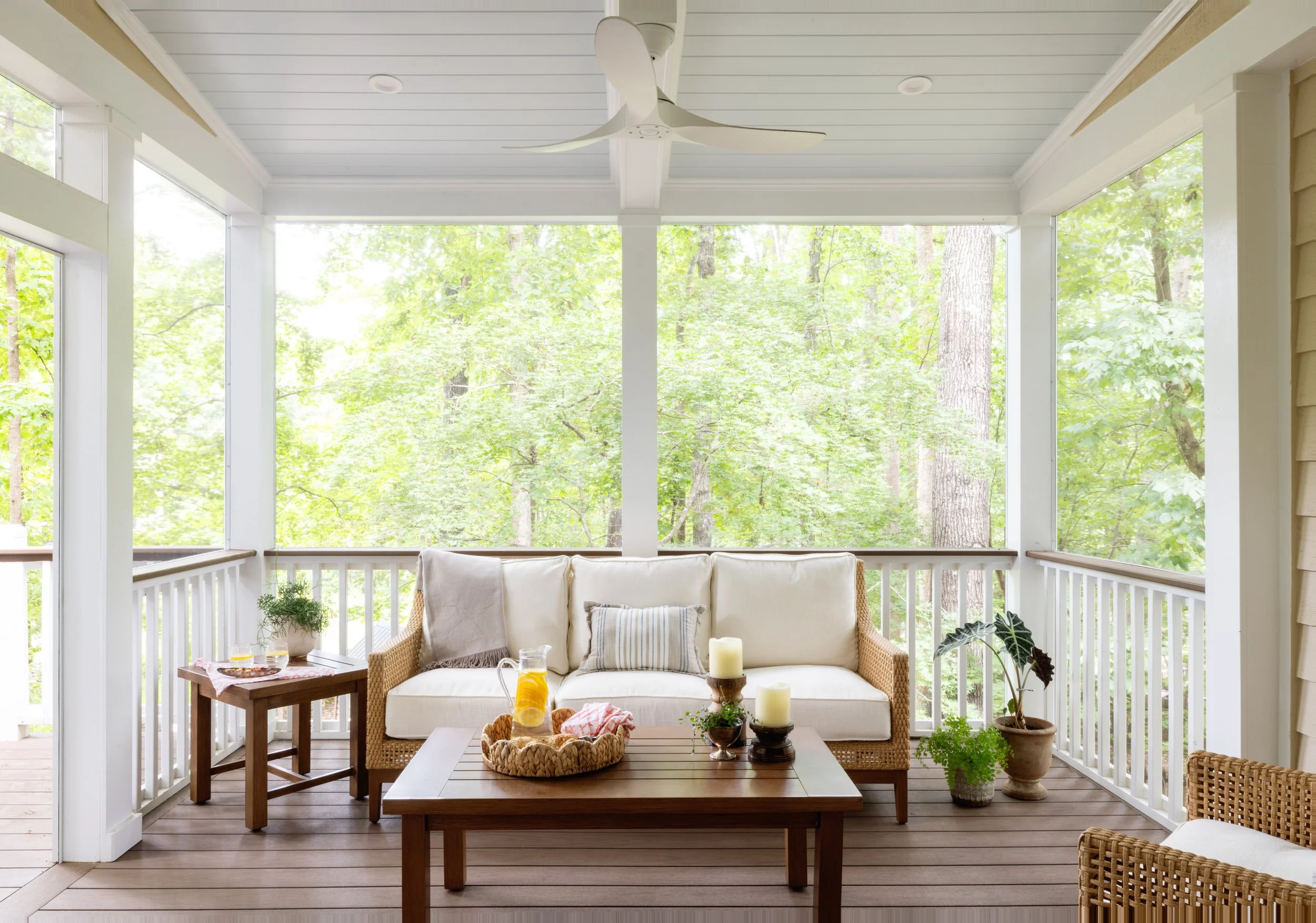
Covered outdoor living creates a peaceful connection between the home and its wooded surroundings. Comfortable seating, filtered natural light, and protected porch space show how modern transitional homes can support quiet mornings, family gatherings, and year-round enjoyment before even stepping inside.
Frequently Asked Questions About Modern Transitional Custom Homes in Chapel Hill, Durham, and Raleigh
Modern transitional homes continue to gain popularity throughout Chapel Hill, Durham, Raleigh, and the broader Triangle because they combine timeless design principles with modern functionality. Homeowners often have questions about how these homes perform on different types of properties, what materials work best, how they support evolving family needs, and how early planning decisions influence long-term value. The following questions address many of the topics homeowners commonly explore when planning a modern transitional custom home in North Carolina.
Are modern transitional homes a trend or a timeless home style?
Modern transitional homes are considered a timeless style because they rely on balanced proportions, natural materials, and functional layouts instead of short-term trends. Their flexibility allows them to remain relevant for decades while adapting to evolving lifestyles and changing family needs.
Why are modern transitional homes so popular throughout the Triangle?
Modern transitional homes work exceptionally well throughout Chapel Hill, Durham, Raleigh, Cary, Pittsboro, Orange County, Chatham County, and Wake County because they adapt to a variety of homesites. They can feel equally appropriate on wooded properties, established neighborhood lots, golf-course settings, and larger estate properties while maintaining a warm and approachable feel.
Do modern transitional homes work on wooded properties?
Yes. They work exceptionally well on wooded properties because they emphasize natural light, indoor-outdoor living, and thoughtful window placement that responds to the landscape. Features such as covered porches, large windows, terraces, and carefully positioned gathering spaces help homeowners enjoy both privacy and natural surroundings.
How do light studies influence modern transitional homes?
Light studies help determine room orientation, window placement, outdoor living locations, and how sunlight moves throughout the property during different times of the year. Understanding these patterns early can improve comfort, energy efficiency, and the overall living experience.
Are modern transitional homes good for families?
Yes. Flexible layouts, adaptable rooms, generous gathering spaces, thoughtful storage solutions, and strong indoor-outdoor connections make them highly functional for families of all sizes. They are designed to evolve alongside changing routines and priorities.
What materials are commonly used in modern transitional homes?
Common materials include painted brick, natural stone, white oak, walnut, limestone, quartzite, plaster finishes, custom cabinetry, and warm metal accents. These materials create warmth and durability while helping the home maintain its appeal over time.
Can modern transitional homes support multi-generational living?
Absolutely. They are particularly effective for multi-generational households because they allow flexible spaces that can evolve alongside changing family needs. Guest suites, private workspaces, main-level living, and adaptable rooms are all common features.
How do modern transitional homes differ from traditional homes?
Traditional homes often emphasize heavier trim, more decorative detailing, and formal room separations. Modern transitional homes simplify these elements while preserving warmth, proportion, and timeless character. The result is a home that feels current while still remaining approachable and comfortable.
How do modern transitional homes differ from contemporary homes?
Contemporary homes often emphasize sharper geometry, expansive glass, and minimal detailing. Modern transitional homes maintain cleaner lines while introducing warmth through natural materials, layered textures, and more inviting gathering spaces that support long-term living.
Do modern transitional homes have strong long-term value?
Because they balance timeless appeal with modern functionality, modern transitional homes often retain strong desirability throughout the Triangle. Their adaptable nature allows them to appeal to a broad range of future homeowners without relying on short-lived design trends.
Can an existing home be renovated into a modern transitional style?
Yes. Many homeowners choose to renovate existing properties using modern transitional principles. Projects may involve opening gathering spaces, improving kitchens, updating primary suites, increasing natural light, and strengthening indoor-outdoor connections while preserving the original character of the home.
What is the first step when planning a modern transitional home?
The first step is understanding the property itself. Evaluating topography, natural light, privacy, tree preservation opportunities, drainage, driveway placement, and long-range lifestyle goals creates a stronger foundation for every decision that follows.
How long should homeowners spend planning before construction begins?
There is no universal timeline, but investing additional time during planning often leads to better outcomes. Site studies, material selections, room orientation, budget discussions, and construction documentation completed early can significantly reduce costly changes later in the project.
What makes modern transitional homes especially well suited for North Carolina?
North Carolina's climate, mature landscapes, and strong outdoor living culture make modern transitional homes particularly effective. Covered porches, screened outdoor rooms, expansive windows, and flexible gathering spaces allow homeowners to enjoy all four seasons while maintaining strong connections to the surrounding property.

