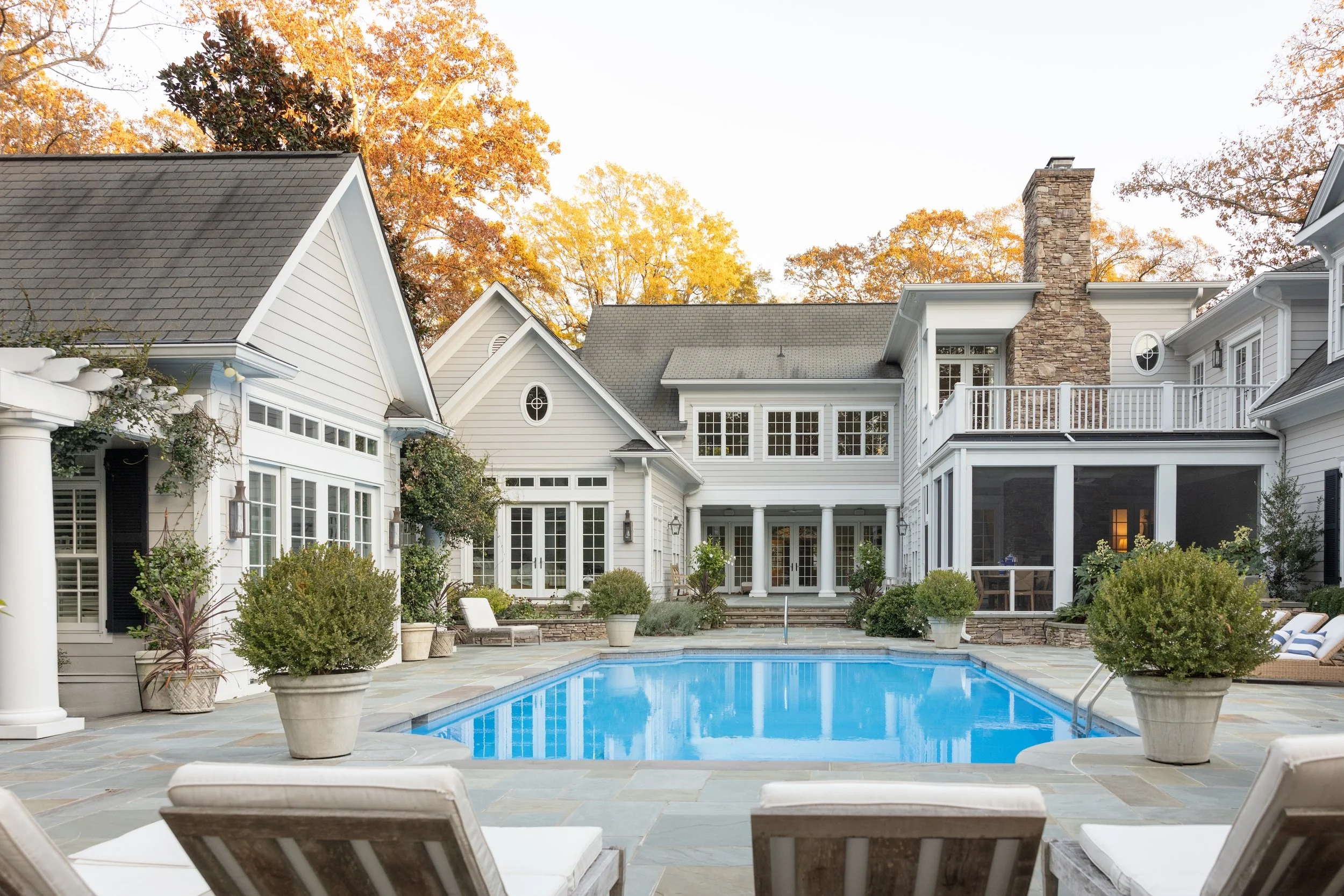
Rear exterior of a luxury custom home by Will Johnson Building Company in the Triangle NC featuring a rectangular in-ground pool, white siding, stone chimney, covered outdoor living spaces, and upper deck with refined residential craftsmanship
Feasibility and Site Study for High-End Custom Homes: Building With Certainty Before Design Begins
Before a single wall is framed or a foundation is poured, the most important work of a luxury custom home begins quietly and methodically. For $2M+ residences in Raleigh, Durham, Cary, and throughout the Greater Triangle, the feasibility and site study phase determines not only what can be built — but how successfully it can be built.
High-value custom homes are not reactions to inspiration. They are the result of disciplined preparation. Feasibility and site study protect financial investment, clarify constraints, and transform raw property into a build-ready opportunity grounded in certainty, reinforcing the same long-term thinking seen in timeless home design.
At Will Johnson Building Company, this phase is treated as a strategic due diligence process within our design-build process. It is thorough, analytical, and one of the most critical drivers of long-term success. :contentReference[oaicite:0]{index=0}
What a Feasibility Study Means in a Luxury Custom Home Project
A feasibility study for a custom home goes far beyond confirming that a lot is buildable. It examines environmental realities, structural limitations, regulatory requirements, and lifestyle priorities before design decisions move too far forward, often building directly on insights from relocation and planning considerations.
For luxury properties, especially those with complex grading, wooded lots, waterfront exposure, or existing structures, this stage establishes clarity before transitioning into schematic planning.
A comprehensive feasibility study includes:
Boundary and topographic surveys
Existing condition documentation
Soil and drainage evaluation
Utility availability assessment
Zoning and setback review
Structural limitations for renovations
Environmental considerations
Rather than discovering obstacles mid-construction, this phase identifies them early, aligning closely with the principles outlined in site selection strategy.
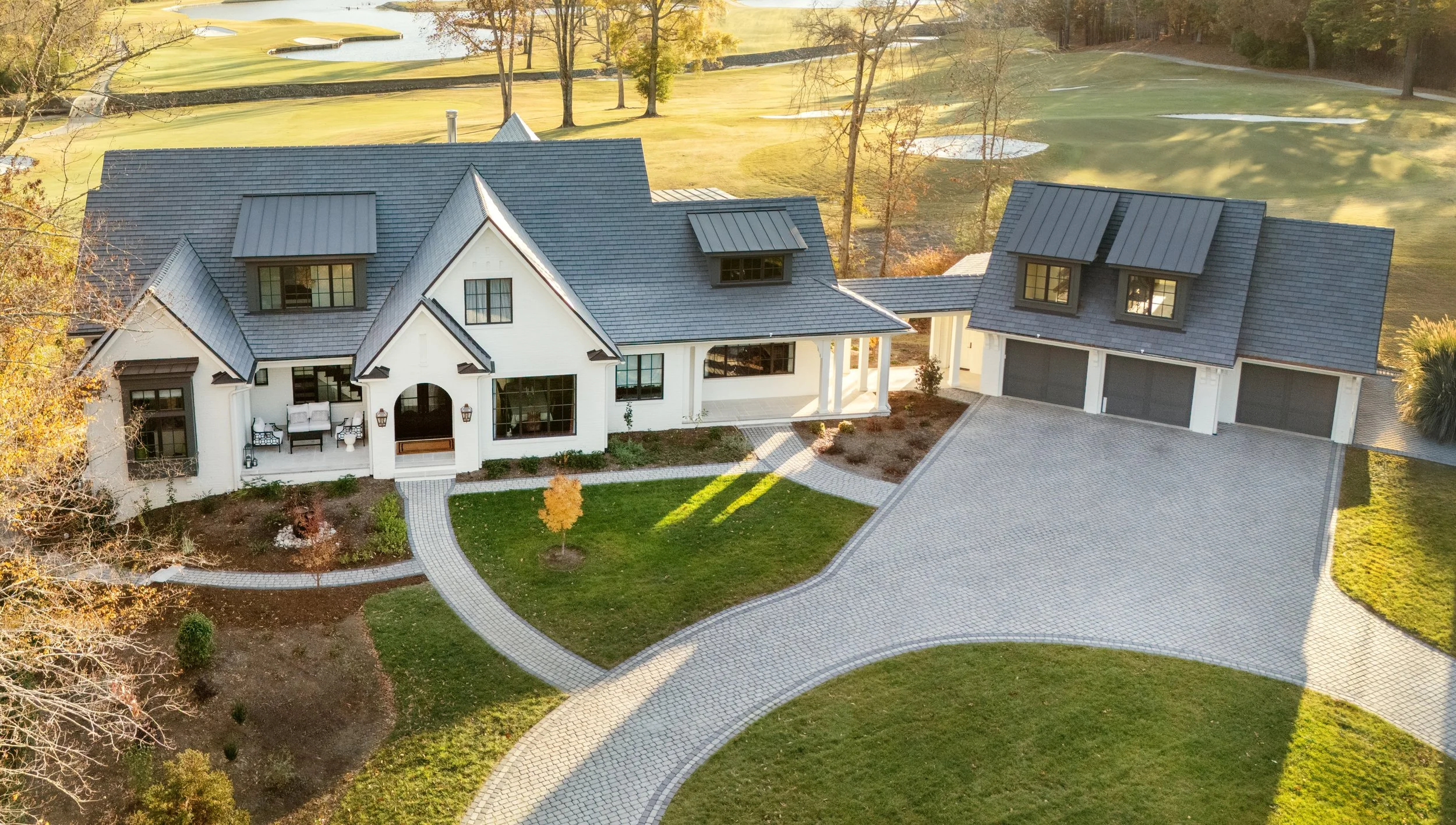
Aerial view of a Will Johnson Building Company luxury custom home in the Triangle NC featuring a curved driveway, detached garage, landscaped grounds, and high-end residential craftsmanship
Who This Phase Is Designed For
Feasibility and site study are most valuable for homeowners planning high-investment custom homes, large-scale renovations, or properties with long-term intent. Projects in the $2M+ range require a level of clarity that extends beyond inspiration and into structured decision-making. This phase is designed for those who want to move forward with confidence rather than uncertainty.
It is especially important for buyers evaluating land in Chapel Hill, Durham, or Pittsboro, where site conditions and local regulations can significantly influence build potential. It also plays a critical role for families planning multi-generational properties, estate homes, or long-term residences aligned with legacy-focused homebuilding.
Property Surveys: Establishing Boundaries & Topography
Every exceptional home begins with an accurate understanding of the land. A property survey confirms legal boundaries, easements, setbacks, right-of-ways, and buildable envelopes, which are especially important in areas like Orange County and Raleigh 27608.
Topographic surveys reveal elevation changes that impact:
Foundation design
Retaining wall needs
Driveway slope
Drainage strategies
Outdoor living placement
For high-end homes, minor elevation shifts can significantly influence both aesthetic presence and construction cost. These insights directly inform later phases such as layout planning and outdoor living integration.
Common Mistakes Without Proper Feasibility Planning
Skipping or minimizing feasibility often leads to avoidable issues that surface during construction, when adjustments are more expensive and disruptive. These mistakes are rarely due to poor design intent, but rather a lack of early coordination between site conditions, budget, and long-term planning.
Purchasing land without understanding buildable area limitations
Underestimating grading and drainage requirements
Designing beyond setback or zoning allowances
Overlooking utility capacity or infrastructure limitations
Beginning design before lifestyle programming is clearly defined
Many of these challenges can be traced back to decisions made before structured planning begins. Addressing them early creates a smoother transition into schematic design and reduces the need for reactive changes later in the process.
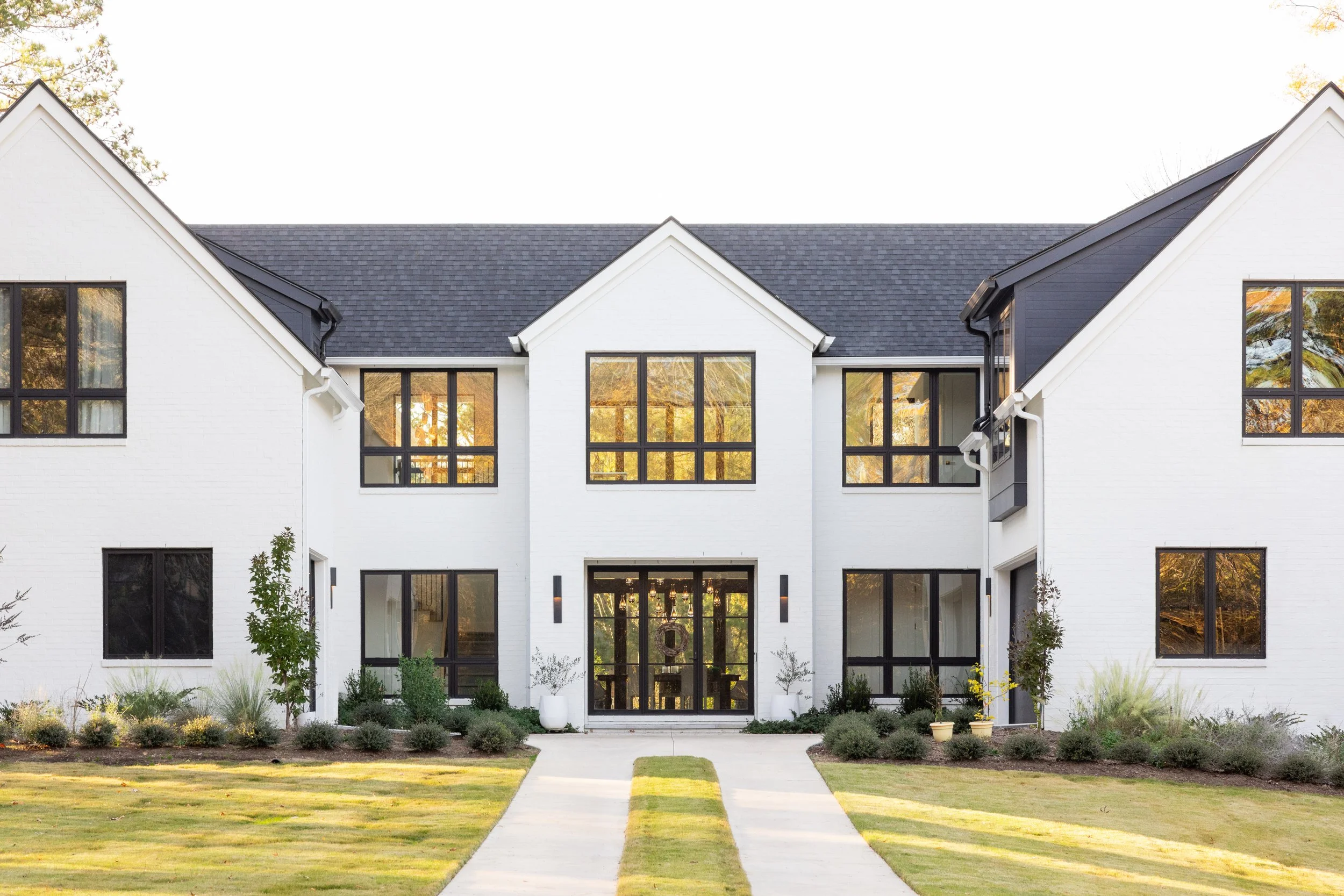
Front exterior of a luxury custom home by Will Johnson Building Company in the Triangle NC featuring white brick, symmetrical design, black-framed windows, and a refined estate-style entrance
Why High-End Homes Require a Different Level of Planning
Luxury custom homes operate under a different set of expectations than standard residential construction. Higher budgets introduce greater complexity, from structural requirements to material sourcing and system integration. As a result, the margin for error becomes significantly smaller.
Feasibility ensures that complexity is addressed early rather than managed reactively. This level of preparation aligns closely with approaches seen in cost-plus construction, where clarity and transparency guide every decision. For homeowners building at this level, preparation is not optional—it is essential.
How Feasibility Transitions Into Schematic Design
Once feasibility and site study are complete, the project moves forward with clarity into schematic planning. At this stage, the information gathered during Phase I begins to shape layout, spatial relationships, and overall home form.
Site conditions, programming insights, and budget alignment all influence how the home is organized, ensuring that early ideas translate into a buildable and cohesive design. This transition is explored further in schematic design for high-end custom homes, where vision begins to take measurable form.
Building With Certainty Before Breaking Ground
If you are evaluating land, planning a custom home, or considering a large-scale renovation in the Triangle, the right starting point is clarity. A structured feasibility study allows you to move forward with confidence, understanding both the opportunities and constraints of your property before design begins.
Connect through our contact page to begin the process with a clear, disciplined approach that aligns your vision, your property, and your long-term goals.